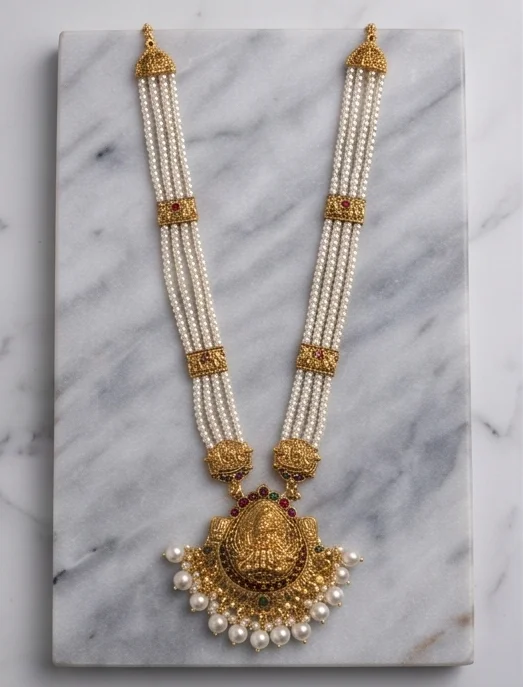
Buying imitation jewellery online means you cannot pick the piece up, check its weight, or run a thumb over the stone setting before paying. That is not a small handicap. Most quality problems in artificial jewellery only show up once you have actually held the piece, or worse, worn it a few times. This guide covers what actually separates a well-made imitation piece from a poorly finished one, so you know what to look for before you click buy.
Start With the Base Metal
Almost all imitation jewellery starts with a base metal, usually brass, an alloy, or occasionally white metal, that gets plated afterward. This matters more than most buyers realise.
- Brass takes plating well and holds its shape, which is why most decent imitation pieces are built on it.
- Cheaper alloy blends are lighter, but often plate unevenly and can tarnish or discolour faster, sometimes leaving marks on skin.
- Weight is a rough but useful clue. A piece that feels suspiciously light for its size is often using a thinner or cheaper base metal.
Product listings do not always mention the exact base metal, but description quality is itself a signal. A seller who specifies brass base or alloy base is generally being more transparent than one who just says metal and leaves it there.
Understand What Gold Plated Actually Means
This is where most confusion happens. Gold plating is a thin layer of gold, measured in microns, applied over the base metal through an electroplating process. It is not solid gold, and no honest imitation jewellery brand should ever suggest otherwise.
A few things worth knowing:
- Micron thickness affects durability. Thicker plating, usually one to two microns for decent quality pieces, lasts noticeably longer than a very thin flash coating.
- Plating wears with contact. Perfume, sweat and friction from clothing all speed this up, regardless of brand or price.
- Colour consistency matters. Good plating looks even across the whole piece. Patchy or slightly different-toned areas, especially near settings or clasps, usually point to uneven plating.
Look Closely at Stone Setting and Finishing
This is the detail that separates a piece that looks fine in a product photo from one that looks fine in person too.
- Check how stones are set. Glued stones tend to loosen and fall out faster than prong or claw-set ones, especially with kundan and polki-style work.
- Scan product images for edges and joints. Rough, unfiled edges around the back of pendants or earring posts usually point to lower-quality finishing.
- Symmetry matters in pairs. For earrings especially, mismatched stone sizes or slightly different bends between the left and right piece are a common quality gap in mass-produced batches.
What Good Manufacturers Actually Do Differently
Since finishing quality is hard to judge from a single photo, it helps to look at how a brand talks about its own process, and what segment of jewellery it actually specialises in. Brands that manufacture within a focused category tend to control finishing more tightly than ones spreading across every style at once.
For instance, sister label Saubhagya Jewellery works specifically within bridal and temple-style imitation jewellery, necklaces, chokers, kundan earrings and bridal sets, rather than a broad general catalogue. Its temple jewellery sets are a reasonable example of what tighter category focus tends to produce, consistent plating tone across a full set and stone settings finished for the heavier motifs that temple-style pieces typically carry. Comparing a specialised catalogue like that against a mixed general one is often the fastest way to get a feel for finishing standards before committing to a purchase.
Price Is Not Everything, But It Is Not Nothing Either
Imitation jewellery in India spans a wide price band, roughly ₹200 at the low end to well over ₹1000 for detailed bridal sets. A very low price is not automatically a red flag, plenty of simple, well-finished pieces sell affordably. But when a piece looks unusually detailed or heavy for its price, that is usually where corners got cut, most often in plating thickness or stone setting method.
A rough way to sanity-check price against expected quality:
- Under ₹300 — simple designs, thinner plating, lighter base metal.
- ₹300 to ₹600 — better finishing, secure stone settings, moderate plating thickness.
- ₹600 to ₹1000 and above — detailed bridal or statement pieces, heavier base metal, thicker plating.
Questions Worth Asking Before You Buy
- Does the product page mention the base metal or plating type at all?
- Are there multiple close-up photos, not just one styled shot from a distance?
- Does the return or exchange policy actually cover manufacturing defects?
- Is the brand specific about care instructions? Vague or absent care guidance often means the seller has not thought much about plating longevity either.
Making Your Plating Last Longer
Regardless of where you buy, a few habits extend the life of any gold-plated piece: apply perfume and hairspray before putting jewellery on, not after, store pieces separately in a dry pouch rather than tangled together, and wipe them down gently after wearing rather than leaving them exposed to sweat overnight.
Final Word
Judging imitation jewellery quality online comes down to reading between the lines, checking how a brand describes its metal and plating, looking closely at setting and finishing in photos, and staying a little sceptical of a price that seems too good for the level of detail shown. Brands that stay focused on a specific category, the way Saubhagya Jewellery's kundan earrings collection does for bridal-style pieces, are worth studying as a benchmark for what properly finished imitation jewellery should look like, even if you end up buying elsewhere.
Want a wholesale partner who controls quality at every step?
Request Bulk Fulfillment →