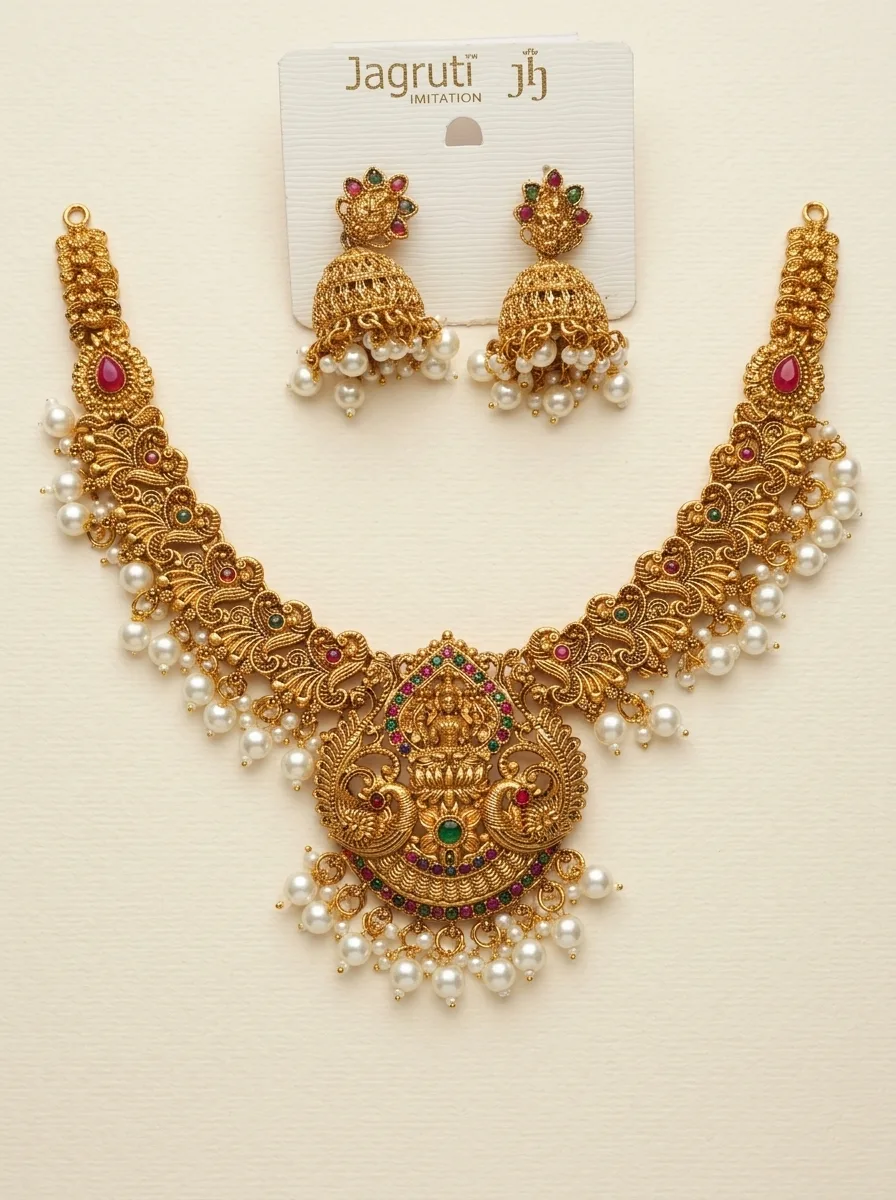
Brides and their families buy many pieces for a wedding. Bundling them into clear packages makes buying easier for customers and raises the value of each sale.
What a bridal bundle includes
A complete bridal look for your region: main necklaces, earrings, headpieces, nath, bangles, waist belt and hand ornaments. Offer it as one package at a clear price.
Family bundles
Many families buy matching or coordinated sets for sisters, mothers and cousins. Offer family bundles of lighter sets in the same design family.
Function bundles
Weddings have several functions. Bundle a heavy set for the ceremony with a lighter set for the mehendi or reception.
Offer lighter bundles for each function alongside the main bridal bundle, in colours that suit each event, such as yellow and floral for haldi, green and pink for mehndi, and sparkling AD for the reception. Families often buy several function bundles at once when they see them presented together.
Sourcing for bundles
Pieces in a bundle must match in finish and stone colour. Order the whole bundle from the same manufacturer in the same batch, recorded under one set of codes: mixing suppliers usually shows in slightly different gold tones. Read bridal sets wholesale guide.
Common mistakes
Assembling bundles from different suppliers whose finishes do not match, or offering only one bundle size.
An example
A Chennai store offers an Essential temple bundle, a Classic bundle with oddiyanam and vanki, and a Complete bundle with jadai and extra necklaces. Most brides choose Classic, and families add two guest sets.
See bridal jewellery manufacturer.
Pricing bundles
Price bundles slightly below the sum of their parts, so customers see value, while keeping margin healthy because bundles move more pieces per sale. Show the bundle price and the separate prices side by side.
Displaying bundles
Lay out each bundle together on a bust, a large velvet board or in a dedicated bridal area, with the price for the complete bundle clearly shown. Customers understand a bundle instantly when they see it as one look, rather than as pieces scattered across trays. Keep one display bundle per tier, show colour options beside it, and use photos of bundles worn.
Training staff
Staff should know every bundle's contents and be ready to swap pieces to match a customer's outfit or regional style.
Online bundles
Bundles work online too: a single listing for a complete set, with clear photos of every piece.
An example of tiered bridal bundles
| Bundle | Contents | Who it suits |
|---|---|---|
| Essential | Necklace set, earrings, tikka | Budget-conscious brides, small ceremonies |
| Classic | Essential plus bangles, nath | Most brides |
| Complete | Classic plus choker or rani haar, haath phool, waist belt | Full bridal looks |
| Family add-on | Lighter matching sets for mother and sisters | Families buying together |
Bundles and the bridal consultation
Bridal customers often shop with family and take time. A seated consultation with the bundle laid out, an outfit swatch nearby, and the option to switch colours within the bundle turns browsing into a confident purchase.
Add-ons at the point of sale
When a bride chooses a bundle, suggest add-ons that complete the look: an ear chain to support heavy earrings, a matching hair piece, a clutch-matching bangle set, or care and storage boxes. Keep these add-ons at the bridal counter, not elsewhere in the shop, so suggesting them feels natural rather than pushy.
After the wedding
Follow up with bridal customers a few weeks after the wedding. Many return for family functions, anniversaries and relatives' weddings, and a customer who was looked after well is the best advertisement a bridal counter has.