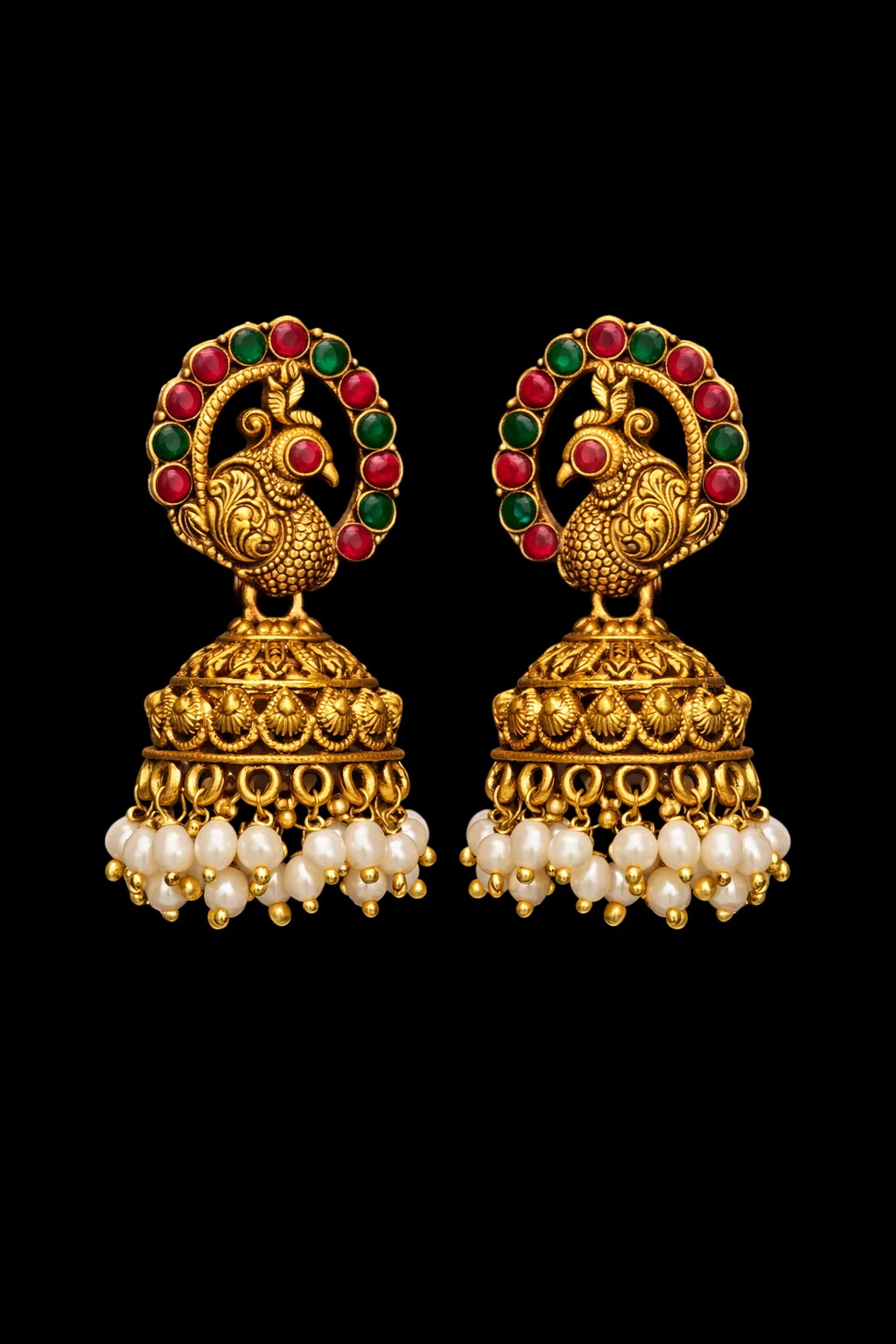
Two suppliers quote very different prices for what looks like the same necklace. One is not necessarily cheating; they are probably quoting different things. Once you know what goes into a factory price, you can compare quotes fairly and negotiate on the parts that actually move.
The building blocks of a factory price
1. Base metal. Mazak (zinc alloy) costs less than brass and weighs less per piece. A heavy brass haaram carries noticeably more metal cost than the same design in Mazak. Metal prices move with the market, which is one reason factories quote per enquiry rather than printing price lists.
2. Casting. Simple one-piece castings are cheap per unit. Designs with many parts, fine filigree or hollow sections take more casting time and more assembly.
3. Plating and finish. Antique finishes need extra steps: plating, darkening, relief polishing and a protective coat. Matte and high-polish finishes have their own steps. Heavier plating costs more.
4. Stones and beads. Kemp glass, CZ, Kundan glass with foil, pearls and beads all have different costs. Stone count matters as much as stone type: a choker with 300 small stones costs more to set than one with 30 large ones.
5. Setting labour. Hand-setting is the most labour-heavy stage. Closed kemp settings, Kundan foil work and pave AD all take skilled time.
6. Findings and assembly. Hooks, screw backs, S-locks, dori threads and back chains add cost and are where cheap pieces often fail.
7. Packing. Individual anti-tarnish pouches, branded boxes and cartons.
8. Fixed costs spread over quantity. CAD, master, moulds and setup are shared across the run. This is why MOQ exists and why price per unit falls as quantity rises.
A simple example of how cost shifts
| Change | Effect on price |
|---|---|
| Brass instead of Mazak | Up (more metal cost, more weight) |
| Antique instead of bright finish | Up slightly (extra finishing steps) |
| Double the stone count | Up (stones plus setting labour) |
| 1,000 units instead of 200 | Down per unit (fixed costs shared) |
| Branded box instead of pouch | Up per unit |
Reading two quotes side by side
Before comparing numbers, make sure both quotes state the same base metal, finish, stone type and count, findings, packing and quantity. If one supplier leaves anything unstated, ask. Often the "cheaper" quote uses a lighter base, fewer stones or a thinner finish.
What you can and cannot negotiate
You can usually negotiate on quantity (bigger runs per design), design simplification (fewer parts, fewer stones), packing (plain pouch vs box) and payment timing. You cannot negotiate away metal cost or skilled setting labour without the piece changing. Read how to negotiate wholesale jewellery prices for tactics that work with factories.
Why prices change between orders
Metal prices, plating chemical costs and labour rates change over the year. A good manufacturer tells you when a re-order price has changed and why. Ask for quotes to be valid for a stated period so you can plan.
How we quote at Jagruti
We quote per design, per quantity and per finish, with MOQ 200 pcs per design (400 for earrings and pendants). Tell us your target retail price and we will suggest where the design can be adjusted to hit it without hurting the look. Start on the wholesale enquiry page.
How raw material prices move your quote
Imitation jewellery is priced from commodities, so quotes move with markets you do not control:
| Input | What drives its price |
|---|---|
| Zinc alloy (Mazak) | The international zinc price, plus alloy making |
| Brass | Mostly the copper price, since brass is largely copper |
| Gold-colour plating | Plating salts and chemicals; true gold plating also tracks the gold price |
| Glass stones, CZ, pearls | Supplier prices, often linked to import costs and the rupee |
| Labour | Seasonal: skilled setters are scarce before Diwali and the wedding season |
When copper or gold rises sharply, brass pieces and heavily plated pieces rise first. That is why factories date their rates and hold them for a limited period.
Price per piece, per set and per gram
Quotes come in different units, and mixing them causes confusion:
- Per piece or per pair: normal for earrings, pendants and single items.
- Per set: normal for necklace sets, where the price covers necklace plus earrings and sometimes a tikka.
- Per gram: sometimes used for heavy traditional pieces, where metal is the main cost.
When you compare suppliers, convert everything to the same unit and make sure a "set" contains the same pieces in each quote.
Rate validity
A factory rate is a promise for a limited time. Ask how long a quote is valid, usually a few weeks, and confirm the order within that window. Once the order and advance are confirmed, the price should be fixed for that order even if metal prices move during production. At Jagruti our trade rates carry the date they were set, so both sides know which prices apply.