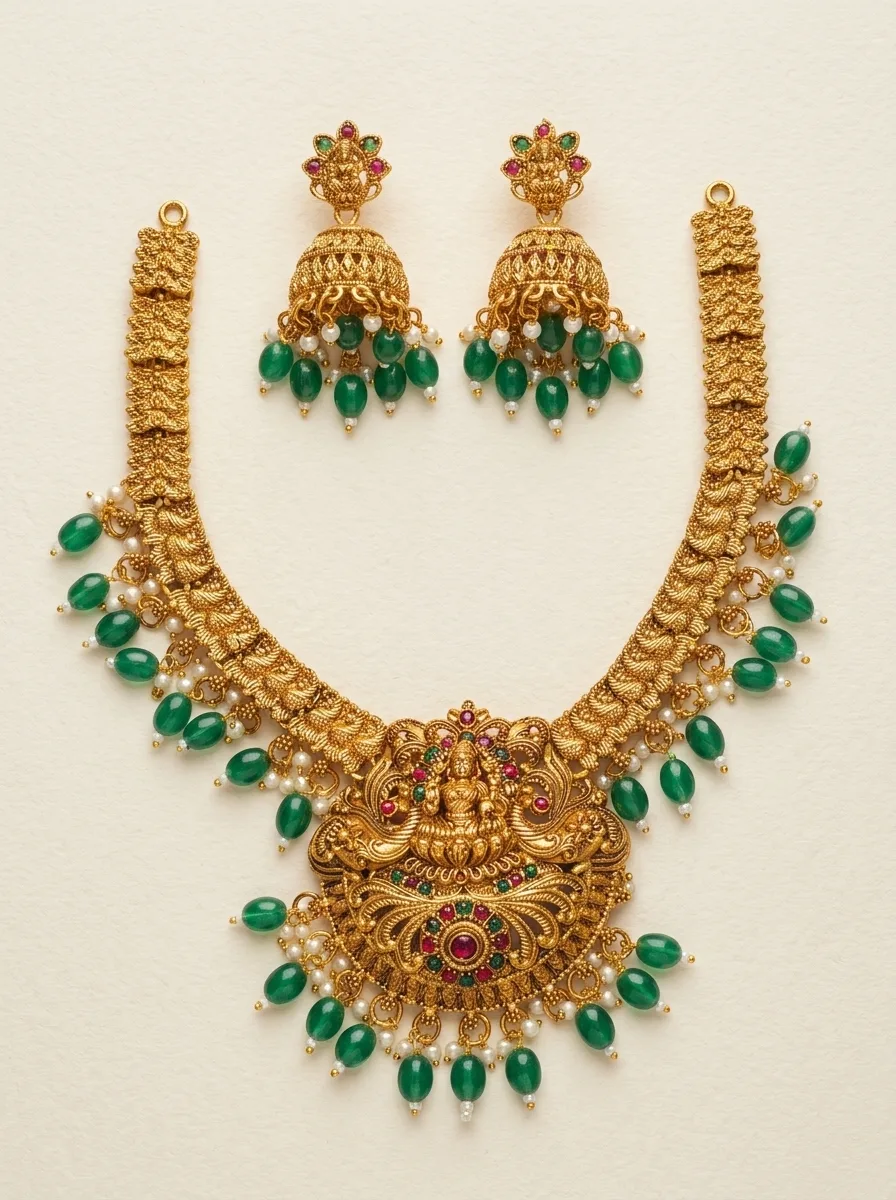
Victorian-style jewellery has become a popular category in Indian imitation jewellery. Inspired by nineteenth-century European designs, it uses a darker gold or blackened finish with dense stone work, often CZ or polki-look stones, creating a rich vintage look.
What defines the style
- Finish: dark antique gold, black rhodium or mixed dark tones
- Stones: dense CZ, polki-look or coloured stones
- Motifs: florals, scrolls, bows and vintage shapes
- Look: heavy, royal and vintage
Pieces that sell
- Bridal chokers and long necklaces
- Chandbalis and drop earrings
- Maang tikkas
- Bangles and bracelets
- Cocktail rings
Who buys Victorian-style
Brides and families looking for something different from traditional Kundan or temple designs, reception and sangeet outfits, and customers who like vintage and royal themes. It sells in metros and increasingly in smaller cities.
Quality checks
| Check | Why |
|---|---|
| Finish consistency | Dark finishes show patches easily |
| Stone setting | Dense stone work must be even |
| Colour contrast | Stones should stand out against dark metal |
| Weight | Dense designs can get heavy |
| Findings | Strong enough for heavy pieces |
Stocking tips
Victorian-style pieces sit between traditional bridal and modern AD. They work as a premium, fashion-forward line. Stock a few strong designs and see how your market responds before going deep.
Finish care
Dark finishes can show wear at high points. Advise customers to avoid rubbing and to store pieces in pouches.
We make Victorian-style pieces to order at 200 pcs per design (400 for earrings and pendants). See AD jewellery wholesale.
Why Victorian-style has grown
Customers see new looks on social media and at celebrity weddings long before those looks reach local counters. Victorian-style pieces gained ground this way: they offered brides something that was neither classic Kundan nor classic temple, while still feeling rich and traditional enough for Indian weddings. For wholesalers, the lesson is that a small, well-chosen trend line can refresh an established range without replacing it.
Briefing a Victorian design
Share references for the finish tone as well as the design, because "Victorian" finishes vary from dark gold to near black. Ask for a physical sample, since dark finishes look different on screen and in hand. Specify stone colours precisely: emerald and ruby tones against dark metal are popular, but the contrast must be right.
What "Victorian" means in the Indian trade
The name refers to the Victorian era in Britain (1837 to 1901), whose jewellery used dark metal settings, many small stones and ornate, romantic designs. In the Indian imitation trade today, "Victorian jewellery" usually means pieces with a dark antique finish, often a brownish-black or dark gold tone, set with many CZ stones and sometimes coloured stones or pearls. It combines a vintage look with sparkle.
How the Victorian finish is made
The piece is plated, then given a controlled dark finish, sometimes called a Victorian polish, that sits deeper and darker than standard antique gold. Raised areas are relieved to leave bright edges. CZ stones are then set, often in large numbers. The contrast between dark metal and bright stones is the defining look.
Quality points specific to Victorian pieces
- The dark tone should be even across the piece and across the batch.
- Stones should be clean: dark finishes show glue marks and dirt more clearly.
- The finish should not rub off onto skin or clothes; a good lacquer prevents this.
- Large Victorian sets are heavy; check hooks and links.
Who buys it
Victorian-style jewellery appeals to customers who find bright gold too flashy but want more sparkle than antique jewellery gives. It suits receptions, engagement functions and evening events, and pairs well with dark and jewel-toned outfits. Many buyers treat it as a middle ground between traditional bridal and modern AD.
Victorian-style for brides and guests
Victorian-style sets work particularly well for reception and engagement looks, where brides want something different from their wedding-day gold. Guests choose them for evening functions. Stock chokers, long necklaces with pendants and matching earrings, and a few statement rings and bangles.
Colour stones in Victorian designs
While white CZ is the classic Victorian partner, emerald green, ruby red and sapphire blue stones in Victorian finishes are popular for colourful outfits. A mix of white and coloured versions of your best designs covers most customers.
Keeping the finish consistent
Because the Victorian tone is darker and more distinctive than antique gold, variations between batches show more clearly. Record the approved tone and compare each batch against it.