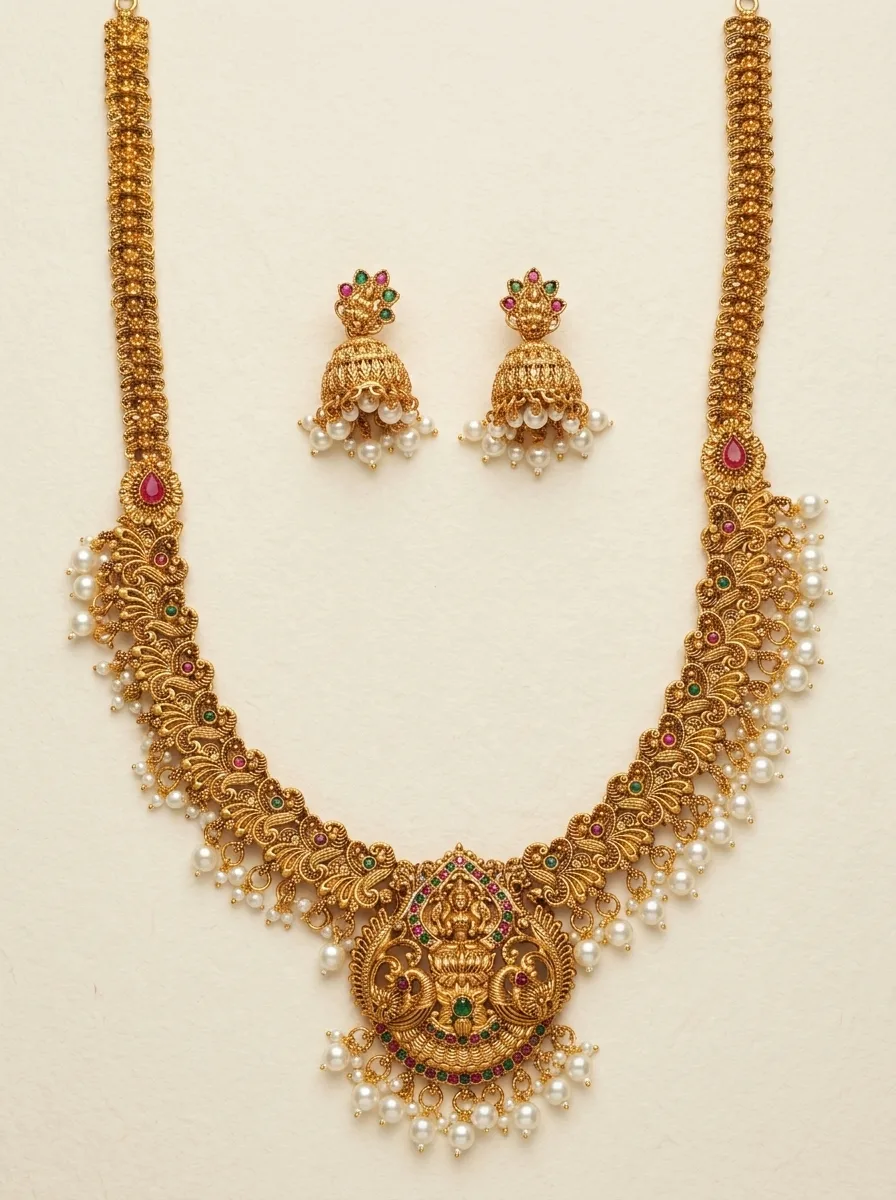
Visakhapatnam (Vizag) is Andhra Pradesh's largest city and a growing commercial centre on the east coast. Its markets serve north coastal Andhra and nearby parts of Odisha.
Markets
Vizag's main shopping districts, including the busy area around Jagadamba Junction, host jewellery showrooms and wholesale traders supplying the region's towns.
What sells best in Visakhapatnam
- Telugu bridal sets: kasulaperu, guttapusalu, Lakshmi haram, vaddanam
- Jhumkas and chandbalis
- Nallapusalu
- AD and fashion jewellery for a young, growing city
- Some Odia-influenced designs near the border
Visakhapatnam's buying calendar
- Sankranti (January).
- Chandanotsavam at the Simhachalam temple (April or May), a major local event.
- Ugadi and Varalakshmi Vratham.
- Dasara and Deepavali.
- Wedding muhurthams.
What retailers ask distributors for
Telugu bridal sets at a range of prices, plus modern pieces for Vizag's younger, urban buyers. Retailers near the Odisha border also ask for some Odia designs.
See Telugu bridal jewellery and temple jewellery wholesale.
A sample first factory order
A Vizag distributor might order: a kasulaperu, a Lakshmi haram, a guttapusalu choker, two jhumka designs, an AD reception set and a nallapusalu design, at MOQ quantities (200+ pcs per heavy design, 400+ per earring or pendant design).
Getting stock from a Mumbai factory to Visakhapatnam
Vizag is connected by rail, road and air. Plan seasonal stock for transit.
Vizag's younger market
As a fast-growing port and naval city with many students and young professionals, Vizag has strong demand for lighter, modern jewellery: AD studs and pendants, oxidised jhumkas and minimal pieces for office wear. Order these steadily through the year, with extra before college festival seasons. Stocking only heavy bridal sets misses this market, and stocking only fashion jewellery misses the steady bridal demand from surrounding towns: retailers who balance the two serve both older and younger customers.
Tribal areas nearby
The hill areas around Araku and the Eastern Ghats have tribal communities with their own traditions. Tribal-inspired oxidised pieces are popular with tourists visiting these areas.
Who buys, and what they want
| Customer | Looks for |
|---|---|
| Telugu brides and families | Temple sets, kasulaperu, guttapusalu, vaddanam |
| Young professionals and students | Light daily wear, oxidised, AD |
| Families from nearby Odisha and north coastal Andhra | Mixed traditional styles |
A twelve-month stocking plan
| Months | Focus |
|---|---|
| January | Sankranti |
| March to April | Ugadi |
| April to May | Chandanotsavam |
| August | Varalakshmi Vratham |
| September to November | Dasara and Deepavali |
Place factory orders about two to three months before each focus period, since most designs are made to order in about a month and transport and approval add more time.
Packing and storage for this climate
This is a humid region for much of the year, and humidity is the main enemy of plated jewellery. Keep stock in sealed zip bags with anti-tarnish strips, add silica gel to every carton, store cartons off the floor and away from outside walls, and rotate stock so older pieces sell first. Advise customers to store jewellery sealed and dry, especially in the monsoon.
When buying direct from a factory makes sense
Retailers with large bridal counters benefit most. Designs that sell in the hundreds each season are worth ordering from a manufacturer at 200 pieces per design (400 for earrings and pendants): the unit price is lower, colour and finish stay consistent, and re-orders match exactly. Keep local wholesalers for fast top-ups and designs you are still testing.
Briefing your supplier for this market
Split your order between temple bridal sets and fashion pieces, and ask for sealed, humidity-proof packing for coastal storage. Share which colours sell best locally so re-orders follow real demand.