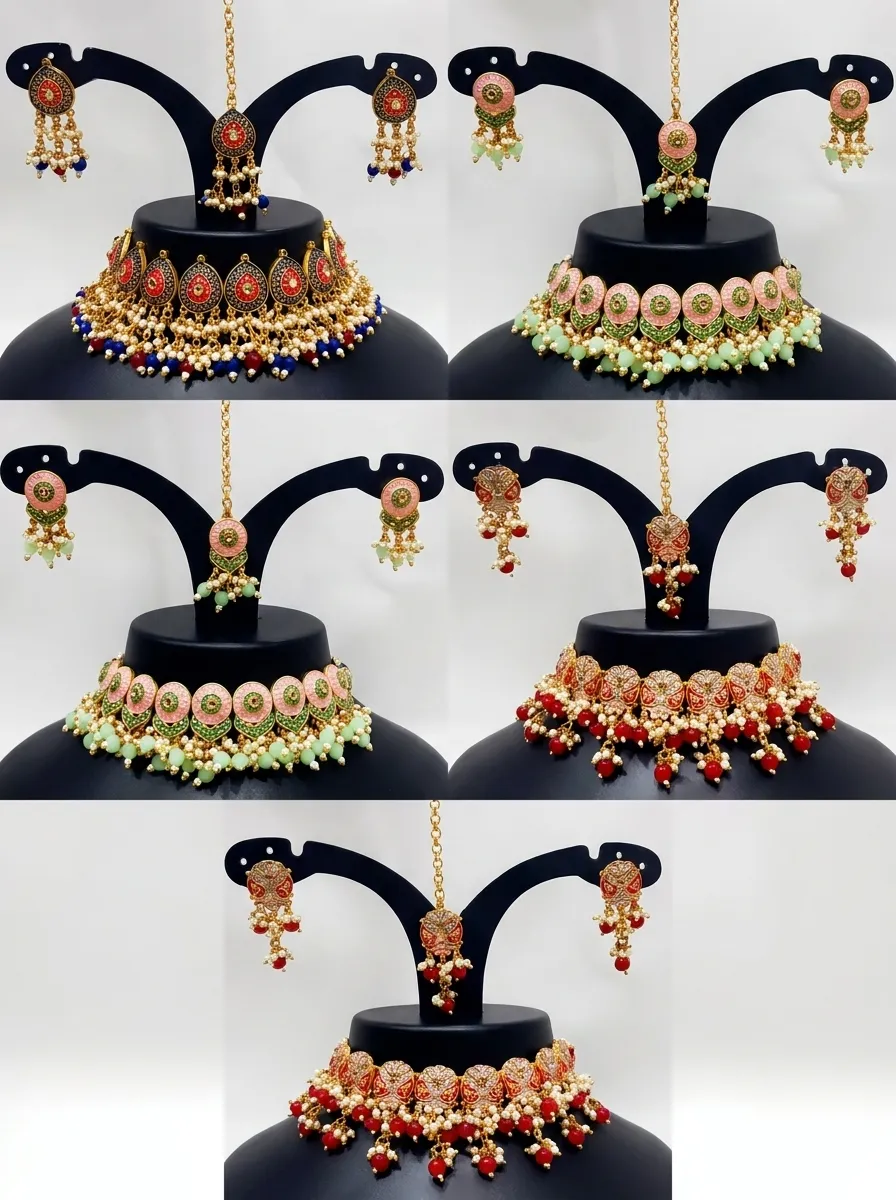
Chandbalis are crescent-moon earrings, from the words "chand" (moon) and "bali" (earring). They frame the face beautifully and are popular in both North and South Indian styles, making them a strong cross-regional category for wholesalers.
Chandbali styles
- Kundan and polki-look chandbalis: foil-backed stones in the crescent, often with pearl drops; North Indian bridal and festive, Hyderabadi and Mughal-inspired.
- Temple chandbalis: antique gold with kemp and Lakshmi or peacock centres; South Indian.
- AD chandbalis: CZ-set crescents in rhodium or rose gold for receptions.
- Oxidised chandbalis: silver-look, lighter, for daily and festive fusion wear.
Sizes that sell
Chandbalis come in roughly three sizes: small (about 3 to 4 cm tall) for daily wear, medium for festivals and guests, and large statement pieces (6 cm and more) for brides. Heavy large chandbalis need a support chain or a strong post and back - hooks alone may not hold the weight. A size ladder in your top designs lets one design serve several occasions and price points.
Quality checks
| Check | Why |
|---|---|
| Symmetry of the crescent | Uneven curves are obvious on the face |
| Hang | The crescent should face forward, not tilt sideways - this depends on where the hook joins the top |
| Matched pairs | Size, stones and drops identical |
| Pearl drops | Evenly spaced, the same length and secure - hanging pearls get pulled |
| Comfortable posts | Thick or rough posts cause returns |
| Back finish | The back is visible when the head turns |
Regional demand, and why chandbalis travel well
Chandbalis sell well in Hyderabad, Delhi NCR, Punjab, Rajasthan, Tamil Nadu and Andhra. Few earring shapes cross regions as easily: the same crescent can carry Kundan stones for a Punjabi bride, kemp and a Lakshmi centre for a Chennai bride, or CZ for a Mumbai reception. Keep two or three core shapes in several finishes and one range serves many markets.
Pairing and add-on sales
Chandbalis are a natural match for chokers, rani haars and maang tikkas. They sell in sets and strongly on their own, especially in bridal colours and pastels: stock them in the stone colours of your main necklace sets, so a customer who buys a necklace without earrings, or already owns one, can add a matching pair.
Briefing a chandbali
State the crescent width, total drop, stone type and colours, drop style (pearls, beads or none) and fastening. Ask for a CAD proof shown next to a face outline, since a chandbali that is too wide overwhelms smaller faces.
Where the chandbali comes from
Chandbali means "moon earring", from its crescent shape. The style is widely associated with the Mughal era and with the jewellery traditions of Hyderabad, and it is now worn across India, from South Indian brides to North Indian wedding guests. Its shape frames the face well, which is part of why it photographs so well at weddings.
Chandbalis online
Chandbalis photograph well from the front, which makes them strong online sellers. Show one photo on a plain background and one worn, so buyers can judge the size.
We manufacture chandbalis in every style at 400 pcs per design (the earring MOQ). See Kundan and Polki wholesale and our jhumka guide.