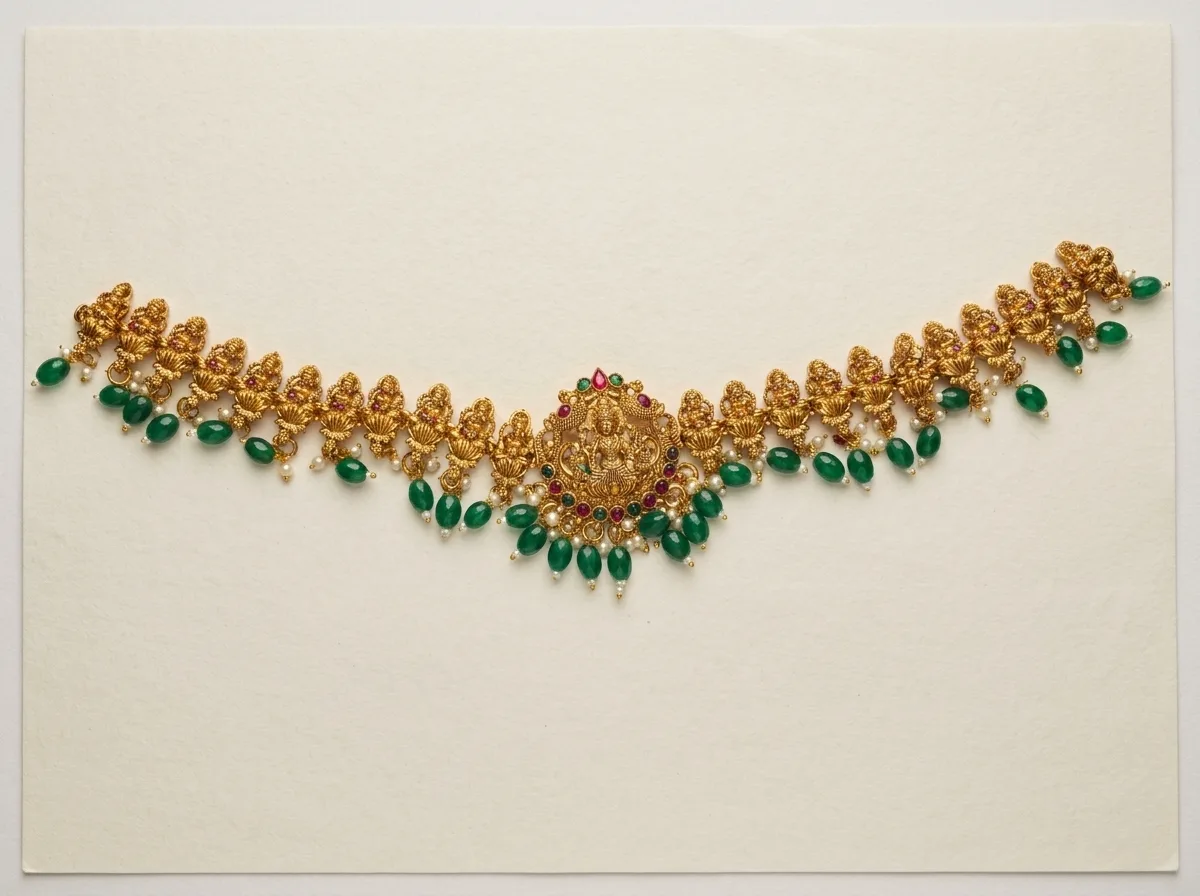
The waist belt is a defining piece of South Indian bridal wear, known as vaddanam in Telugu and oddiyanam in Tamil. North Indian brides wear kamarbandh or waist chains. For wholesalers supplying bridal counters, waist belts are a high-value item where fit decides everything.
Styles
- Temple vaddanam: broad belt with Lakshmi, peacock or elephant motifs, kemp and pearls.
- Kasu vaddanam: coin-style belt.
- Waist chains (kamarbandh): lighter chains with pendants, for North Indian and lehenga looks.
- Kundan kamarbandh: bridal Kundan waist pieces.
- Oxidised waist chains: for festival and dance wear.
Our catalogue includes a range of waist chain designs made to order. See the catalogue.
Sizing and adjustability
Waist belts must fit a range of waists, roughly 24 to 40 inches for adult women, and about 20 to 26 inches for children's dance sets. Most imitation waist belts use:
- a rigid decorative front panel, which should not be too long for a slim waist
- side chains, links or extension chains that adjust the fit and can be added or removed
- a hook or screw closure at the back or side that sits flat
Order a size spread, ask for the segment count so you know how adjustable a belt will be, and ask for extension chains retailers can fit for larger waists.
Weight and comfort
A full bridal waist belt can be heavy. Mazak and hollow castings keep weight down while holding detail, and flexible segments stop the belt digging in when the bride sits. The inside rests on silk and skin for hours, so it should be smooth, with no sharp edges that snag sarees.
Quality checks
| Check | Look for |
|---|---|
| Segment links | Strong and flexible |
| Closure | Secure, flat, easy to fasten |
| Kemp and pearls | Matched, secure |
| Back | Smooth, no sharp edges on fabric |
| Finish | Matches the bridal set |
Stocking and selling
Waist belts carry high value per unit and are often the last piece a bride buys, after the necklaces and earrings are chosen. A retailer with a well-fitting vaddanam that matches the rest of the set completes the sale in the store instead of losing the customer to another shop.
- Stock bridal vaddanams in depth for the South Indian wedding season, and lighter waist chains year-round for festival and dance buyers.
- Offer belts that coordinate with your haarams and chokers, and display them on a mannequin with the matching necklace set so customers picture the complete look.
- Show lighter waist chains for festivals and saree events - many customers think of waist belts only as a bridal item.
We make waist belts and chains at 200 pcs per design (400 for earrings and pendants). See temple jewellery wholesale.
Briefing a waist belt
Give the minimum and maximum waist sizes you want to cover, the belt width at the front, the design of the central panel, and the closure type. Ask for the segment count so you know how adjustable the belt will be.
Waist belt names across regions
| Name | Where |
|---|---|
| Vaddanam | Andhra Pradesh, Telangana |
| Oddiyanam | Tamil Nadu |
| Kamarbandh | North India |
| Kamarpatta | Maharashtra |
| Kardhani / kandora | Various, lighter chain styles |
Knowing the local name helps retailers and search: a customer in Chennai looks for an oddiyanam, in Hyderabad a vaddanam.
Waist belts for dance schools
Dance sets need lighter, secure waist belts that stay in place through movement, often with a padded or fabric-backed fit, for children as young as six or seven. Schools value consistency across a group, so keep the design and stone colours on record and available year after year - it turns one school into a repeat customer.