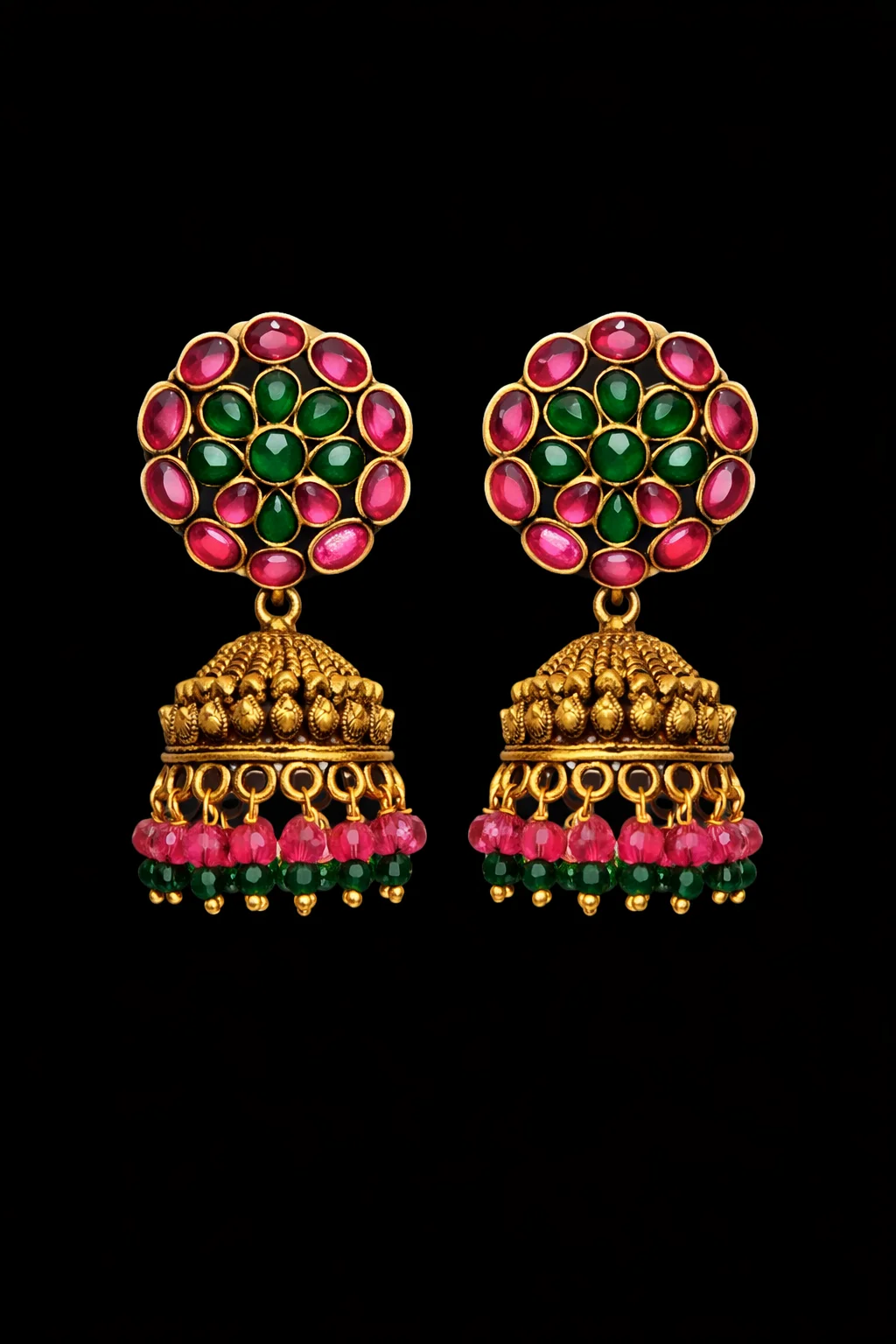
When every wholesaler in a city sells the same necklace, the only thing left to compete on is price. Exclusive designs change that. They give you something competitors cannot offer and protect your margin.
What "exclusive" can mean
- Fully exclusive: made only for you, anywhere.
- Territory exclusive: not sold to other buyers in your city, state or region.
- Time exclusive: exclusive for a season, after which the factory may sell it more widely.
- Private label: your brand on the product and packaging.
Agree which one you mean. "Exclusive" means different things to different people.
How to commission exclusive designs
- Share references: photos, sketches, or a mix of catalogue elements.
- The factory models the design in 3D CAD and sends a proof.
- Approve the proof, then a physical sample.
- Agree exclusivity terms in writing before production.
- Place the bulk order at MOQ.
At Jagruti we model in Rhino with Matrix, so changes before the sample are quick. See our custom design service.
What to agree in writing
- Design code and description
- Type and scope of exclusivity (territory, time)
- Ownership or use of moulds
- Minimum re-order commitments, if any
- What happens if you stop ordering
Is exclusivity worth the cost?
Exclusive designs carry the design and mould costs of a new piece. They make sense when:
- You sell enough to meet MOQ comfortably
- Competitors copy your bestsellers quickly
- You want a brand identity, not just stock
- Retailers ask for something "no one else has"
Mixing exclusive and open designs
Most wholesalers do both: exclusive hero pieces that draw retailers in, and open catalogue designs that fill out the range. Over time, successful exclusives become your signature lines.
Protecting exclusives in the market
Keep your approved samples and CAD proofs as records. Use your own design codes with retailers. Build relationships with retailers so they come to you for the design, not to whoever copies it.
Read about private label manufacturing.
An example of how exclusivity pays off
Picture a distributor in Hyderabad who sells the same Lakshmi haaram as three competitors. Every retailer knows the design and pushes for the lowest rate, so the distributor's margin shrinks each season. Now picture the same distributor with a Guttapusalu choker made only for their territory. Retailers who want it must buy from them, and the conversation moves from price to availability. That shift, repeated across a handful of hero designs, is what exclusivity is really for.
An exclusivity clause, in plain terms
A short written clause covers most of what matters. It should state:
- The designs, by code and approved sample photo.
- The scope: exclusive in which territory (a city, a state, a country) or channel (retail shops, online).
- The period: for example twelve months from the first delivery, renewable if you keep ordering.
- The condition: often a minimum re-order within the period, so the factory is not tied to a buyer who orders once.
- Mould and CAD ownership: whether they belong to you, the factory, or remain with the factory but reserved for you.
- What happens at the end: whether the factory may then sell the design to others.
Keep it simple and fair to both sides. A clause that is too one-sided tends to be ignored in practice.
The cost of exclusivity
Exclusivity usually costs something: a one-time design and mould charge for a custom design, a slightly higher unit price, or a commitment to minimum quantities. In return you get a design your competitors cannot buy from the same source. For hero designs in a busy market, that difference is often worth far more than the extra cost.
Protecting a design legally
Registering a new design under the Designs Act, 2000 gives legal protection in India for 10 years, extendable by 5 more. It is worth considering for a design you expect to sell for several seasons and to be copied. Registration must happen before the design is sold or shown publicly.
Territories that make sense
Exclusivity works best when the territory matches how customers shop. For a distributor, that is usually a state or a group of districts; for a retail chain, the cities where it has stores; for an online brand, the online channel itself. Asking for all-India exclusivity on a design you will only sell in two cities rarely gets agreed, and rarely matters. Ask for the territory you can actually serve, and offer to extend it as your sales grow.
Telling customers a design is exclusive
Exclusivity is also a selling point. Retailers like to know a design will not appear in the shop next door. Mark exclusive designs in your catalogue and tell retailers which designs are yours alone. It helps them sell with confidence, and it helps you justify a slightly higher price for those pieces.