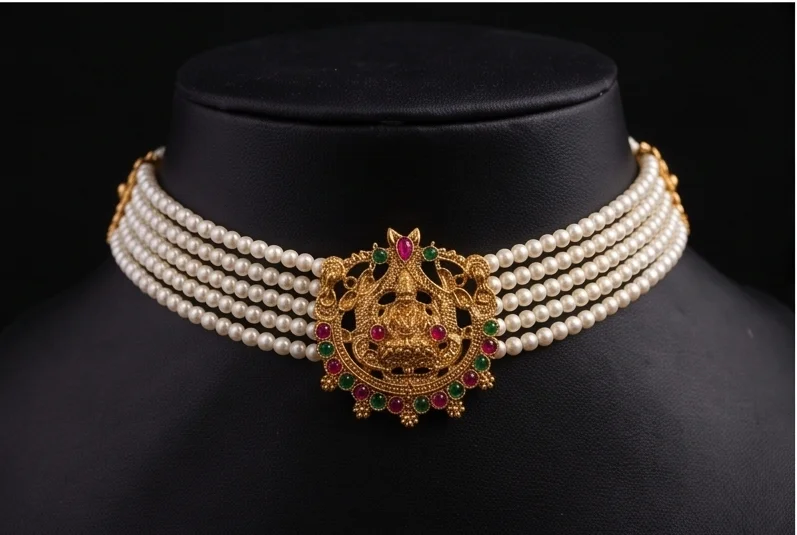
Imitation jewellery sits on the skin for hours, so many importing countries regulate the metals in it. The three that matter are nickel (a common skin allergen), lead and cadmium (toxic metals). Buyers in Europe, the UK, North America and increasingly elsewhere will ask you to confirm your jewellery meets their limits. This guide explains the rules in plain terms, what they mean for zinc alloy and brass jewellery, and how factories and exporters can prepare.
This is a general overview, not legal advice. Rules change, so confirm the current requirement with your buyer.
The key limits at a glance
| Market | Nickel | Lead | Cadmium |
|---|---|---|---|
| EU and UK (REACH) | Release below 0.5 micrograms per sq cm per week for items in prolonged skin contact; 0.2 for piercing posts | Below 0.05% by weight in any part of jewellery | Below 0.01% by weight in metal parts |
| USA (federal) | No general federal limit | 100 ppm total lead in children's products (CPSIA) | Limits in several states |
| California | No specific limit | State jewellery law limits lead in materials; Prop 65 warnings | State limits in jewellery |
| Canada | No specific limit | 90 mg/kg total lead in children's jewellery | 130 mg/kg for small children's jewellery |
Nickel: the one that catches exporters out
The EU and UK rule is about nickel release, how much nickel migrates from the surface onto skin over a week, measured by a standard test (EN 1811). It is not a ban on nickel in the metal.
The practical risk in imitation jewellery is plating. Many plating processes put a nickel layer under the gold, because nickel gives a bright, hard base. If the gold layer is thin or wears, the nickel layer is exposed to skin. For EU and UK orders, ask for nickel-free plating, where a different underlayer (often copper-based) is used, and a thicker or sealed top coat.
Lead and cadmium: it comes down to the alloy
Most imitation jewellery is cast in zinc alloy (Mazak) or brass.
- Good-grade zinc die-casting alloys are made with very low lead content, well under the 0.05% REACH limit, because lead damages the alloy's properties.
- The risk comes from cheap, recycled or unknown scrap alloy, and from some solders, paints and enamel.
- Cadmium was once used in some cheap alloys and solders, which is why the EU and Canada set explicit cadmium limits.
Buying clean alloy from a known supplier is the simplest way to stay well inside these limits. See what Mazak material means and Mazak vs brass.
Children's jewellery is a separate category
The US, Canada and the EU treat jewellery made for children much more strictly: lower limits, mandatory third-party testing in the US, and certificates. If any of your designs are for children, tell your manufacturer and your buyer at the start, because it changes materials and testing.
How to prove compliance
- Material declaration. A signed statement from the manufacturer describing base metal, plating layers and stones, confirming the product is intended to meet the destination's limits.
- Lab test report. From an accredited lab (for example SGS, Intertek, TUV or Bureau Veritas, all of which have labs in India). Typical tests: nickel release by EN 1811, total lead and cadmium content.
- Test per material, not per design. A lab can test the alloy and plating system used across many designs, which keeps cost down. Buyers may still ask for design-specific tests.
Testing costs money, so agree who pays and which tests are needed before production, and put it in the purchase order.
How a nickel release test works
The EU and UK nickel test (EN 1811) places the jewellery, or the part that touches skin, in an artificial sweat solution for a week at body temperature. The lab then measures how much nickel has dissolved and divides by the surface area in contact. If the result is above the limit, allowing for measurement uncertainty, the piece fails.
For plated jewellery, labs may also run a wear simulation first, because the question is what reaches the skin after normal use, not only when the piece is new.
What this means in practice:
- a thick, well-bonded top layer and a nickel-free underlayer both help
- lacquer can reduce release but wears off, so it should not be the only protection
- earring posts and hooks are the highest-risk parts, since they pierce the skin
Lead and cadmium tests
Lead and cadmium are measured as total content by dissolving a sample of each material and analysing it. Because the limit applies to each individual part, a lab tests the metal body, the solder, any paint or enamel and the stones separately where they can be separated.
A practical checklist for exporters
- Tell the factory the destination country before production starts.
- Ask for nickel-free plating for the EU and UK.
- Confirm the base alloy grade and that no lead or cadmium solder is used.
- Keep test reports and declarations with each shipment's documents.
- Re-test when you change alloy supplier or plating process.
At Jagruti
Our pieces are cast mainly in zinc alloy (Mazak) or brass and plated in antique, matte or bright finishes. For export orders, tell us the destination and whether any pieces are for children. We can plan the plating system accordingly and arrange testing through an accredited lab when a buyer needs a report. See our export supply page.