Indian bridal jewellery is not one market. A distributor supplying both Chennai and Chandigarh needs two quite different ranges. This comparison helps national wholesalers and chains plan both.
The core difference, and why it exists
North Indian bridal centres on Kundan, polki-look and jadau, with colourful stones, pearls and meena; key pieces include rani haar, choker, maang tikka, passa, nath, chooda-matching bangles and kaleere (in Punjab). It grew largely from royal court traditions, especially the Rajput and Mughal courts.
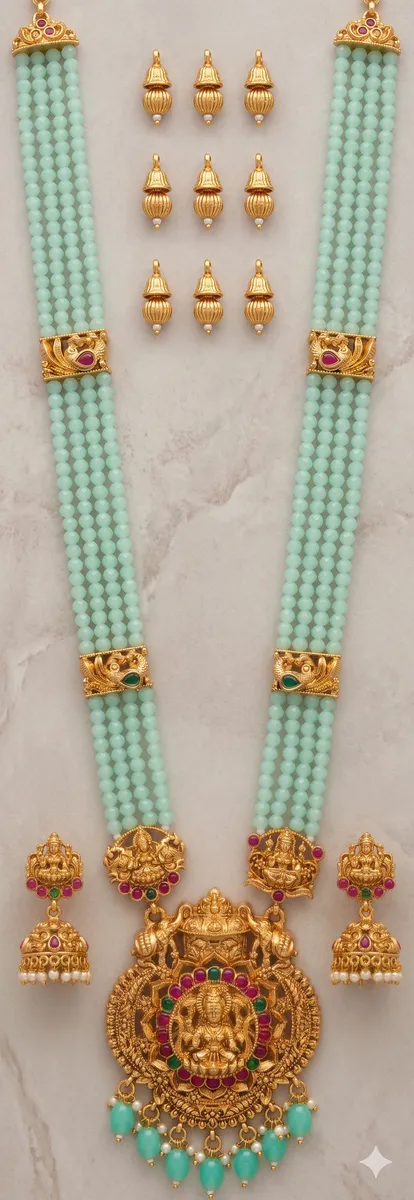
South Indian bridal centres on temple jewellery: antique gold, kemp stones, pearls and deity motifs; key pieces include haaram, choker, kasu mala, waist belt, nethi chutti, vanki and hair ornaments. It grew from temple traditions - designs made to adorn gods, later worn by brides and dancers.
Side by side, piece by piece
| Element | North India | South India |
|---|---|---|
| Stones | Kundan glass, polki-look, CZ, colourful stones | Kemp (ruby and emerald-look), pearls, some CZ |
| Finish | Warm or bright gold, often with meena | Antique gold, darker in Tamil Nadu, brighter in Kerala |
| Motifs | Floral, paisley, Mughal, royal | Lakshmi, peacock, temple, mango, coins |
| Headpieces | Maang tikka, matha patti, passa | Nethi chutti, surya and chandra, jada |
| Waist | Kamarbandh, less common | Oddiyanam or vaddanam, essential |
| Arms | Bajuband | Vanki |
| Outfits | Lehenga | Silk saree |
| Wedding symbol | Mangalsutra, chooda | Thali or mangalsutram |
Pieces that cross over
Jhumkas, chandbalis, chokers, maang tikkas and pearl strings sell in both markets with style changes, and AD sets sell for receptions everywhere. Many modern brides mix styles - a South Indian bride wearing a Kundan choker for the reception, a North Indian bride choosing temple-style jhumkas, temple jewellery with a lehenga or Kundan with a Kanjeevaram - so a few crossover pieces let retailers serve them.
Stocking both
A distributor serving both regions should keep two distinct, labelled ranges rather than one compromise range: Kundan, polki-look and meena for the North and West; temple, kemp and pearl work for the South. Share crossover pieces between them, time orders to each region's wedding and festival calendar, and use each region's names for its pieces - calling a vaddanam a kamarbandh confuses customers.
For example, a Mumbai distributor serving Maharashtra, Gujarat and Karnataka might keep three ranges: Maharashtrian and Gujarati bridal (Kundan, nath, thushi), South Indian temple sets for Karnataka and Mumbai's South Indian community, and a national AD reception range, with jhumkas and chokers offered in both Kundan and temple finishes.
We make both North and South Indian bridal jewellery at 200 pcs per design (400 for earrings and pendants). See bridal jewellery manufacturer, Kundan wholesale and temple wholesale.
Briefs and care differ too
Keep separate briefs: North Indian briefs focus on stone colours and meena, South Indian briefs on motif, kemp colours and antique tone. Kundan and polki pieces are sensitive to moisture behind the stones, while temple pieces need protection for the antique finish, so tailor care cards to each range; both benefit from sealed packing.