The Srinivasa Kalyanam haram shows the celestial wedding of Lord Venkateswara (Srinivasa) and Goddess Padmavathi, a much-loved theme in Andhra Pradesh and Telangana. Brides wear it at weddings, and devotees buy it for festivals and for the Kalyanam celebrations held at temples and in homes. In imitation form, it is a respected, high-value temple piece.
What the design shows
A central panel depicting Srinivasa and Padmavathi, often with garlands and temple arches, set in antique gold with kemp stones, pearl hangings and sometimes green bead strings. Long haaram and short necklace versions both sell.
Who buys it
- Telugu brides and their families
- Buyers for Srinivasa Kalyanam celebrations
- Devotees purchasing for festivals and gifting
- The Telugu diaspora in the US, UK and Gulf
Quality points
| Check | Why |
|---|---|
| Deity faces | Must be clear and respectful |
| Panel symmetry | The two figures should be balanced |
| Kemp colours | Matched across the piece |
| Pearl hangings | Secure and even |
| Weight | Balanced so the panel hangs straight |
Sizes and finishes
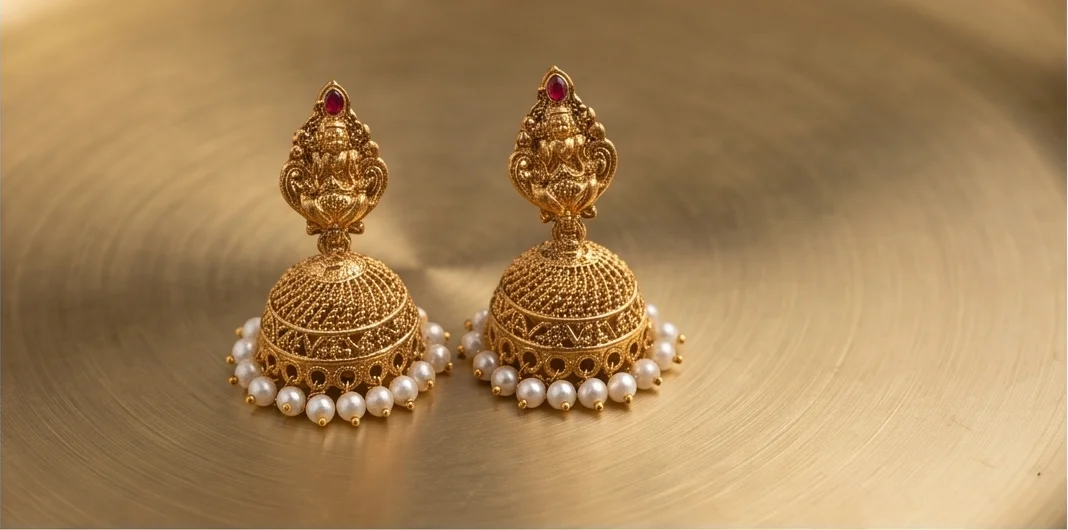
Antique gold is standard. Offer a long bridal haaram and a shorter necklace for guests. Matching jhumkas complete the set.
Stocking tips
Stock around Telugu wedding muhurthams and temple festival seasons. Because the design carries religious meaning, customers look closely at detail; invest in quality rather than the cheapest version.
Ordering in bulk
Share a reference photo, preferred length and stone colours. We model the panel in 3D CAD, send a proof and sample, then run the order at 200 pcs per design (400 for earrings and pendants). See temple jewellery wholesale and Telugu bridal jewellery.
Pairing and set building
Retailers sell Srinivasa Kalyanam harams best as part of a coordinated set: the haram, a matching choker with a smaller Kalyanam or Lakshmi panel, and temple jhumkas with pearl drops. For brides, a matching vaddanam completes the look. Order these pieces together so finish and kemp colours match across the set.
Care and presentation
Because customers buy this piece partly for its devotional meaning, present it well: a box or velvet pouch, and a short care card. Advise keeping it dry and wiping it after wearing to protect the antique finish.
The story the haram tells
Srinivasa Kalyanam is the celestial wedding of Lord Srinivasa (Venkateswara) and Goddess Padmavathi, a story central to the Tirumala and Tirupati tradition. The ritual re-enactment of this wedding is performed at Tirumala and at events organised by devotees and temple bodies in many cities and abroad. Jewellery showing the divine couple, often with attendants, temple arches and floral borders, is treasured by families devoted to Lord Venkateswara, and is especially popular for weddings, housewarmings and religious events.
Why the detail matters
Because the haram tells a sacred story, customers look closely at the figures: the faces of the deities, the posture of the couple, the ornaments and the temple setting. Crisp casting, a warm antique finish that brings out the relief, and well-set stones make the scene readable from a distance and convincing up close. Blurred faces or muddled figures are the most common reason customers reject a design, even at a good price.
Where it sells
Srinivasa Kalyanam harams sell most strongly in Andhra Pradesh and Telangana, and among Telugu families in Chennai, Bengaluru, Hyderabad and the United States, where Kalyanam events are held by community organisations. Wedding seasons and major festivals connected with Lord Venkateswara bring peaks in demand. For diaspora buyers, allow enough time for production and international shipping before the event date.
Presenting it respectfully
Display the haram on a bust or velvet board, clean and well lit, with the story described on a small card. Many customers see it as a devotional piece as much as jewellery, and a respectful presentation is part of what they are buying.