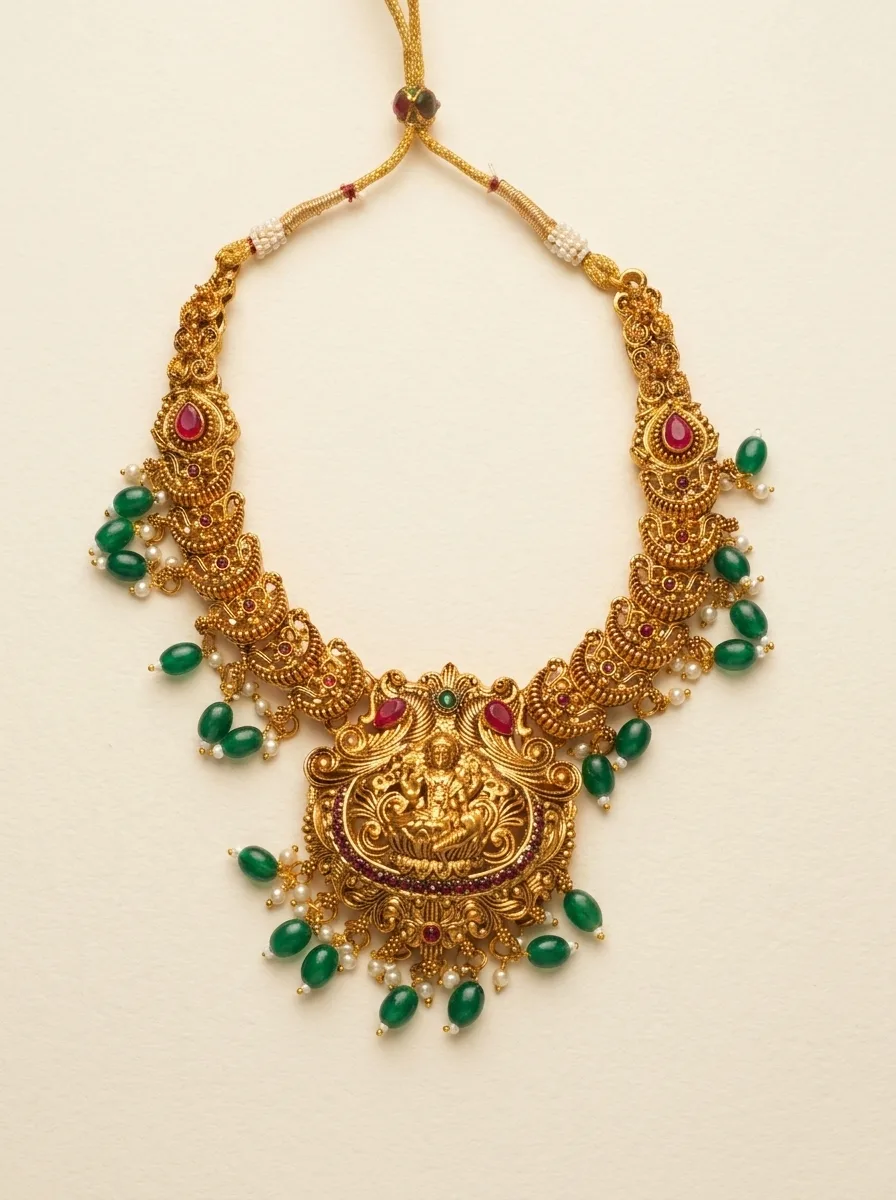
Pearls appear across Indian jewellery: Hyderabadi satlada necklaces, Guttapusalu clusters, Kundan hangings, Maharashtrian thushi and modern layered strands. In imitation jewellery, pearls are usually glass, shell-based or plastic, and the type matters for look, weight and durability.
Types of imitation pearls, and telling grades apart
- Glass pearls: a glass bead dipped repeatedly in a pearlescent coating, giving weight and a cool feel. Better glass pearls have many thin coats and a deep lustre.
- Shell pearls: a core made from shell (often mother-of-pearl powder) with a pearlescent coat. Heavy, good lustre, often premium.
- Plastic (acrylic) pearls: light and cheap, with a single coating. Useful for large, lightweight designs, but the lustre is flatter and the coating can peel.
The pearlescent coating was historically made from fish scales; today it is mostly synthetic.
| Check | Better pearls | Cheaper pearls |
|---|---|---|
| Weight in hand | Heavy, cool (glass, shell) | Light, warm (plastic) |
| Lustre | Deep, reflective | Flat, chalky |
| Coating at the hole | Clean, no peeling | Chipped, flaking |
| Shape | Round and uniform | Irregular |
Pieces that sell
- Multi-strand pearl necklaces (satlada style)
- Pearl chokers with Kundan or polki-look pendants
- Guttapusalu haarams with pearl clusters
- Pearl jhumkas and chandbalis
- Maharashtrian thushi and pearl nath
- Layered pearl sets for receptions
Quality checks
- Even size and colour across strands
- Coating smooth, not peeling at the drill hole
- Strong stringing: nylon or silk thread with knots between pearls, or strong wire, so pearls do not scatter if a string breaks
- Secure knots or crimps
- Clasps that hold multiple strands evenly
In bridal sets, check the pearls as carefully as the stones: cheap pearls with peeling coatings spoil an otherwise good set.
Regional demand
- Hyderabad and Telangana: pearls are central - satlada and layered pearl necklaces, pearl-heavy bridal.
- Andhra: guttapusalu clusters.
- Maharashtra: pearls in naths, thushi-style necklaces and bridal pieces.
- North India: pearl drops on Kundan and polki-look sets, pearl rani haars.
- Across India: layered pearl sets for receptions and western wear, and pearl strings for everyday and gifting.
Stocking tips
- White and cream are the steady sellers; offer white and ivory, since the right shade depends on the outfit, and add coloured pearls (pink, peach, grey, black) in small quantities to test demand.
- Pair pearl strands with Kundan or polki pendants for bridal.
- Keep lighter pearl sets for daily and office wear.
- Store pearls separately from metal pieces to avoid scratches on the coating.
Care advice
Pearl coatings are sensitive to perfume, sweat and cosmetics. Pearls should be the last thing a customer puts on and the first thing removed; wipe them gently after wearing and store them flat, not hanging - sets stored hanging for months can end up with gaps between pearls.
Pearls in bridal combinations
Pearls rarely work alone in Indian bridal jewellery. They soften heavy Kundan, frame kemp stones in temple pieces and give polki-look sets their vintage feel. When briefing a manufacturer, say how pearls should be combined: drops below a choker, clusters in a Guttapusalu haaram, or strands in a satlada. The same pearl can look very different in each role, and the approved sample should show the final combination.
We use pearls in temple, Kundan and bridal designs made to order at 200 pcs per design (400 for earrings and pendants). See temple jewellery wholesale or read the Guttapusalu haaram.