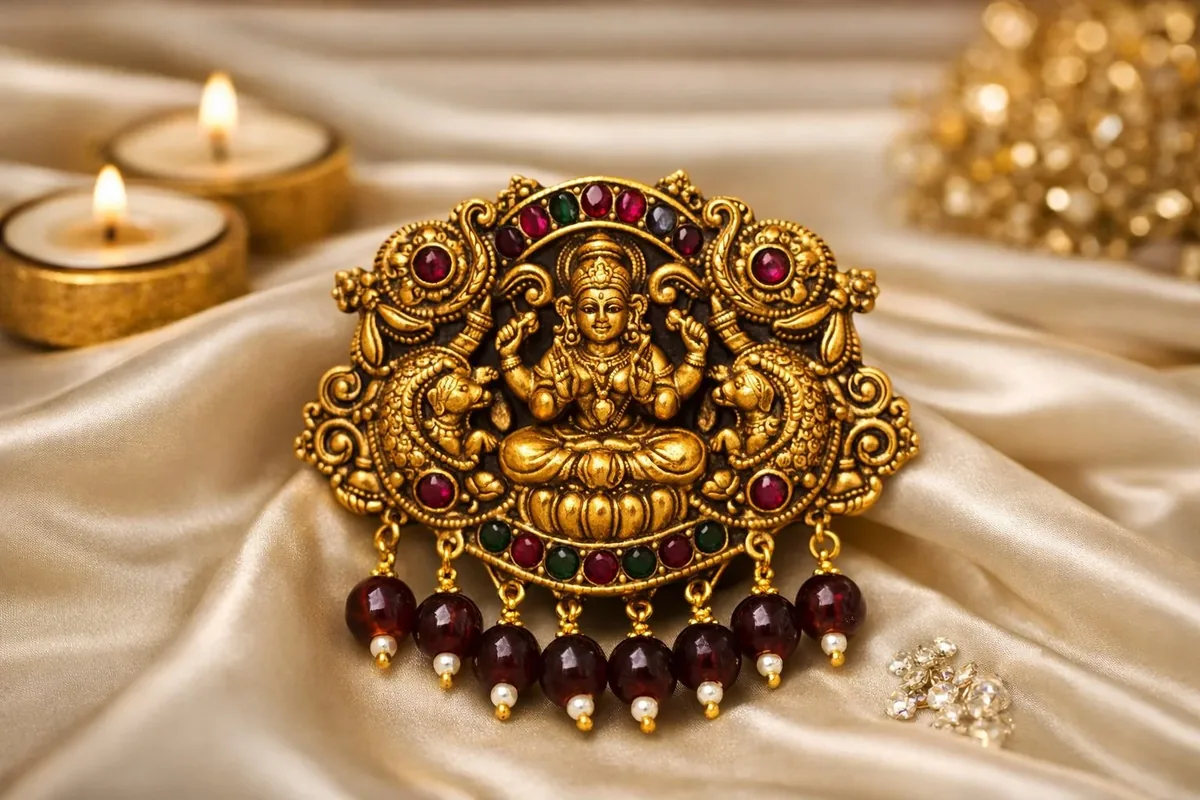
Bihu is Assam's defining festival, celebrated three times a year. Rongali (Bohag) Bihu in spring, the Assamese New Year, is the most joyful, with dance, music and new clothes. Bhogali (Magh) Bihu in January is the harvest feast. For Assamese jewellery, Rongali Bihu is the main peak.
What sells
- Jonbiri and dugdugi pendants
- Gamkharu bangles
- Keru earrings
- Golpata necklaces
- Red-stone traditional sets
- Pieces for Bihu dancers
Bihu dance groups
Bihu dance troupes perform at countless events during the season. Dancers wear traditional jewellery with mekhela chador, and groups buy matching sets, which creates bulk orders from cultural groups and schools. Troupes often include children and adults, so offer sets in different sizes, especially for gamkharu.
Beyond Assam
Assamese communities in Delhi, Kolkata, Bengaluru and abroad celebrate Bihu and buy traditional jewellery. Online sellers can serve them.
We manufacture regional designs at 200 pcs per design (400 for earrings and pendants). See bridal jewellery manufacturer, Assamese jewellery and the Guwahati guide.
Common mistakes
Ordering too late for Rongali Bihu, given the distance from manufacturing hubs. Another mistake is using generic designs; Assamese customers want authentic traditional shapes.
A sample order
A Guwahati distributor might order a jonbiri set, a dugdugi set, a gamkharu design, a keru design and matching sets for dance groups, at MOQ quantities (200+ pcs per heavy design, 400+ per earring or pendant design).
Bhogali and Kati Bihu
Bhogali (Magh) Bihu in January is a feast-centred celebration: jewellery demand is smaller than at Rongali Bihu but still worth planning for. Kati Bihu in autumn is quieter and more solemn, with less jewellery demand.
Ordering remotely
Most Assam distributors order remotely: they share traditional references, approve a sample, and see ready stock on a video call before dispatch by road or air.
How the dates are set
Assam's three Bihus follow the solar calendar. Rongali (Bohag) Bihu begins around 14 April, the Assamese New Year. Kati (Kongali) Bihu falls in mid-October, and Magh (Bhogali) Bihu in mid-January. Because the dates are steady, planning is straightforward: order for Rongali Bihu in January and February.
Why jewellery matters at Bihu
Rongali Bihu celebrates spring and the new year with Bihu dances, songs and feasts. Women and girls dress in mekhela chador, often in muga silk, with traditional Assamese jewellery such as the jonbiri, golpata, lokaparo and gamkharu.
A ready-made assortment
| Piece | Share of the order | Notes |
|---|---|---|
| Jonbiri and dugdugi necklaces | About a third | Traditional |
| Earrings (keru, lokaparo) | About a quarter | Popular |
| Gamkharu and bangles | About a fifth | Festive |
| Dance troupe sets | The rest | Group orders |
Red meena and gold-look are essential.
After the season
After Rongali Bihu, the wedding season continues in Assam, so traditional sets keep selling. Record what sold by design, colour and price point in the final week, while it is fresh. That record is the best guide to next year's order.
Display ideas
Display jewellery with a mekhela chador, grouping jonbiri, golpata, lokaparo and gamkharu as a complete Bihu look.
Briefing your staff
Staff should know the names and meanings of traditional Assamese pieces, and offer group options for dance troupes.
Working with your manufacturer for this season
Confirm designs and quantities by January, so production (about a month for made-to-order designs), approval and transport all fit before your shelves need the stock. Transport from Mumbai to Guwahati takes about a week or more, so allow extra time. For dance troupes, confirm the number of identical sets and sizes early, and ask the factory to keep the design on record for next year. Ask the factory to keep a record of the approved finish and stone colours, so any mid-season re-order matches the first batch.
Care
Red meena and gold-look finishes last longest when pieces are stored sealed and dry between festivals, away from the humidity of the Assam monsoon.