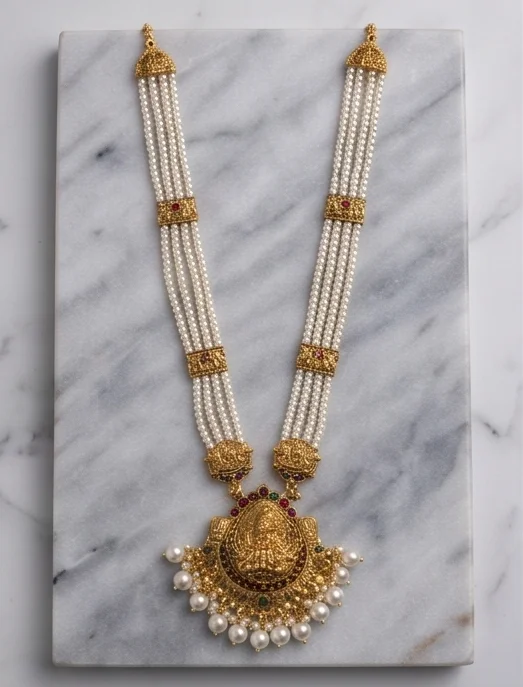
A wholesale jewellery catalogue is the first thing most trade buyers ask for. It is also where a lot of confusion starts, because a catalogue from a manufacturer, a trader and a marketplace seller can look alike and mean very different things.
Three kinds of wholesale catalogues
1. Ready-stock catalogue (trader or wholesaler). Shows pieces in stock now. You can buy smaller quantities, but designs sell out and may never return.
2. Manufacturer's design catalogue. Shows designs the factory has made and can make again. Stock may not be ready; each design is produced to order at the factory's MOQ. This is how our catalogue works.
3. Marketplace catalogue. Online listings with photos, often from several suppliers. Good for browsing, weaker for bulk consistency.
What a good trade catalogue includes
- A design code for each piece, so you can order and re-order without confusion
- Category and style: temple, Kundan, antique, oxidised, AD
- Finish and stone type: antique gold, matte, kemp, CZ, pearl
- Base metal: Mazak (zinc alloy) or brass
- MOQ: per design and whether mixed orders are allowed
- Lead time once the order is confirmed
- Clear note that images are for reference, when products are made to order
Why many manufacturers do not print prices
Factory rates depend on metal prices, plating, stones and quantity, and they change. Printing prices in a catalogue that circulates on WhatsApp for years causes disputes. Most manufacturers, including us, quote per enquiry, with the quantity and finish in front of them.
How to use a catalogue to place a bulk order
- Shortlist designs by code.
- Ask for factory rates at your intended quantity per design.
- Ask which designs can be modified (colour, size, stone) at no extra mould cost.
- Request a sample or 3D proof for new or modified designs.
- Confirm lead time, payment terms and dispatch method before paying the advance.
Catalogues for your own retailers
If you distribute to shops, your retailers want a catalogue too. Build yours from your manufacturer's design codes, add your own codes and prices, and share it in a form they can order from quickly:
- A WhatsApp Business catalogue with one image per design and your code in the title
- A PDF with codes, sizes and your prices, dated on the cover
- For larger accounts, a simple order sheet listing codes and quantities
Keep your manufacturer's code mapped to your own code in a spreadsheet, so a retailer's re-order becomes an exact factory order.
Red flags in a catalogue
- Photos lifted from other brands' sites
- No design codes
- "Real gold" or "916" language on imitation products
- No MOQ or terms stated anywhere
You can browse our factory direct catalogue and send the design codes you like through the enquiry form.
Reading a catalogue photo like a trade buyer
Catalogue photos are taken to sell, so read them carefully:
- Scale. Ask for the size in millimetres or a photo on a hand or neck form. A choker that looks bold in close-up may be small.
- Colour. Studio lighting and phone screens shift gold tones and stone colours. Ask for a daylight photo or video before ordering a new design.
- Finish. Antique, matte and bright gold look different in person. If the finish matters, order a sample.
- Weight. Photos cannot show weight. Ask for it per piece, especially for bridal sets.
- Back side. Ask for a photo of the back. It shows casting quality and how the piece is fitted.
How manufacturers use design codes
A good design code tells you, and the factory, exactly what to make again. Many factories build codes from the category, a running number and the colour, for example a pendant, a necklace or a choker code followed by a colour suffix. Whatever the system, record three things with every order: the design code, the finish and the stone colour. Those three, plus the approved sample photo, are what make a re-order match.
Keeping your catalogue current
A catalogue loses value quickly if it shows designs that are no longer made or finishes that have changed. Ask your manufacturer which designs are active each season, and remove the rest from what you share with retailers. Add a date to every catalogue file you send out, so a retailer ordering from an old PDF knows to check first. For your best sellers, keep the approved sample photo beside the catalogue photo; that is the standard every re-order should match.