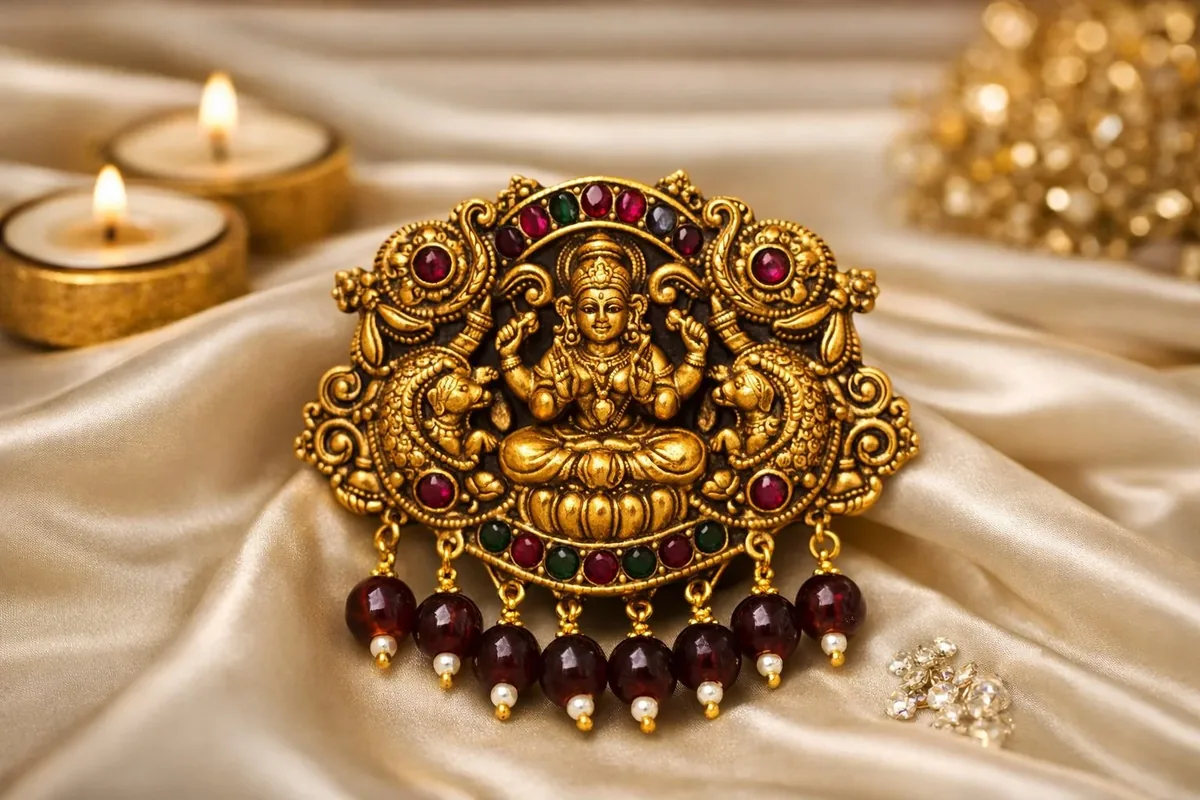
Guwahati is the commercial gateway to India's North East. Its wholesale markets supply retailers across Assam and the neighbouring states, making it a strategic base for jewellery distributors.
Markets
- Fancy Bazaar: the main wholesale market.
- Pan Bazaar and Paltan Bazaar: busy commercial areas.
- Local markets across the city for retail.
What sells best in Assam
- Assamese traditional pieces: jonbiri, dugdugi, gamkharu, keru
- Bengali and Marwari bridal styles for those communities
- Gold-tone bridal sets
- Oxidised and fashion jewellery
- Pieces for Bihu performances
Read Assamese jewellery wholesale.
Assam's buying calendar
- Magh (Bhogali) Bihu (mid-January): harvest feasts.
- Rongali (Bohag) Bihu (mid-April): Assamese New Year and the biggest occasion for traditional jewellery.
- Durga Puja (September or October).
- Kati Bihu (October) and Diwali.
- The wedding season, mainly November to March.
A sample first factory order
A Guwahati distributor might order: a jonbiri set, a dugdugi pendant set, a gamkharu design, a Bengali bridal set, a Marwari bridal set and two oxidised jhumka designs, at MOQ quantities (200+ pcs per heavy design, 400+ per earring or pendant design).
Getting stock from a Mumbai factory to Assam
Guwahati is far from Mumbai. Road transport takes time; air cargo is often worth it for seasonal orders. Plan Bihu and Durga Puja orders well ahead.
Reaching the wider North East
Guwahati distributors supply Meghalaya, Nagaland, Manipur, Mizoram, Tripura and Arunachal Pradesh, each with its own tastes. Fashion and oxidised jewellery travel well across these markets.
See bridal jewellery manufacturer.
Common mistakes distributors make in the North East
The most common mistake is assuming one range fits the whole region. Assamese, Bengali, Marwari, Nepali-speaking and tribal communities each have their own tastes, and the hill states differ from the Brahmaputra valley. Distributors who listen to retailers in each town and adjust their range sell through faster. Another mistake is ordering late for Bihu; distance from manufacturing hubs means stock needs to be ordered well ahead.
Online reach
Many customers in the North East shop online because local choice is limited. Online sellers based in Guwahati with a strong regional range can serve the whole region.
Who buys, and what they want
| Customer | Looks for |
|---|---|
| Assamese brides and families | Jonbiri, golpata, lokaparo, gamkharu in red-meena gold-look |
| Bihu dancers and troupes | Complete traditional sets, often several identical ones |
| Bengali and Marwari communities | Bengali bridal pieces, Kundan-meena |
| Young buyers | Oxidised and fashion pieces |
A twelve-month stocking plan
| Months | Focus |
|---|---|
| January | Magh Bihu |
| March to April | Rongali Bihu stock and sales |
| September to October | Durga Puja and Kati Bihu |
| November to March | Wedding season |
Place factory orders about two to three months before each focus period, since most designs are made to order in about a month and transport and approval add more time.
Packing and storage for this climate
This is a humid region for much of the year, and humidity is the main enemy of plated jewellery. Keep stock in sealed zip bags with anti-tarnish strips, add silica gel to every carton, store cartons off the floor and away from outside walls, and rotate stock so older pieces sell first. Advise customers to store jewellery sealed and dry, especially in the monsoon.
When buying direct from a factory makes sense
Fancy Bazaar wholesalers supplying the wider North-East benefit most. Designs that sell in the hundreds each season are worth ordering from a manufacturer at 200 pieces per design (400 for earrings and pendants): the unit price is lower, colour and finish stay consistent, and re-orders match exactly. Keep local wholesalers for fast top-ups and designs you are still testing.
Briefing your supplier for this market
Send clear photos of the Assamese piece you want and specify red meena colour, so designs look authentic.