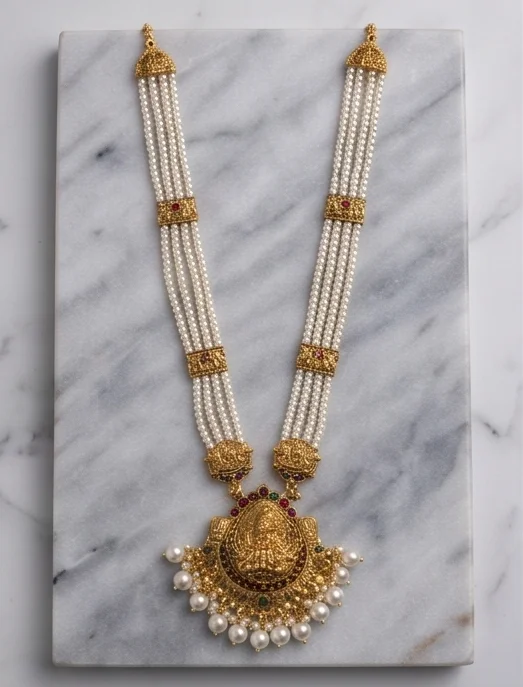
In mid-January, India celebrates the harvest: Pongal in Tamil Nadu, Sankranti in Andhra Pradesh, Telangana and Karnataka, Makar Sankranti and Uttarayan in Gujarat and Maharashtra, and Lohri in Punjab just before. For jewellery retailers, it is a welcome festive boost in the middle of the wedding season.
What sells
- Tamil Nadu (Pongal): temple jhumkas, lighter temple sets, bangles.
- Andhra and Telangana (Sankranti): Lakshmi designs, kasulaperu, guttapusalu, jhumkas; Sankranti is a big family festival.
- Karnataka: kempu jhumkis and festive sets.
- Gujarat (Uttarayan): festive casual jewellery; kite festival is more outdoor.
- Maharashtra: Makar Sankranti haldi-kumkum gatherings, where women wear traditional jewellery and exchange gifts.
Haldi-kumkum gifting
In Maharashtra, women host haldi-kumkum gatherings around Sankranti and give small gifts. Small jewellery pieces and bangles are popular gifts. Distributors can offer gift-packed small pieces for this.
Common mistakes
Forgetting Sankranti in stock planning because it falls in the middle of the wedding season. Retailers in Andhra and Telangana treat Sankranti as a major festival, and families buy jewellery for it separately from weddings.
A sample order
A distributor in Andhra might add to the wedding-season order: a Lakshmi haram, a kasulaperu and two jhumka designs. A Maharashtra distributor might add gift-packed small pieces and bangle sets for haldi-kumkum gatherings.
Lohri in Punjab
Lohri, celebrated just before Makar Sankranti, is a festive occasion in Punjab, especially for newlyweds and families with new babies. Festive Punjabi jewellery sells in the days before.
Why the date is steady
Pongal and Makar Sankranti follow the solar calendar, marking the sun's entry into Capricorn (Makara), so they fall on about 14 or 15 January every year. That makes them easier to plan than lunar festivals: order in October and November, and have stock on shelves by the end of December.
Selling tips
- Stock traditional temple and kemp pieces for Tamil and Telugu customers, and bangles everywhere.
- Keep kid-friendly and light pieces for family celebrations.
We manufacture temple and festive designs at 200 pcs per design (400 for earrings and pendants). See temple jewellery wholesale and Telugu bridal jewellery.
A ready-made assortment
| Piece | Share of the order | Notes |
|---|---|---|
| Temple and kemp sets | About a third | Tamil and Telugu customers |
| Jhumkas and kasu malas | About a quarter | Traditional add-ons |
| Bangles | About a fifth | Festive outfits |
| Small gifts for haldi-kumkum | The rest | Maharashtra and Gujarat |
After the season
Pongal is followed by the Thai wedding month in Tamil Nadu, so bridal demand rises straight after. Record what sold by design, colour and price point in the final week, while it is fresh. That record is the best guide to next year's order.
Selling online for this occasion
Online orders for Sankranti peak in early January; dispatch before the festival week.
Display ideas
Use kolam patterns and sugarcane as festive props, with traditional temple sets and bangles at the front.
Briefing your staff
Staff should suggest complete festive looks and small gift items for haldi-kumkum gatherings, and remind customers that the Thai wedding season follows.
Working with your manufacturer for this season
Confirm designs and quantities by October, so production (about a month for made-to-order designs), approval and transport all fit before your shelves need the stock. Many factories are busy with Diwali orders until November, so place Pongal orders early to secure a production slot. Pair them with your Thai wedding season bridal order. Ask the factory to keep a record of the approved finish and stone colours, so any mid-season re-order matches the first batch.
Care
Advise customers to store festive sets sealed and dry after the festival.