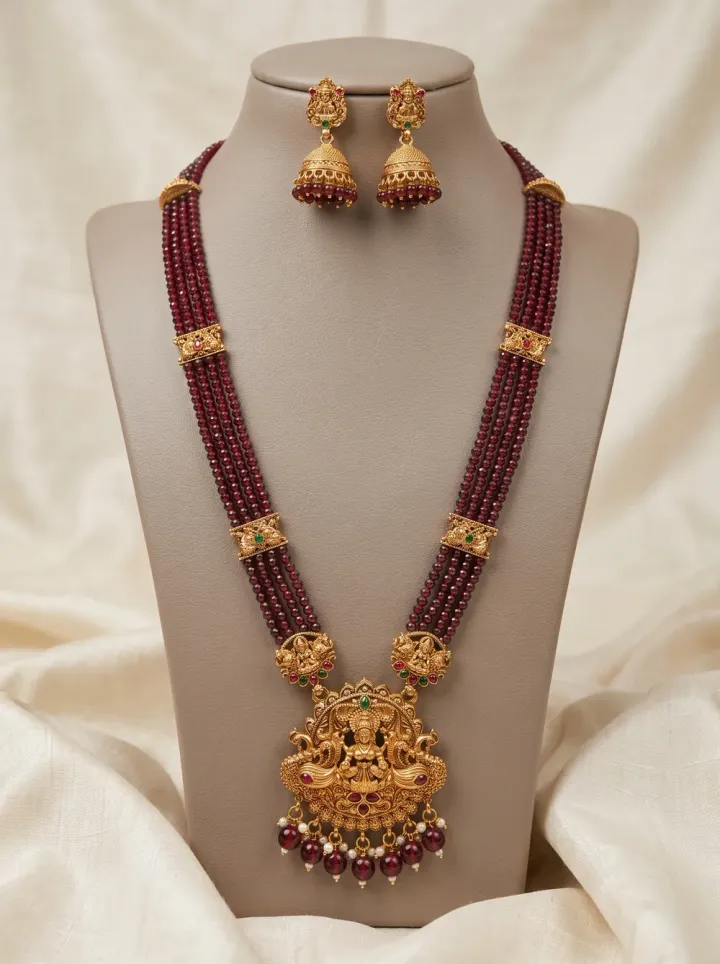
Australia's Indian-born population has grown fast over the past fifteen years and is now one of its largest migrant communities, concentrated in Melbourne, Sydney, Brisbane, Perth and Adelaide. New Zealand has its own growing communities in Auckland and Wellington. Weddings, festivals and a strong culture of dressing up for community events make both countries steady buyers of Indian imitation jewellery.
Who buys
- Indian clothing and jewellery shops in Melbourne's Dandenong and Harris Park and Parramatta in Sydney, and in Auckland's Sandringham and Papatoetoe.
- Bridal and outfit boutiques selling matched jewellery.
- Online stores shipping across Australia and New Zealand.
- Dance schools needing classical dance sets for Bharatanatyam and Kuchipudi students.
What sells
- Bridal sets in kundan, polki-style and antique gold finishes.
- South Indian temple jewellery for Tamil, Telugu and Malayali families, and for classical dance.
- Punjabi and Gujarati festive jewellery: heavy jhumkas, maang tikka, bangles.
- Lightweight sets for community events and Diwali parties.
Duty and tax: Australia
Under the India-Australia Economic Cooperation and Trade Agreement (ECTA), all Indian goods have entered Australia duty-free since 1 January 2026. To claim it, the Australian importer needs a valid ECTA certificate of origin issued in India. See certificate of origin for jewellery exports.
Australia charges 10% GST on imports. For low-value parcels, overseas sellers who register for Australian GST collect it at the point of sale instead, which matters if you sell directly to consumers online.
Duty and tax: New Zealand
The India-New Zealand Free Trade Agreement, signed on 27 April 2026, takes effect on 20 October 2026 and gives all Indian goods zero-duty access to New Zealand. Shipments before that date pay the normal New Zealand tariff. After it, the buyer will need the agreement's origin paperwork to claim zero duty, so check the exact procedure with their customs broker. 15% GST applies on import either way.
Biosecurity and packing
Australia and New Zealand have strict biosecurity checks at the border. Jewellery itself is not a concern, but packing materials can be: avoid untreated wood, straw, plant material or used cartons from food. Use clean new cartons, plastic or paper fill and anti-tarnish pouches. See export packaging.
Seasons
- The southern hemisphere summer (December to February) is a busy wedding and travel period.
- Diwali, Navratri, Onam and Pongal each drive orders from their communities.
- Classical dance recitals and arangetrams run through the year, with demand for temple dance sets.
Shipping and payment
Courier from Mumbai reaches Sydney or Melbourne in about 4 to 8 working days, and Auckland in a similar time. Air cargo suits larger seasonal orders. Advance or part advance is normal with new suppliers. See courier vs air cargo.
How to reach buyers
- Work with shop owners who serve specific communities: a Tamil shop in Melbourne wants different stock from a Punjabi boutique in Brisbane.
- Classical dance teachers are a steady niche: complete dance sets in consistent quality sell year after year.
- Offer clear photographs and design codes for easy re-ordering.
Classical dance sets: a steady niche
Bharatanatyam, Kuchipudi and Mohiniyattam schools are active in every major Australian and New Zealand city. Each year new students need complete dance sets for their first performance, and senior students need sets for their arangetram. What schools and costume suppliers look for:
- Complete kits: long and short necklaces, waist belt (oddiyanam), armlets (vanki), bangles, jhumkas, nethi chutti with surya and chandra pieces, and a jada billai for the hair.
- Consistent colours across a group, usually ruby red with green or pearl accents.
- Comfort and security for movement: secure hooks and adjustable lengths.
- Price points that parents accept for a child who may outgrow the style.
Schools re-order year after year, so a supplier that can repeat the same set reliably keeps the business.
Pricing for Australian and New Zealand retail
Retail prices in both countries have to cover freight, GST, rent and staff costs that are high by Indian standards. A typical shop will price at several times its landed cost. That makes the landed cost per piece the number to manage: order enough pieces per shipment to spread freight and clearance costs, and use the ECTA duty benefit for Australia, and the new FTA for New Zealand from 20 October 2026.
Working with Jagruti
We make temple, dance, bridal and antique imitation jewellery to order in Mumbai, from 200 pieces per design (400 for earrings and pendants). For Australia we can prepare invoices ready for the ECTA certificate of origin. See our classical dance jewellery page and the export supply page.