Jaipur has one of India's richest jewellery traditions: Kundan-Meena, gemstone cutting, silver and lac bangles. Its imitation jewellery trade builds on that heritage, and many buyers visit to source Rajasthani styles and fashion jewellery.
Main markets
- Johari Bazaar: the famous jewellery market in the old city.
- Bapu Bazaar: fashion, textiles and accessories.
- Tripolia Bazaar and nearby lanes: including areas known for lac bangles.
- Workshops across the old city for Meena, Kundan and stone work.
What Jaipur is known for
- Kundan-Meena jewellery
- Lac bangles with stones
- Silver and silver-look tribal jewellery
- Gemstone-inspired fashion pieces
- Rajasthani bridal pieces: borla, aad, bajuband, hathphool
Who sources from Jaipur
Retailers across Rajasthan, Marwari community stores nationwide, exporters looking for handcrafted fashion jewellery, and boutiques selling ethnic wear.
Jaipur's buying calendar
- Gangaur (March or April) and Teej (July or August): two of Rajasthan's most important festivals for women, with strong demand for traditional jewellery.
- Karva Chauth, Diwali and Akshaya Tritiya.
- Wedding seasons in winter and spring.
- Tourist season (October to March), when visitors buy Rajasthani jewellery as souvenirs.
Buying tips
- Ask about Meena quality on the reverse side.
- Check lac bangles for stone security and even colour.
- Confirm GST invoicing.
- Test small orders before committing to large ones.
See Rajasthani jewellery wholesale and Meenakari wholesale.
What Jaipur buyers ask Mumbai factories for
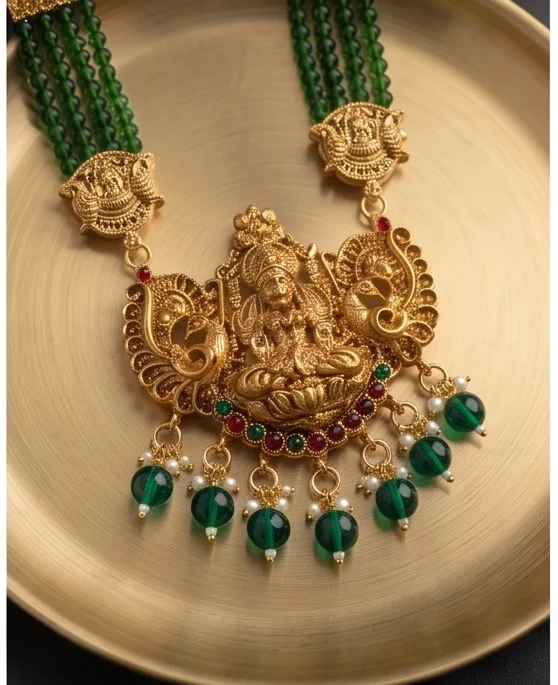
Jaipur's own strengths are Meena, lac and gemstone-look pieces. Jaipur retailers and distributors often come to Mumbai for what their city makes less of: South Indian temple sets for customers who want them, AD bridal sets, antique bridal jewellery and custom Kundan designs at larger volumes with consistent re-orders. A Mumbai manufacturer can also produce Rajasthani styles to your reference. Combining the two cities' strengths gives a Jaipur store a broader range than competitors.
Tourism and export
Jaipur's tourist trade creates demand for gift-sized pieces: earrings, pendants and bangles in Rajasthani styles, well packaged. Exporters based in Jaipur also buy imitation jewellery for international fashion retailers. For both, consistency across units and good packing matter as much as design.
Getting stock from a Mumbai factory to Jaipur
Plan bridal and Teej orders with transit time included; air cargo is available for urgent ones.
- Road transport from Mumbai to Jaipur typically takes about 3 to 4 days, depending on the transporter and season.
- Courier for samples and urgent top-ups usually takes 2 to 4 days.
- Goods moving between states carry IGST at 3% on imitation jewellery, which a GST-registered buyer claims back as input credit.
- Consignments above Rs 50,000 moving by road generally need an e-way bill, generated by the supplier, buyer or transporter.
Plan orders backwards from your shelf date: factory lead time (about a month for made-to-order designs) plus transport plus a few days for approval and payment.
What sells best in Jaipur
- Kundan-meena sets, borlas and aads.
- Lac and stone-set bangles, a Jaipur specialty.
- Tourist pieces: colourful earrings, bangles and oxidised jewellery.
- Bridal sets for Rajasthani and Marwari weddings.
Local market or factory?
| What | Where to source | Why |
|---|---|---|
| Kundan-meena and Rajasthani styles | Local makers or manufacturers | Regional expertise |
| Temple, AD and other styles | Mumbai manufacturers | Wider range |
| Tourist souvenirs | Local ready-stock suppliers | Small quantities, many designs |
For designs that sell in hundreds each season, a factory order at 200 pieces per design (400 for earrings and pendants) gives a lower unit price, consistent colour and finish, and exact re-orders. Local wholesalers remain the right source for quick top-ups and small quantities.
Tips for retailers in Jaipur
- Keep tourist-friendly pieces in small, gift-ready packaging near the entrance.
- Stock Gangaur and Teej sets well before each festival.
- Show Kundan-meena pieces with their colourful reverse visible.