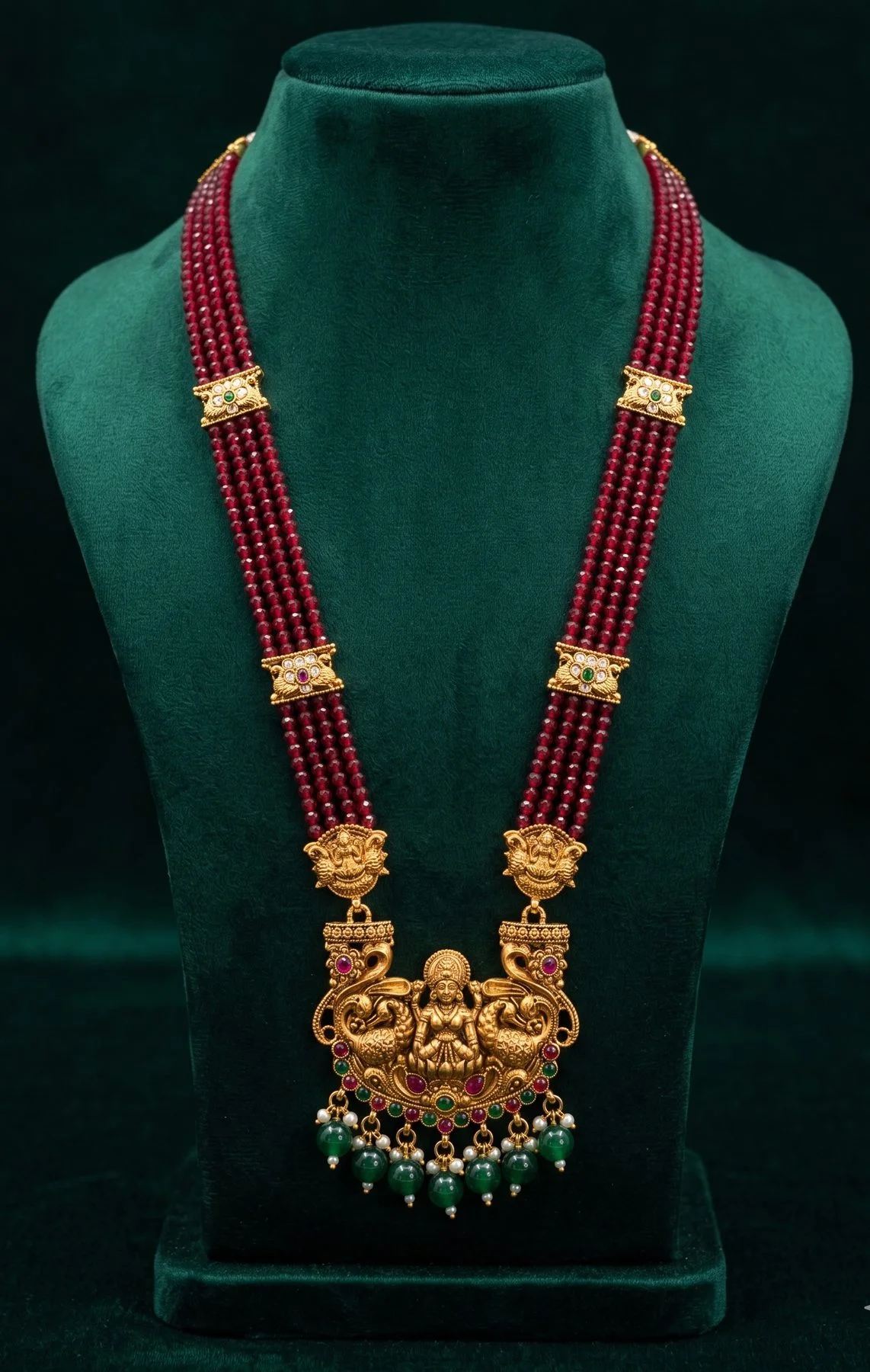
Meenakari is the art of decorating metal with coloured enamel. It is strongly associated with Jaipur and Rajasthan, and it often appears on the reverse of Kundan pieces or as the main colour work on bangles, jhumkas and pendants.
Types of Meenakari pieces
- Kundan-Meena: Kundan stones on the front, Meena work on the back.
- Full Meena: coloured enamel as the main decoration.
- Meena bangles and kadas: bright colours for festivals and weddings.
- Meena jhumkas: colourful bells for festive wear.
- Pink Meena: soft pink enamel, popular for bridal and gifting.
Colours that sell
Traditional Jaipur colours - deep red, green, white and blue - remain steady sellers. Pink and green meena is popular in Rajasthani and Gujarati designs, and pink meena sells in metros for gifting. Pastel meena in mint, pink and peach suits younger buyers and modern bridal outfits. Colour matching is a selling point: pink meena for pastel lehengas, red and green for traditional bridal.
Quality checks on samples
| Check | Look for |
|---|---|
| Colour fill | Each recess filled evenly, without gaps or overflow onto the metal |
| Edges | Clean lines between colours and between colour and metal |
| Surface | Smooth and glossy, no bubbles or dust |
| Durability | Press a fingernail gently near an edge; good cold enamel does not lift, and edges are not chipped |
| Consistency | The same shade across the batch and across re-orders |
| Reverse finish | Neat on Kundan-meena pieces |
Regional demand and festivals
Rajasthan, Gujarat, Punjab, Delhi and Uttar Pradesh buy meena pieces for weddings, Navratri, Teej, Karva Chauth and Diwali. Bright colours suit festive outfits, pastel meena suits daytime functions. Plan meena stock ahead of these festivals, since colour work adds time to production.
Using meena in a range
Meena works both as the main feature (jhumkas, bangles and pendants) and as an accent on the reverse of Kundan and polki-look sets. A small line - bangles and jhumkas in three colourways - adds colour to a range dominated by gold tones, lets retailers match customers' outfits and raises the chance of an extra sale. Use meena backs to add value to your Kundan range. Enamel can chip if pieces knock together, so individual packing matters.
We make Kundan-meena and meena pieces at 200 pcs per design (400 for earrings and pendants). See Kundan and Polki wholesale.
Hot enamel and cold enamel
In fine jewellery, meenakari is vitreous enamel: powdered glass fused onto metal in a kiln at high temperature. Jaipur is its most famous centre, with deep reds, greens, blues and whites fired onto gold.
Imitation jewellery mostly uses cold enamel: coloured resins or lacquers applied into recesses in the casting and cured without a kiln. It gives similar colour at far lower cost and suits base metals that could not survive kiln temperatures. It is less hard than fired enamel, so it can chip if knocked, and colours should be protected by a clear top coat. Ask your manufacturer how colour is applied and cured, and look closely at colour edges on samples.
Briefing Meena work
Give exact colour references, ideally photos or colour swatches, and say where colour should appear: front, back or both.
Care for meena pieces
Cold enamel can chip if knocked. Advise customers to store meena pieces separately in soft pouches, keep them away from water and perfume, and avoid dropping them on hard floors.