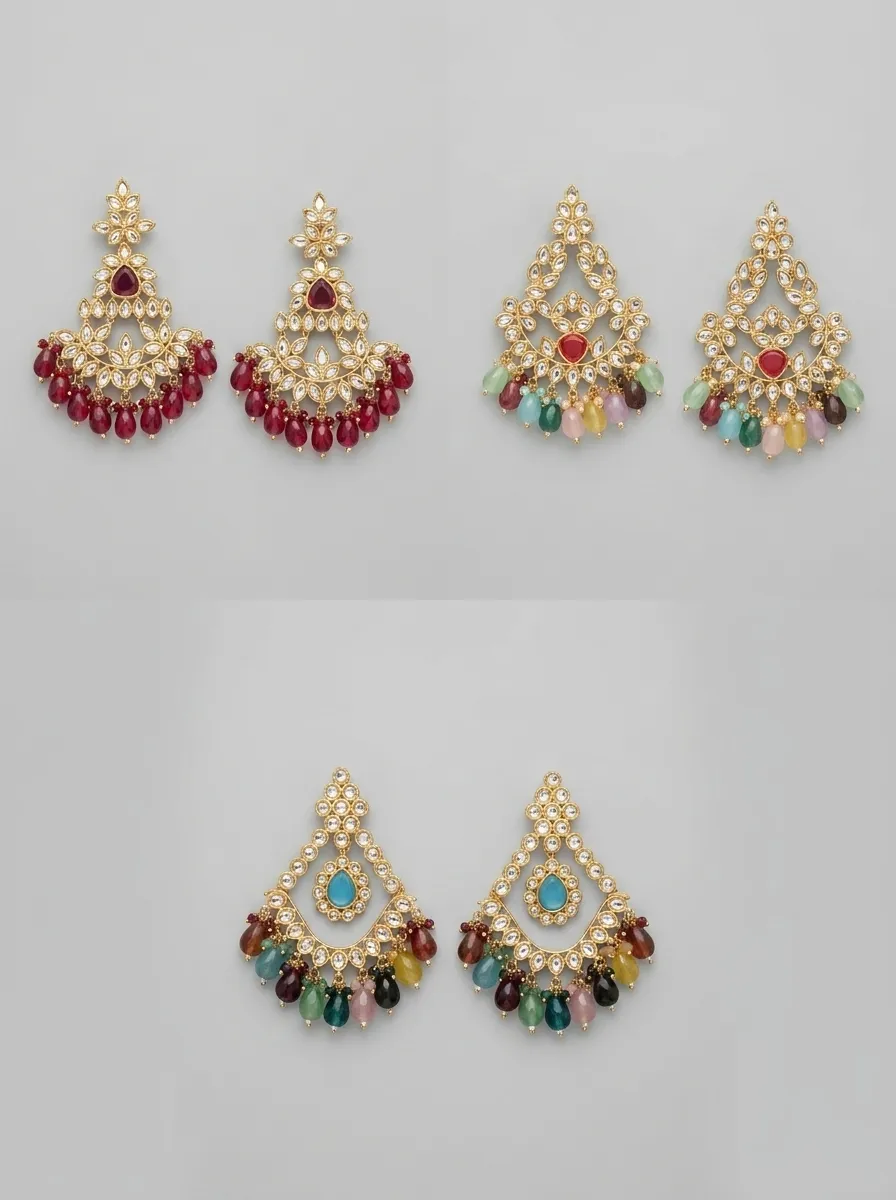
Kashmiri jewellery includes some of India's most distinctive pieces. The best known is the dejhoor, a pair of ornaments hung from the ears on a thread or chain, worn by married Kashmiri Pandit women. Kashmiri jewellery also includes ornate jhumkas, chandbalis and silver-look pieces inspired by the valley's crafts.
The dejhoor and its meaning
The dejhoor (also written dejharoo) is a pair of long, usually hexagonal gold pendants hung from the ears on a chain or thread, the atahor, passing through the upper ear. It is received at marriage and worn by married Kashmiri Pandit women as a sign of marriage, much as a mangalsutra is elsewhere; at the wedding, the bride's ears are pierced at the top for the atahor.
Imitation versions sell for daily wear, for travel and to the many Kashmiri Pandit families living outside Kashmir who want a lighter or more affordable version. Because of its meaning, make and describe it respectfully, following the traditional form - selling it as a fashion earring to customers from the community is a mistake they notice.
Other pieces
- Jhumkas and chandbalis in Kashmiri styles, often with enamel and small stones
- Kan-dur or other ear ornaments
- Silver-look necklaces with enamel and stones
- Bangles and cuffs
- Bridal sets combining Kundan and enamel, with tikka and hair ornaments
Who buys
Kashmiri families in Jammu and Kashmir, Kashmiri Pandit communities across India (especially in Delhi NCR and Jammu), and the diaspora. Fashion buyers also like Kashmiri-inspired jhumkas and chandbalis.
Stocking tips
Kashmiri families in Jammu and Kashmir, Kashmiri Pandit communities across India (especially Delhi NCR and Jammu) and the diaspora buy the traditional pieces; fashion buyers across India buy Kashmiri-inspired jhumkas and chandbalis. The two groups buy very differently, so present them separately:
- Keep a small, carefully chosen range of dejhoors in the traditional hexagonal style, with strong chains - they are worn daily - and only with good knowledge of the customer base.
- Keep a broader range of Kashmiri-style jhumkas, enamelled earrings and silver-look pieces for fashion customers. They sell especially in the North Indian winter, paired with shawls, pherans and winter kurtis, and in wedding seasons.
- Diaspora exporters may include dejhoors for community events and weddings; work closely with community retailers to understand exactly what is expected. Community buyers outside Kashmir often shop online, where clear photos of the atahor chain help.
Quality points
Traditional proportions, secure chains, balanced weight, clean enamel if used.
We make regional pieces to your reference at 200 pcs per design (400 for earrings and pendants). See bridal jewellery manufacturer and regional Indian jewellery styles.
Kashmiri-inspired fashion jewellery
Kashmiri-style jhumkas, enamelled earrings and silver-look pieces have become popular fashion items across India, often sold as "Kashmiri jhumkas". They carry the flavour of Kashmiri craft without replicating items with specific cultural significance, and pair well with pherans, winter wear and kurtis.
Briefing Kashmiri pieces
Share clear references and explain the use: traditional (such as dejhoor for married women) or fashion (such as inspired jhumkas). For traditional items, follow the established form closely. For fashion pieces, specify finish, size and any enamel or stone colours.
Packaging
Delicate chains and ear pieces need careful packing so they do not tangle in transit: individual pouches with a card insert, and dejhoors in small boxes with the chain coiled neatly, since customers often buy them as gifts for brides.