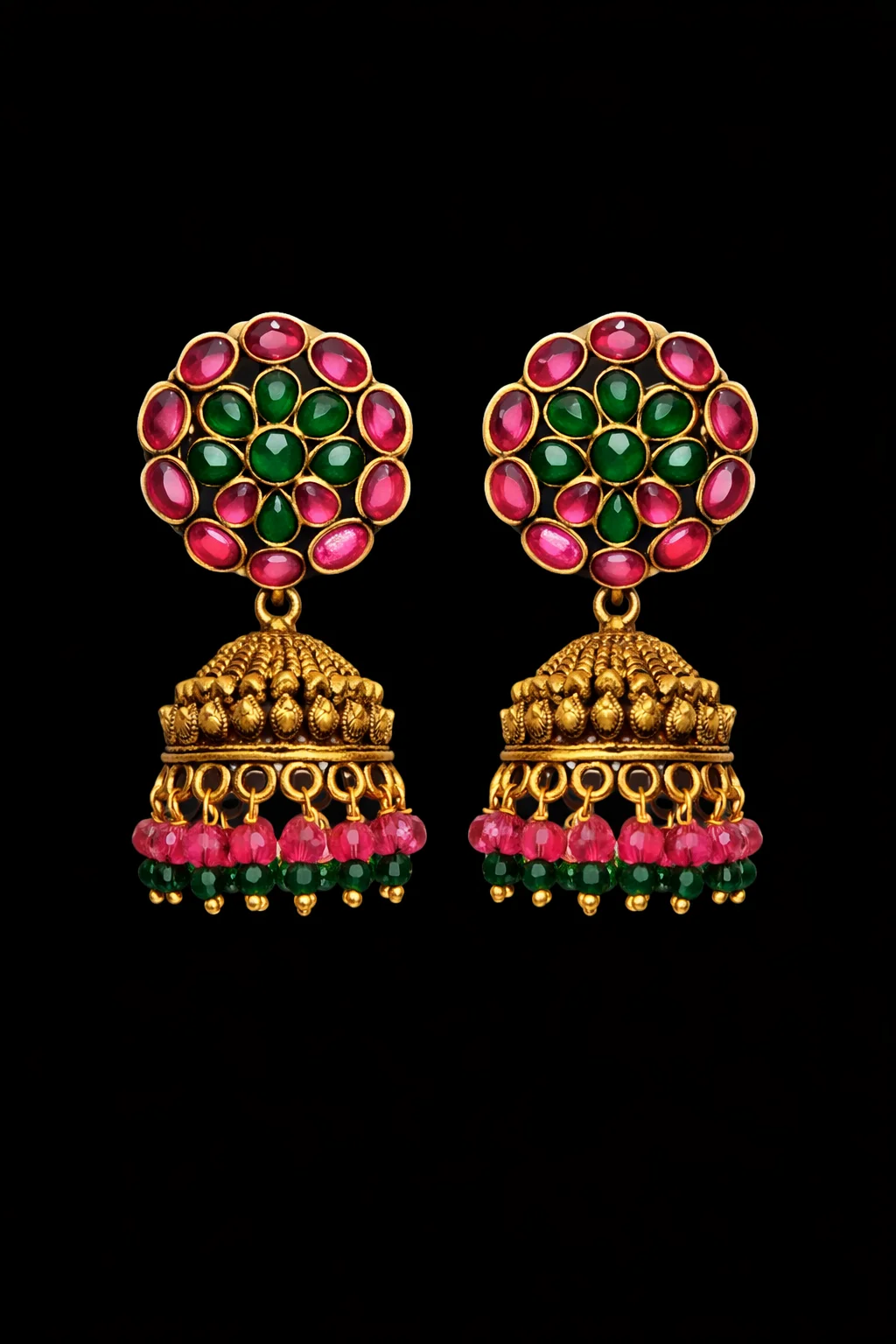
Gudi Padwa marks the Marathi New Year in spring. Families raise the gudi, prepare festive food and dress in traditional clothes. In many cities, women in nauvari sarees ride motorcycles in colourful shobha yatras (processions), wearing naths and traditional jewellery. It has become a major moment for Maharashtrian jewellery.
What sells
- Naths, especially clip-on
- Thushis
- Kolhapuri saaj
- Bugadi (upper ear ornaments)
- Green bangles with gold-tone patlis
- Chandrakor (crescent) bindi-style ornaments
The shobha yatra look
The nauvari saree, a nath, thushi and saaj make up the classic look. Groups often coordinate, buying matching jewellery. That creates bulk demand from groups and societies.
Ugadi overlap
Ugadi, the Telugu and Kannada New Year, falls on the same day. In Karnataka, Andhra Pradesh and Telangana, it brings its own festive jewellery demand.
Timeline
Gudi Padwa falls in spring (Chaitra). Stock should arrive a few weeks before. Spring also brings weddings; plan both together.
Stocking plan
- Naths in depth, clip-on and pierced
- Thushis in adjustable designs
- Saaj and bugadi
- Bangle sets
We manufacture Maharashtrian pieces at 200 pcs per design (400 for earrings and pendants). See bridal jewellery manufacturer and Maharashtrian jewellery.
Common mistakes
Stocking only a few nath designs when shobha yatra groups want matching sets for many women. Another is forgetting bugadi and other smaller Maharashtrian pieces that complete the look.
A sample order
A Maharashtra distributor might order two nath designs, a thushi, a kolhapuri saaj, a bugadi design and bangle sets, at MOQ quantities (200+ pcs per heavy design, 400+ per earring or pendant design), arriving weeks before Gudi Padwa.
Group orders
Housing societies, women's groups and cultural organisations often order matching jewellery for processions. Distributors can offer group packs.
Timing with the spring wedding season
Gudi Padwa sits close to the start of spring weddings in Maharashtra. Distributors can place one combined order covering festive Maharashtrian pieces and spring bridal sets, securing production slots once and receiving stock in two batches.
How the date is set, and why it moves
Gudi Padwa falls on the first day of the bright half of the month of Chaitra, usually in March or April, and marks the Maharashtrian New Year. Ugadi in Karnataka, Andhra Pradesh and Telangana falls on the same day. Because the festival follows the lunar (or luni-solar) calendar, its date on the Gregorian calendar shifts from year to year. Check the date for the coming year as soon as the new panchang or calendar is published, and plan factory orders backwards from it rather than from last year's date.
Why jewellery matters on Gudi Padwa
Families raise a gudi, a decorated pole with a silk cloth and a pot, outside their homes, and many join shobha yatras, processions in traditional dress. Women wear nauvari sarees with naths, thushis and traditional Maharashtrian jewellery, often in groups with matching looks. Gudi Padwa is also considered an auspicious day for new purchases, including jewellery.
Selling tips
- Stock naths, thushis and traditional sets by early March.
- Offer group orders for shobha yatra groups wanting matching looks.
- Keep Ugadi pieces for Kannada and Telugu customers in mixed cities.
A ready-made assortment
| Piece | Share of the order | Notes |
|---|---|---|
| Naths | About a third | Essential for the look |
| Thushis and chokers | About a quarter | Traditional |
| Saaj and necklace sets | About a fifth | Fuller looks |
| Bangles and earrings | The rest | Add-ons |
Offer group discounts for shobha yatra groups.
After the season
The spring wedding season follows, so traditional bridal sets continue to sell. Record what sold by design, colour and price point in the final week, while it is fresh. That record is the best guide to next year's order.
Selling online for this occasion
Nath sizes and styles vary; clear photos and measurements reduce returns online.
Display ideas
Display a gudi as a prop with traditional nauvari looks, naths and thushis.
Briefing your staff
Staff should offer group options for shobha yatra groups and point out bridal sets for the spring wedding season.
Working with your manufacturer for this season
Confirm designs and quantities by December or January, so production (about a month for made-to-order designs), approval and transport all fit before your shelves need the stock. Combine Gudi Padwa stock with your spring wedding order. Ask the factory to keep a record of the approved finish and stone colours, so any mid-season re-order matches the first batch.