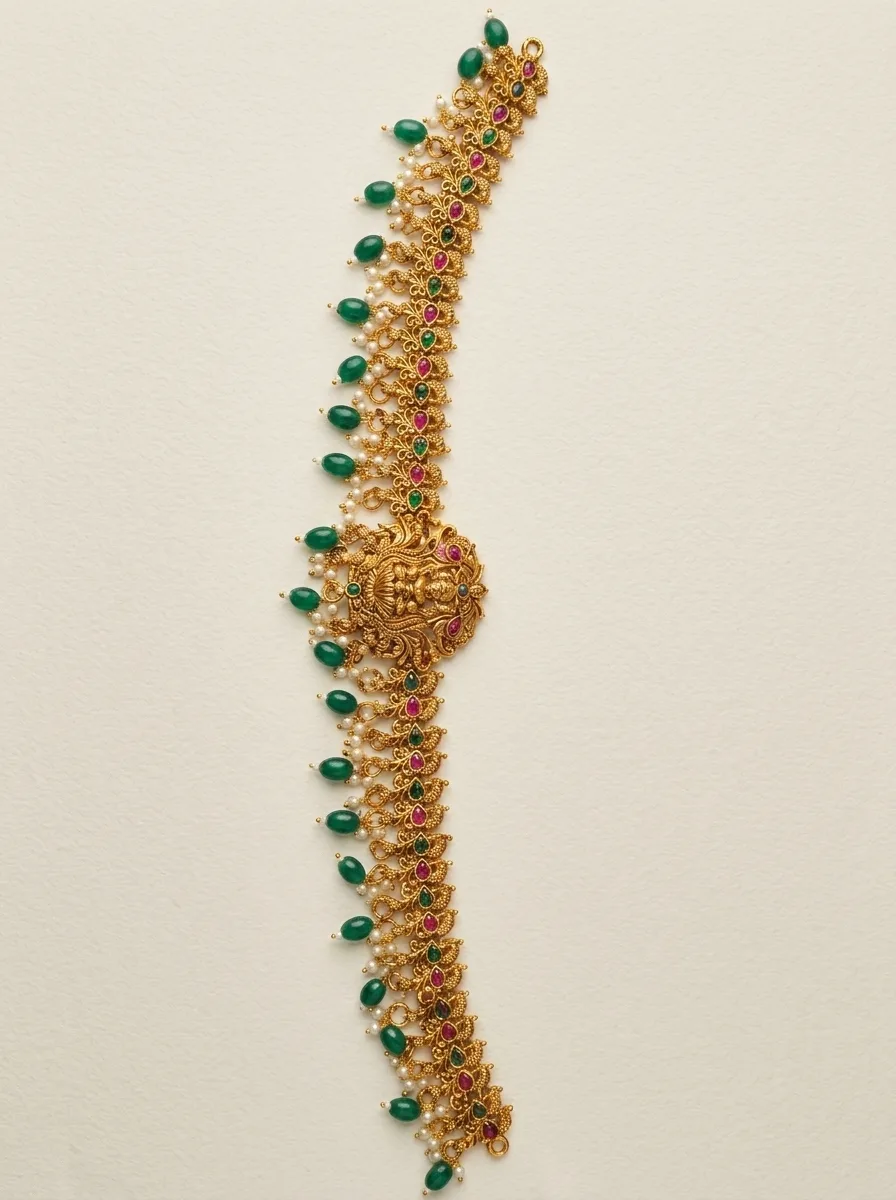
When people think of jewellery in Mumbai, they think of Zaveri Bazaar. But a large share of the city's imitation jewellery is made further north, in the western suburbs around Malad, Kandivali and Borivali. Workshops here cast, plate, set and finish pieces that end up in showrooms across the country.
Why the western suburbs
- Space: workshops need more room than South Mumbai can offer at sensible rents.
- Skilled workforce: karigars live and work in the area, and skills pass through families.
- Supply clusters: casting units, platers, stone suppliers and packaging vendors sit close to each other.
- Rail and road links to the rest of the city and to transport hubs.
What gets made here
Across the area you will find units making temple and kemp pieces, Kundan and Polki, AD and CZ, antique bridal, oxidised and fashion jewellery. Some units do one stage, such as plating; others, like ours, handle design, production and finishing for complete orders.
How buyers usually source from the area
- Through a manufacturer that manages the full process and quality, and is accountable for the final piece.
- Through a showroom or trader in Zaveri Bazaar who sources from workshops.
- Directly from specialist units, usually only for buyers with their own production knowledge.
For most wholesalers, the first route gives the best balance of price and accountability.
Visiting tips
- Book appointments; workshops are production spaces, not showrooms.
- Bring reference photos and your target quantity per design.
- Ask to see pieces at each stage: casting, plating, setting.
- Ask about MOQ, lead times and payment terms in the first meeting.
About our factory
Jagruti Imitation Jewellery has manufactured in Kandivali East since 2005, near Vishvakarman Mandir, Hanumannagar. We work with wholesalers, distributors, multi-store retailers, exporters and private label brands at 200 pcs per design (400 for earrings and pendants). See how we supply wholesalers or read imitation jewellery manufacturers in Mumbai.
How the cluster works
The western suburbs work as a connected cluster rather than as separate factories. A typical order may pass through several specialist hands:
| Specialist | Role |
|---|---|
| Model makers and CAD designers | Create the master design |
| Mould and casting units | Make rubber moulds and cast in zinc alloy or brass |
| Platers | Apply base layers and the gold, antique or silver finish |
| Stone suppliers | Sort and supply kemp, CZ, Kundan glass and pearls |
| Setters and finishers (karigars) | Set stones, assemble, string pearls |
| Packaging suppliers | Pouches, boxes, cards and cartons |
A manufacturer's job is to co-ordinate these steps, keep quality consistent and stand behind the finished piece. Some manufacturers do most steps in-house; others rely on trusted local specialists for one or two stages.
The karigar tradition
Much of the skill in the cluster sits with karigars, craftsmen who learnt setting, filing and finishing through years of work, often in family workshops. Their hand skill is what separates a crisp, well-set piece from a rough one, and it cannot be replaced by machines for most traditional designs.
When to visit
Weekday mornings are best. Avoid the weeks just before Diwali, when every workshop is at full stretch and owners have little time for new buyers.
Why this matters to buyers outside Mumbai
Buyers in other cities often assume that buying from a Zaveri Bazaar showroom is buying from the source. Often it is one step removed. Going to the manufacturer in the suburbs can give you better prices at volume, the ability to change designs, and a direct line to the people making your stock. For distributors and multi-store retailers, that directness pays off with every re-order.
Getting there
Kandivali and Malad are on the Western Railway line and close to the Western Express Highway, so buyers can combine a morning in Zaveri Bazaar with an afternoon at a factory. Many buyers also arrange transport of finished goods directly from the suburbs.
Buying from the area without visiting
Most of our customers have never visited Kandivali. They order by WhatsApp using design codes, receive couriered samples, approve finished stock on a video call and have goods dispatched by their chosen transporter. The cluster's advantage for them is not location but depth: every skill a design needs is available within a few kilometres of the factory, which keeps lead times short and quality consistent.