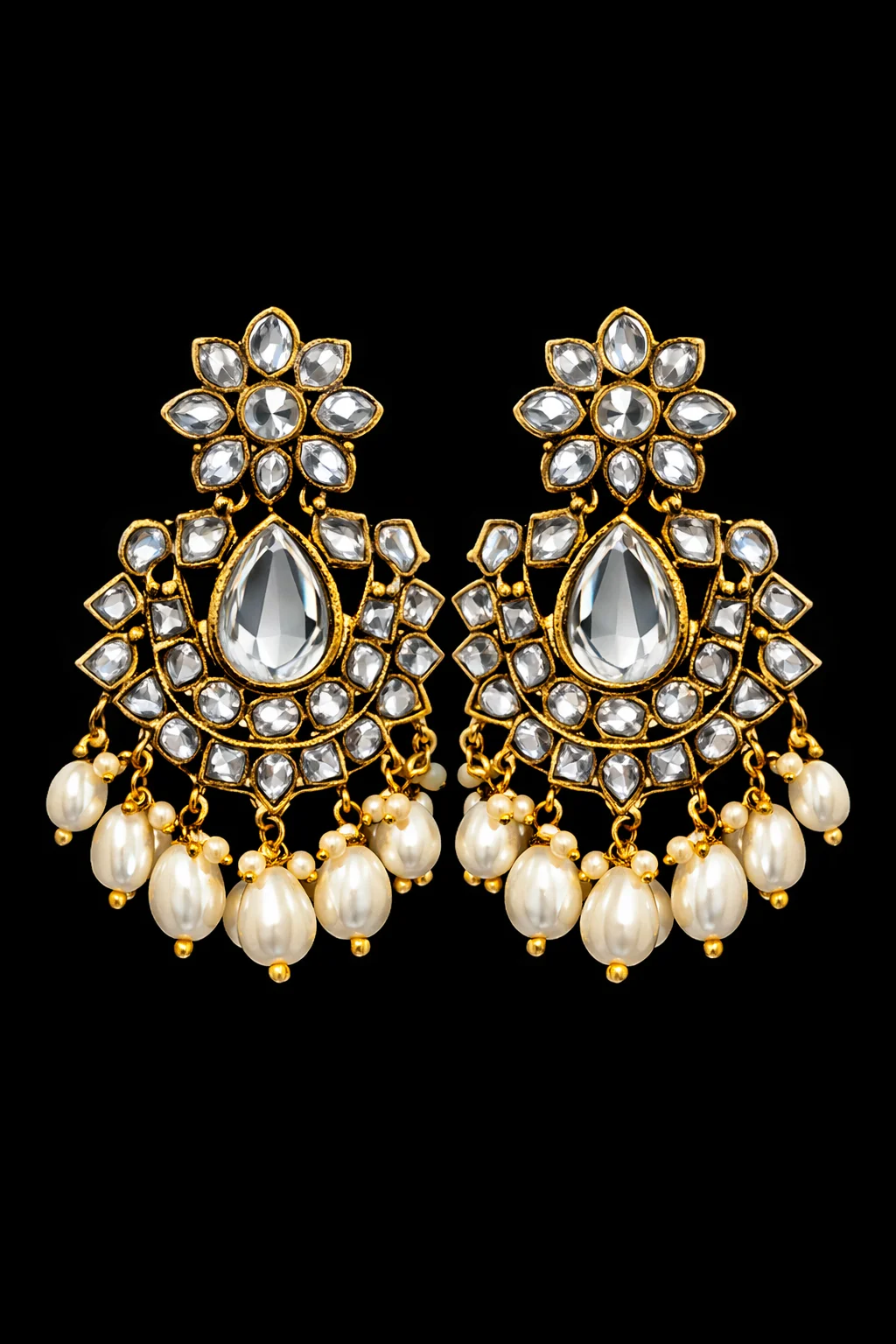
Delhi is North India's biggest trading hub, and its jewellery markets serve retailers from Delhi NCR, Punjab, Haryana, Uttar Pradesh, Rajasthan, Uttarakhand and beyond. It is a crowded, competitive market where price and speed matter.
Main markets
- Sadar Bazar: one of the largest wholesale markets in India, with lanes selling artificial jewellery, cosmetics and accessories in bulk.
- Chandni Chowk: including Kinari Bazaar for bridal accessories and trims, and nearby lanes known for silver jewellery.
- Karol Bagh: retail and bridal shopping, with many jewellery stores.
- Other local markets across the NCR for retail buying.
What sells best in Delhi
- Kundan and polki-look bridal sets
- Punjabi bridal pieces: tikkas, passas, naths, kaleere
- Oxidised and Indo-western jewellery for daily and college wear, students and young professionals
- Party and western jewellery
- Karva Chauth and Teej sets: bangles, tikkas and red-and-gold pieces.
- Party and reception AD sets.
Delhi's buying calendar
- Karva Chauth (October or November): one of Delhi's biggest jewellery occasions, with demand for bridal-style sets, bangles and tikkas.
- Teej (July or August) and Diwali.
- The winter wedding season, roughly November to February, is Delhi's peak for bridal and guest jewellery.
- Eid in the old city's Muslim communities.
Local market or factory?
Delhi markets are fast and competitive, which keeps prices sharp for ready stock. But the same designs are available to every buyer, which drives price wars. Distributors who want exclusive bridal designs and consistent re-orders often buy their core range from manufacturers and use Delhi markets for fill-ins.
| What | Where to source | Why |
|---|---|---|
| Kundan and polki-look bridal sets | Manufacturers (Mumbai or Delhi) | Consistency and colour matching |
| Fast-moving guest and party pieces | Sadar Bazar wholesalers | Quick top-ups |
| Trend and fashion pieces | Ready-stock suppliers | Short product life |
Verifying suppliers
In a crowded market, check GST numbers, ask for invoices and test a small order first. Read how to verify a jewellery manufacturer.
Getting stock from a Mumbai factory to Delhi
Air cargo is available for urgent orders. Factory prices are Ex-Works; add transport to your landed cost.
- Road transport from Mumbai to Delhi typically takes about 3 to 5 days, depending on the transporter and season.
- Courier for samples and urgent top-ups usually takes 2 to 4 days.
- Delhi is a major redistribution hub for North India, so many Delhi wholesalers re-sell to Punjab, Haryana, Uttar Pradesh and Rajasthan.
- Goods moving between states carry IGST at 3% on imitation jewellery, which a GST-registered buyer claims back as input credit.
- Consignments above Rs 50,000 moving by road generally need an e-way bill, generated by the supplier, buyer or transporter.
Plan orders backwards from your shelf date: factory lead time (about a month for made-to-order designs) plus transport plus a few days for approval and payment.
Tips for retailers in Delhi
- Have bridal stock on display by October: Delhi's winter wedding season starts early.
- Offer every bridal design in several stone colours; Delhi brides match jewellery closely to lehengas.
- Watch fashion trends from wedding photography and social media, which move quickly in Delhi.
See Kundan and Polki wholesale and Punjabi bridal jewellery.
A sample first factory order for a Delhi distributor
A distributor supplying bridal stores in Delhi NCR might start with six designs: two heavy Kundan choker-and-rani-haar sets, one polki-look set, one AD reception set, one set of Kundan jhumkas and one tikka-and-passa design, each at 200 to 400 units. That is a first order of roughly 1,500 to 2,000 units, focused on the wedding season, with room to re-order the fastest movers before Karva Chauth.