Most imitation jewellery sold in India is gold plated in one form or another. The phrase covers a wide range of quality, from quick flash plating on cheap castings to carefully layered finishes on well-made pieces. For a wholesaler, understanding what sits behind "gold plated" is the difference between stock that sells and stock that comes back.
What gold plating is, and how it happens
Gold plating is electroplating: the piece hangs in a plating bath as the negative electrode, and gold (or gold-colour metal) in the solution is drawn onto its surface in a very thin, even layer by an electric current. Before that, the piece passes through several steps:
- Cleaning and degreasing, so plating bonds to bare metal.
- Acid activation to remove oxides.
- Copper strike, especially on zinc alloy, to seal the surface.
- Levelling layers, often copper, and sometimes a nickel or nickel-free layer for hardness and brightness.
- The final gold or gold-colour layer, which sets the colour.
- Lacquer, a clear coat that protects the finish from air and sweat.
Most plating failures - peeling, blistering, early fading - trace back to poor cleaning or a missing layer, not to the gold itself.
Plating styles and tones
| Style | Look | Typical use |
|---|---|---|
| High-polish (yellow or bright) gold | Fresh, mirror-like | AD, daily wear, modern |
| Matte gold | Soft, satin, no shine | Contemporary Kundan, modern temple |
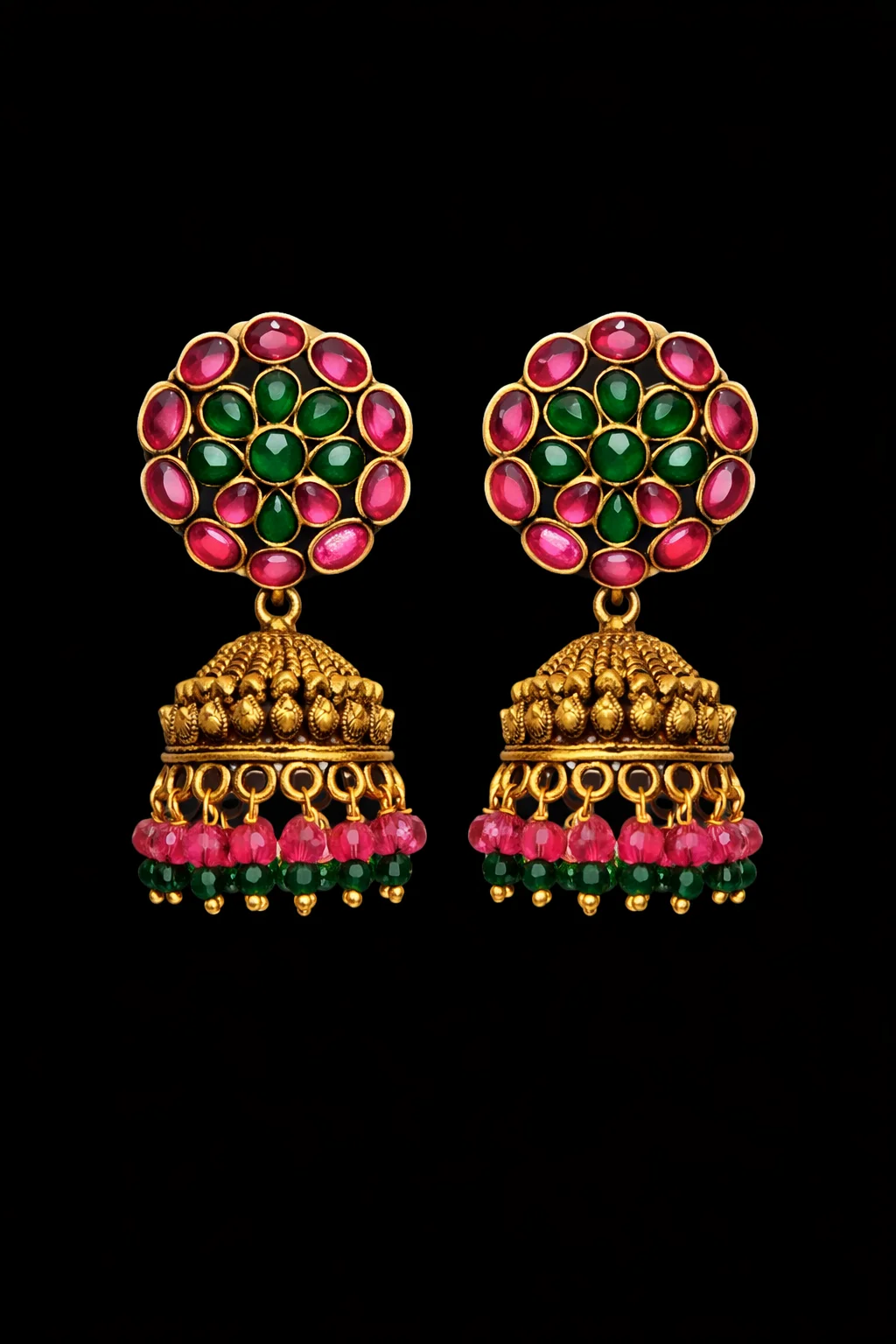
| Antique gold | Darkened recesses, old-gold look | Temple, kemp, bridal |
| Champagne or light gold | Paler, softer yellow | Minimal and daily wear |
| Rose gold | Pink-copper tone | AD, western, gifting |
| Two-tone | Gold with silver or rhodium | Fusion designs |
Tone names vary between factories, so always approve colour on a physical sample or a daylight video rather than by name.
What decides how long plating lasts
- Surface preparation: poor cleaning leads to peeling.
- Base layers: they matter as much as the top layer.
- Plating thickness: thicker generally wears longer. If a supplier quotes microns, ask how it was measured (XRF is the usual method); for export markets, terms like "heavy gold electroplate" have legal meanings.
- Protective coat: slows tarnish and wear.
- Customer care: moisture, sweat, perfume and friction are the main enemies. Plating lasts longest when customers put jewellery on last, after perfume and lotion; take it off before bathing or exercise; wipe it dry after wearing; and store it in a sealed pouch. Printing those four lines on a small card with every piece reduces "the colour faded" complaints more than any change of supplier.
Read antique plating explained and antique vs micron plating.
Base metals under the gold
Mazak (zinc alloy) gives sharp detail and low weight; brass gives heft and excellent plating adhesion. Both are good bases when prepared properly. Ask which base each design uses.
Checks before accepting a bulk order
- Colour match against the approved sample
- Even coverage in recesses and on edges
- No bubbles, peeling or dark spots
- Protective coat present
- Consistent tone between the first and last units
Honest selling
Gold plated imitation jewellery should be sold as imitation or fashion jewellery. Avoid purity numbers or wording that suggest solid gold. Honest description builds repeat customers and keeps you clear of disputes.
Stocking tips
Balance finishes in your range. Antique gold anchors traditional ranges; high-polish and rose gold pull in younger buyers; matte suits modern bridal. Keep the same finish across coordinated sets so pieces match when worn together.
Working with us
At Jagruti, every design is plated to the finish agreed at the quote stage and checked against your approved sample. MOQ is 200 pcs per design (400 for earrings and pendants). See antique jewellery wholesale.