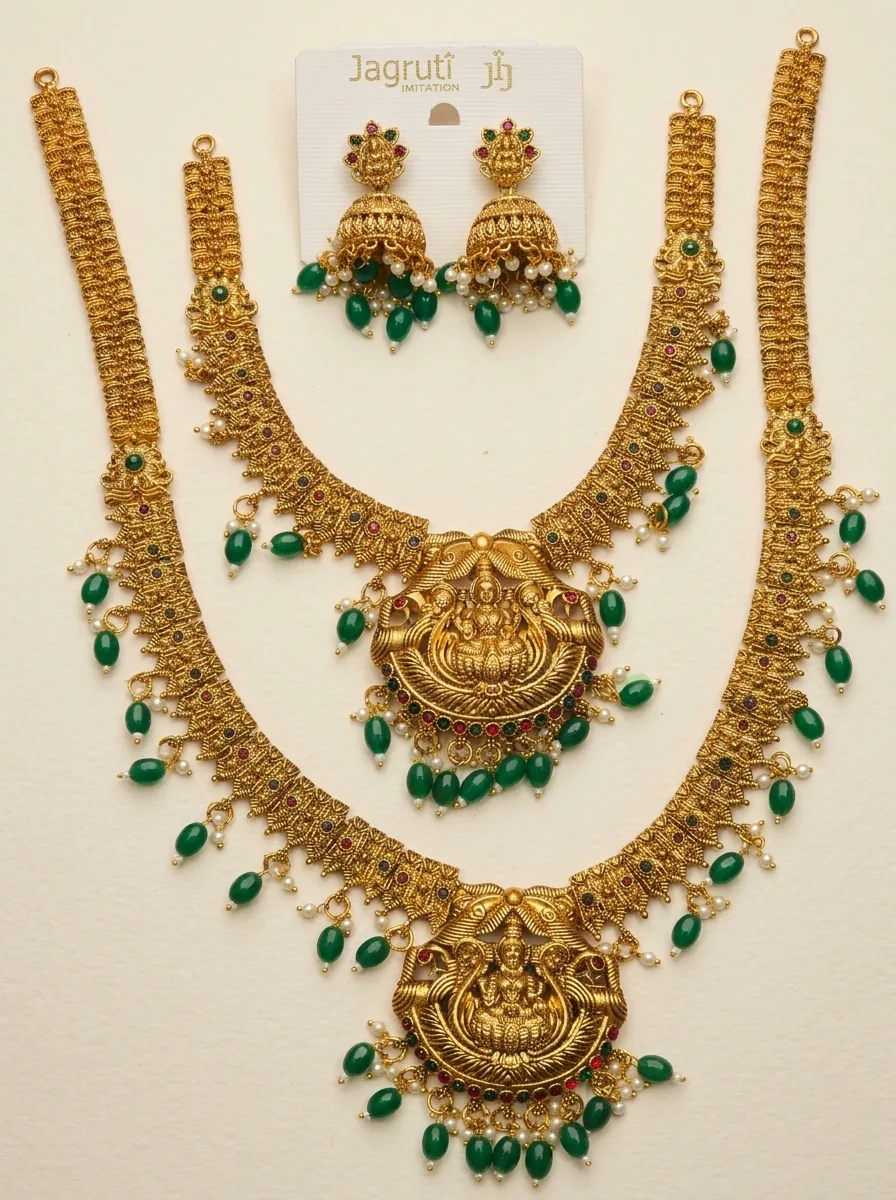
Punjab is one of India's strongest bridal jewellery markets. Punjabi weddings are large and celebratory, with several functions, many guests and a love of rich, colourful jewellery. Amritsar and Ludhiana are the main commercial centres for the trade.
Markets
- Amritsar: bazaars around the old city, including Hall Bazaar and Guru Bazaar, known for jewellery and wedding shopping.
- Ludhiana: Punjab's largest city and commercial centre, with busy wholesale markets such as Chaura Bazaar.
- Jalandhar and Patiala: important regional markets.
What sells best in Punjab
- Heavy Kundan and polki-look bridal sets
- Maang tikkas, passas and matha pattis
- Large naths with chains
- Jhumkas and chandbalis
- Kaleere in many designs
- AD sets for receptions
- Paranda for plaits
Read Punjabi bridal jewellery.
Retailers want big, bold bridal sets that photograph well, matching tikkas and passas, and plenty of kaleere options.
Punjab's buying calendar
- Lohri (13 January): family celebrations, especially for new brides and babies.
- Baisakhi (13 or 14 April): harvest festival and Punjabi New Year.
- Teeyan (July or August): the women's festival of the monsoon month of Sawan.
- Karva Chauth and Diwali (October or November).
- The wedding season, mainly October to March, with a heavy concentration in winter.
A sample first factory order
A Punjab distributor might order: two heavy Kundan choker-plus-rani-haar sets, a polki-look set, a tikka-and-passa design, a bridal nath, two kaleere designs and an AD reception set, at MOQ quantities (200+ pcs per heavy design, 400+ per earring or pendant design).
Getting stock from a Mumbai factory to Punjab
Road transport from Mumbai to Punjab takes several days; plan seasonal orders early. Air cargo to Amritsar or Chandigarh can help for urgent top-ups.
Diaspora link
Many Punjabi families have relatives in Canada, the UK and Australia. Families buy in Punjab before travelling to weddings abroad, and some Punjab distributors supply exporters or ship to relatives' businesses abroad.
See Kundan and Polki wholesale.
Guest and relative demand
At a Punjabi wedding, the bride is only one customer. Sisters, cousins, aunts and friends all want to look festive through several functions, from the jaggo and mehendi to the wedding and reception. That creates large demand for medium-weight Kundan sets, jhumkas and tikkas at accessible prices. Distributors who stock guest sets in depth, not just bridal heroes, capture more of each wedding.
Who buys, and what they want
| Customer | Looks for |
|---|---|
| Brides | Heavy Kundan and polki-look sets, passa, nath, colour-matched to the outfit |
| Wedding guests and relatives | Mid-weight sets, jhumkas, tikkas for each function |
| NRI families visiting for weddings | Complete sets bought in one visit |
| Everyday buyers | Jhumkas, bangles, lighter sets |
Phulkari dupattas and bright Punjabi suits favour bold, colourful jewellery; muted designs tend to sell less here than in many other regions.
A twelve-month stocking plan
| Months | Focus |
|---|---|
| January to March | Lohri and the end of the winter wedding season |
| April | Baisakhi |
| July to August | Teeyan |
| September to October | Karva Chauth and early wedding orders |
| October to March | Peak wedding season |
Place factory orders about two to three months before each focus period, since most designs are made to order in about a month and transport and approval add more time.
Packing and storage for this climate
Hot, dry summers and cool winters are easier on jewellery than coastal humidity, but dust and heat still matter. Keep stock sealed against dust, away from direct sun, and add silica gel during the monsoon months.
Tips for retailers in Punjab
- Stock every bridal design in several stone colours.
- Plan for NRI families who visit in winter and buy complete sets at once.
When buying direct from a factory makes sense
Punjab distributors supplying many shops across Amritsar, Ludhiana, Jalandhar and Patiala benefit most. Designs that sell in the hundreds each season are worth ordering from a manufacturer at 200 pieces per design (400 for earrings and pendants): the unit price is lower, colour and finish stay consistent, and re-orders match exactly. Keep local wholesalers for fast top-ups and designs you are still testing.