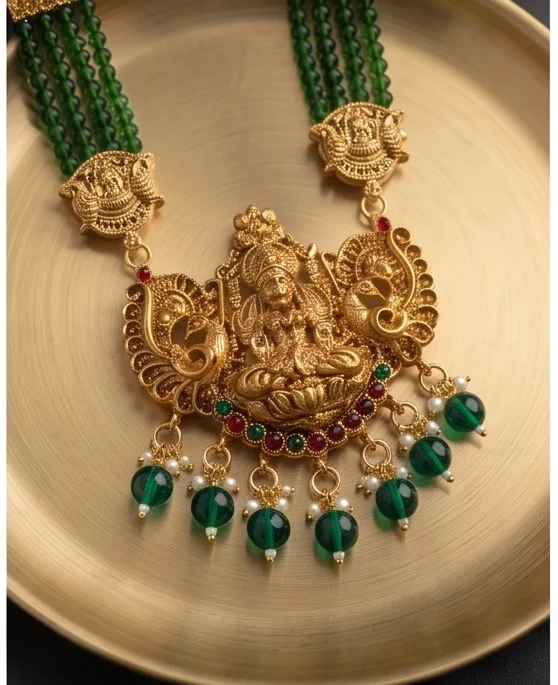
Imitation jewellery is worn across India, by brides who want a heavy look without gold prices, by working women, by students, and by families at every festival. Behind that demand is a large wholesale trade. This overview explains how it works for businesses that buy in bulk.
Where it is made
Manufacturing is spread across several hubs. Mumbai is a major centre for temple, Kundan, AD and bridal work. Rajkot, Ahmedabad and Surat in Gujarat are known for volume production of many fashion lines. Jaipur is strong in Kundan-Meena and fashion jewellery, Delhi and Kolkata have their own manufacturing and trading hubs, and South Indian cities have growing local production. Many pieces combine work from different specialists: casting in one unit, plating in another.
Who buys wholesale
- Distributors and wholesalers supplying retail shops
- Multi-store and multi-city retailers
- Online sellers with volume
- Exporters to the diaspora and international fashion retail
- Private label brands
- Rental businesses and event suppliers
Channels
- Physical wholesale markets such as Zaveri Bazaar and Delhi's markets
- Direct from manufacturers, increasingly over WhatsApp with video approval
- B2B directories and marketplaces
- Trade fairs and exhibitions
Styles in steady demand
Temple and kemp in the South; Kundan and Polki in the North and West; AD for modern bridal and party wear; oxidised for daily and festival wear; antique gold for heavier traditional looks; and regional pieces such as Maharashtrian nath, Bengali styles and Rajasthani borla.
What serious wholesalers focus on
- Buying direct from manufacturers for core designs
- Depth over breadth: fewer designs, deeper stock
- Season planning around weddings and festivals
- Quality consistency, especially for re-orders
- Exclusive designs to avoid price wars
- Clean GST billing
Trends worth watching
- Growth of video-based remote sourcing
- Demand for lighter pieces that look heavy
- Coordinated sets and bridal bundles
- Anti-tarnish finishes and better packing
- Private label for online brands
Where Jagruti fits
We are a manufacturer in Kandivali East, Mumbai, since 2005, making every Indian style to order at 200 pcs per design (400 for earrings and pendants) for wholesalers, distributors, chains, exporters and private label brands. See how we supply wholesalers.
How buyers find suppliers now
The way wholesale buyers source has changed. WhatsApp catalogues and video calls have replaced much of the travel to market hubs. Buyers see designs on phone screens, approve samples by video and track orders by message. Trade fairs and market visits still matter for new relationships, but repeat business is largely digital. Factories that answer quickly, show products clearly and keep design codes consistent have an advantage.
What has not changed
- The wedding and festival calendar still drives most of the year's demand.
- Regional taste remains strong: temple and kemp in the South, Kundan in the North and West, oxidised almost everywhere.
- Trust still decides who gets the repeat order: honest samples, consistent bulk and fair handling of problems.
Rules that affect the trade
- GST at 3% on imitation jewellery under heading 7117, with proper invoices needed for input credit.
- E-way bills for consignments above the value limit when goods move by road.
- Consumer protection and honest labelling: imitation jewellery should be sold as imitation, gold-plated or gold-tone, never with gold purity marks.
- Export rules for those selling abroad: IEC, HS 7117 classification, and destination safety rules on nickel, lead and cadmium.
Where the opportunity is
Growth comes from organised retail chains adding imitation counters, jewellery showrooms offering imitation alongside gold, online brands needing reliable manufacturing, and exports to the diaspora, which several new trade agreements have made easier. The common thread is consistency: buyers want the same quality every time, delivered when promised.
Skills a wholesaler needs now
- Reading sales data: knowing which designs sell, where and when
- Digital selling: clear photos, organised catalogues, quick replies
- Cash management: planning advances and credit across the season
- Supplier management: samples, approvals, re-orders and quality checks
- Compliance: GST invoices, e-way bills and honest labelling
A realistic view of competition
Imitation jewellery has low barriers to entry, so competition is intense, especially online. The wholesalers who last are rarely the cheapest. They are the most reliable: consistent quality, stock of the designs their retailers depend on, and fair dealing when something goes wrong.