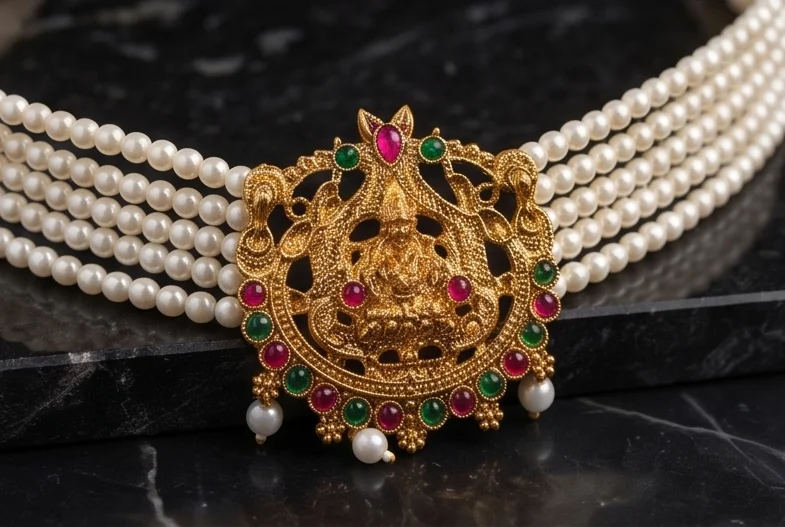
Imitation jewellery is a legitimate, popular product. Customers buy it knowing it is not gold. Problems arise when sellers blur the line, suggesting pieces are gold, or promising they will never fade. Honest selling protects customers and your business.
Describe what it is
Use clear terms: imitation jewellery, fashion jewellery, gold-plated, antique-finish. Mention the base metal if asked, such as zinc alloy or brass.
Avoid purity claims
Do not use purity numbers, hallmark-like stamps or phrases that imply solid gold on imitation products. Beyond ethics, misleading claims can create legal problems and destroy trust.
Set care expectations
Explain that plated jewellery needs care and that finish can change over time with use. Give a care card. Customers who know how to care for pieces are more satisfied.
Be clear on stones
Kemp stones are glass. AD is cubic zirconia. Imitation pearls are glass, shell or plastic. Describe them honestly.
Honest online listings
Online, photos and descriptions must match the product. Write the material and finish in the title or the first line of the description, never use gold purity words, avoid heavily edited photos that exaggerate shine, and mention dimensions and weight.
Why honesty sells
Customers who feel respected come back and recommend you. Customers who feel misled leave bad reviews and never return. In imitation jewellery, repeat customers and word of mouth are worth far more than a single exaggerated sale.
Train your staff
Staff should know how to explain materials, finishes and care. Read staff training for jewellery counters.
Common mistakes
Calling imitation pieces "gold" casually at the counter, promising "lifetime" colour, or using stock photos from other brands online.
How we describe our work
Jagruti is strictly an imitation jewellery manufacturer. We describe our pieces as imitation, never as real gold or precious stones, and we encourage our trade buyers to do the same.
Handling the "is it gold?" question
Customers sometimes ask directly. A confident, friendly answer works best: "No, it is imitation jewellery, gold-plated over zinc alloy, with glass kemp stones. That is why it costs a fraction of gold, and with care it stays bright for a long time." Most customers appreciate the clarity, and many buy anyway because they came for the look.
What the law expects
Several rules support honest selling of imitation jewellery in India:
- Consumer Protection Act, 2019: misleading claims about a product's nature or quality are unfair trade practices, and customers can seek remedies.
- Consumer Protection (E-Commerce) Rules, 2020: online sellers must give accurate product descriptions, including country of origin, total price and return policy.
- Hallmarking: in India, gold hallmarks (BIS marks and karat numbers) belong only to genuine gold jewellery; using them on imitation jewellery is misleading.
- Legal Metrology rules for packaged goods require key details such as MRP on retail packs.
Honest description is not just good ethics; it keeps a business on the right side of these rules.
Words to use and avoid
| Use | Avoid |
|---|---|
| Imitation jewellery, fashion jewellery | "Real gold", "pure gold" |
| Gold-plated, gold-tone, antique gold finish | Karat numbers such as 22k or 916 |
| Glass stones, kemp stones, cubic zirconia (AD) | "Diamonds", "rubies", "emeralds" without "imitation" |
| Zinc alloy or brass base | "Lifetime colour guarantee" |
| Care-dependent finish | "Never fades" |
Honest selling and returns
When customers know exactly what they are buying and how to care for it, they complain far less. Most returns in imitation jewellery come from mismatched expectations, not from faulty pieces. Clear words at the counter and on listings are the cheapest way to cut returns.
Honest labels in practice
A good product label or listing answers the questions a customer would ask: what it is, what it is made of, and how to look after it. For example: "Temple necklace set, imitation jewellery. Zinc alloy base with antique gold plating, red and green glass kemp stones, pearl drops. Keep dry, avoid perfume, store in the pouch provided." That label sells the piece honestly and still sounds attractive.