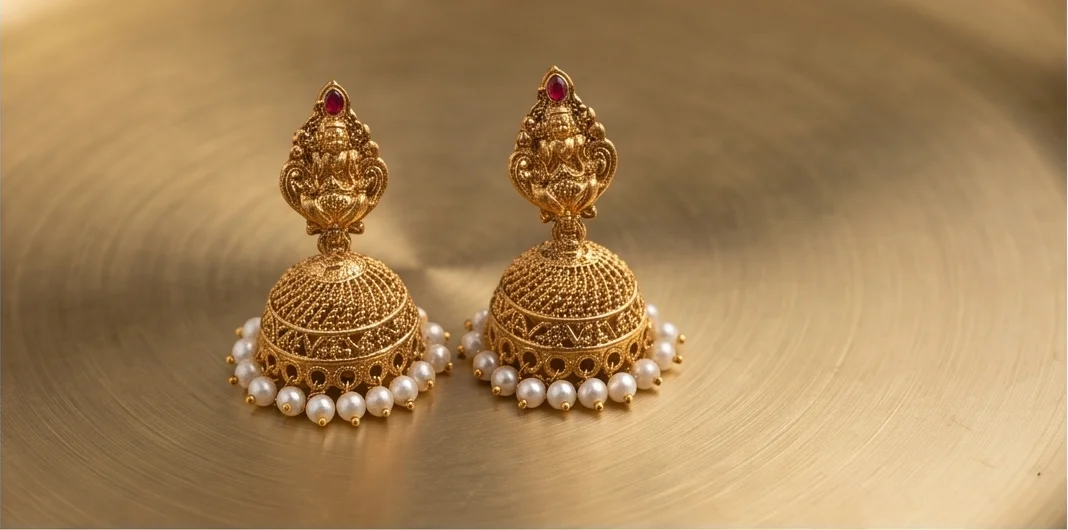
Buyers often ask whether "kemp glass" and "kemp stone" are different products. In the imitation jewellery trade, they normally refer to the same thing: coloured glass cut and polished to look like ruby or emerald, set into a temple-style gold frame. The word "stone" is used loosely, the way people call CZ "diamonds" at the counter.
What does differ is the grade of the glass and the work done on it. Two suppliers can both sell "kemp stone" pieces that look very different after six months.
Where the confusion comes from
Real temple jewellery historically used precious stones. When glass replaced them, traders kept the name "kemp stone". Some sellers now say "kemp glass" to be clear it is glass. Some say "kemp stone" because it sounds better. Neither term tells you the quality.
What actually separates good kemp from poor kemp
Colour depth and consistency. Good kemp has a rich, even red or green. Poor kemp is pale, streaky or varies from stone to stone in one piece.
Polish. Good stones have a smooth, glossy face without scratches. Poor stones look dull or cloudy.
Backing. Many kemp stones use a reflective backing so they glow in a closed setting. Missing or uneven backing makes some stones look dark.
Cut accuracy. Stones should fit their settings exactly. Loose or oversized stones lead to tilted setting and fall-outs.
Heat and moisture resistance. Low-grade backings can discolour if exposed to moisture. Ask how the stones hold up in humid storage.
A simple bulk inspection routine
- Lay ten units of the same design side by side under daylight. Look for colour differences between units.
- Tilt each piece. Stones should flash evenly, with no dead, dark stones.
- Run a fingernail around a few settings. The stone should not move.
- Check the back of the piece for glue spill.
- Compare with the approved sample, which should be kept at the factory and with you.
How to brief your manufacturer on kemp
- Name the colour mix: for example, "ruby red main, emerald green accents, white CZ border".
- Share a reference photo for stone shade, not only design.
- Ask for the stone colour to be locked for re-orders, so repeat batches match.
- If you sell in humid regions such as coastal Tamil Nadu or Kerala, ask about backing and anti-tarnish finishing.
At Jagruti, every kemp order is checked against the physical sample you approved, and ready stock is shown to you on a WhatsApp video call before dispatch. See our kemp jewellery wholesale range, or read what kemp stone is made of for the background.
How kemp stones are fixed, and why it matters
Kemp stones are held in two main ways in imitation jewellery:
- Adhesive in a closed setting. The stone sits in a metal cup and is fixed with adhesive, then the edge of the cup frames it. It is fast and suits most designs. Quality depends on the adhesive, how clean the cup was, and whether the stone fits exactly.
- Lac or resin bed. The traditional method uses lac (arakku), which gives a slightly raised, glowing look. Some premium imitation work still uses a resin bed.
Stones fall out when the cup is too large, the adhesive is weak or old, or the piece is exposed to heat. Sunlight through a shop window can soften some adhesives, so display stock should not sit in direct sun.
Common kemp problems and their causes
| Problem | Likely cause | Fix |
|---|---|---|
| Some stones darker than others | Missing or damaged backing, mixed stone lots | Ask for stones from one lot per design |
| Stones falling out | Oversized cups, weak adhesive, heat | Check fit on the sample; store away from heat |
| Cloudy or scratched faces | Low-grade glass or rough handling | Individual packing, better grade |
| Colour changes after months | Backing reacting to moisture | Anti-tarnish packing, dry storage |
| Uneven red between re-orders | Stone colour not recorded | Record the stone shade against the design code |
Buying kemp for different price points
For daily and festival wear, standard glass kemp in adhesive settings gives the right look at the right price. For bridal and premium dance sets, ask for graded stones from a single lot and a tighter colour check. The difference in cost is small compared with the cost of a bride returning a set because one stone looks brown.
Selling tip for your counter
Customers trust honest language. Describing kemp as "glass kemp stones in antique gold finish" sets correct expectations and still sells, because buyers of temple-style imitation jewellery know they are buying the look, not gemstones.