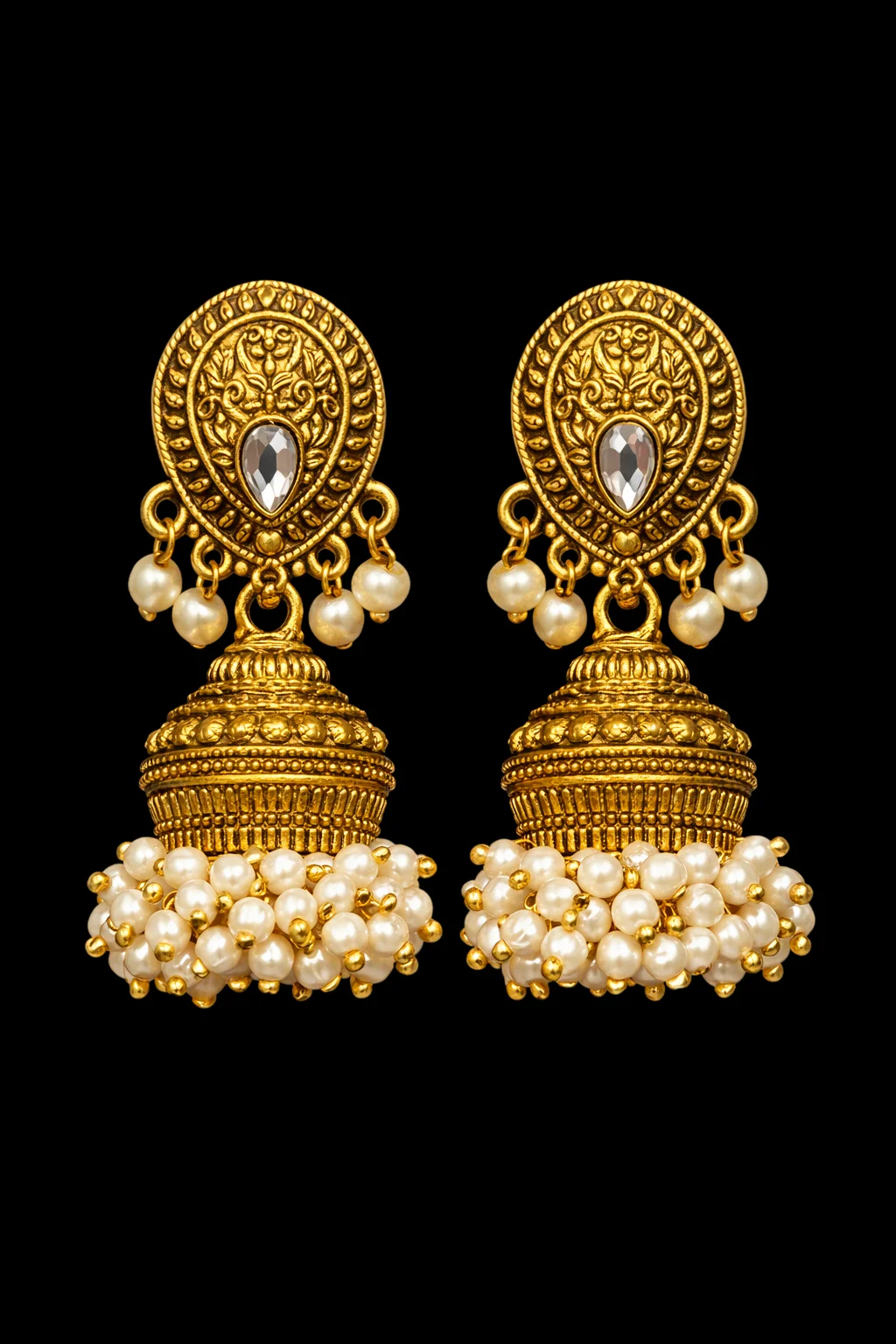
Polki jewellery traditionally uses uncut diamonds set in gold, a look with Mughal and Rajasthani roots. Imitation polki recreates that soft, uncut shimmer with glass or uncut CZ stones and foil backing. It has grown into a premium bridal category, especially for North Indian and Hyderabadi weddings.
Polki, explained
In fine jewellery, polki means uncut diamonds: diamonds with a flat or natural face and no facets, set in gold in the Kundan manner. They have a soft, glowing look rather than sparkle. Because real polki is very expensive, imitation polki-look jewellery reproduces the effect with glass or uncut CZ stones backed with reflective foil, set in a gold-tone frame.
| Polki-look | Kundan | |
|---|---|---|
| Stone look | Uncut, flat, soft shimmer | Glass stones, often coloured |
| Origin of style | Uncut diamond jewellery | Stone setting technique with foil |
| Feel | Vintage, understated luxury | Colourful, regal |
| Common pairing | Pearls, emerald-look drops | Pearls, Meenakari |
In practice, many pieces combine both, and buyers use the terms loosely.
Pieces that sell
Bridal necklace sets, chokers and long haars, chandbalis and jhumkas, maang tikkas and passas lead demand, followed by rings, bangles and kadas, and Hyderabadi-style satlada (seven-strand) looks with polki pendants. Polki-look is especially popular for North Indian and Punjabi weddings, and with brides who want a regal look that photographs softly rather than sparkling.
What makes a convincing polki-look piece
- Stone shape: irregular, flat-topped stones look more like real polki than perfectly regular ones.
- Foil backing: the foil creates the glow; poor foil makes stones look grey or dead. Check the foil is bright behind every stone.
- Setting: stones level and flush in closed settings with a neat gold-tone rim.
- Finish: a warm, slightly matte gold tone suits polki better than bright yellow, and it should be consistent across the set.
- Accents: emerald and ruby drops, pearls and meenakari reverse sides complete the traditional look - drops and pearls must be secure.
Who buys polki-look
Brides who want an elegant, less colourful look; families in Delhi NCR, Punjab, Rajasthan and Hyderabad; diaspora weddings. Polki-look pieces sit at the premium end of imitation ranges.
Buying in bulk
Specify stone type, foil colour, finish (antique or bright gold) and accent stones. Approve a physical sample, because photos rarely show polki shimmer accurately. At Jagruti we make polki-look pieces at 200 pcs per design (400 for earrings and pendants). See Kundan and Polki wholesale.
Pricing polki-look in your range
Polki-look pieces sit at the premium end of most imitation ranges because of the stone work and foil backing. Customers buying them expect the piece to look close to the real thing from a normal distance. That means you should not cut corners on foil or stone quality to hit a low price point; it is better to offer a smaller, lighter polki piece at a lower price than a large piece with dull stones.
Price it above standard Kundan, and present it with packaging that matches its position.
Displaying polki
Polki shimmer shows best under warm, soft lighting rather than harsh white light. Retailers who display polki under warm light, against dark velvet, show it at its best.
Care
Moisture behind the stones dulls the foil. Advise customers to keep polki-look pieces dry, away from water and perfume, and stored in sealed pouches. Retailers should keep display pieces away from humid areas and rotate stock so it does not sit for many months.
Polki colour trends
Traditional polki-look pairs the white, uncut-diamond effect with emerald green and ruby red drops. Recent bridal trends favour pastel accents, such as mint, pink and powder blue, and more pearl work. Keeping the classic green-and-red polki designs while adding pastel versions of the best sellers covers both traditional and younger brides.
Pairing polki with other styles
Polki-look chandbalis and tikkas pair well with Kundan sets, since both share a warm gold tone. Offer them as add-ons to Kundan buyers.