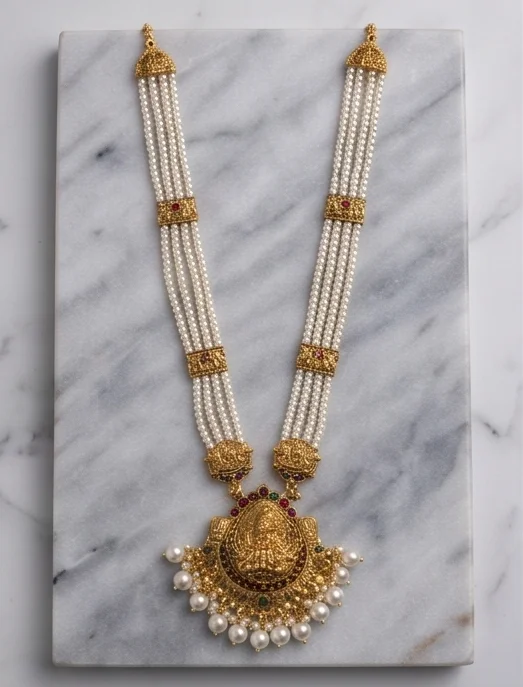
Jadau is a traditional setting technique associated with Rajasthan and Gujarat, and later with Mughal courts and Hyderabad. In real jadau, stones are embedded into softened gold without prongs. Imitation jadau recreates the look: stones closely set into a gold-tone frame, often with Meenakari enamel on the reverse.
Jadau, Kundan and polki: the differences
| Term | What it refers to |
|---|---|
| Jadau | A technique: stones are embedded into gold without prongs or glue, the metal built up around each stone |
| Kundan | The use of highly refined gold foil strips pressed around stones to set them; often used as the name for the whole style |
| Polki | The stones: uncut diamonds with natural faces |
| Meenakari | Enamel colour work, often on the reverse of jadau and Kundan pieces |
A traditional piece may be all four at once: polki stones, set by the jadau technique with Kundan foil, with meenakari on the back. Rajasthan, especially Bikaner and Jaipur, and the old courts of Hyderabad are strongly associated with these crafts. Imitation pieces marketed as "jadau" often combine all three looks, so when buying, focus on the look you want rather than the label.
Pieces that sell
- Bridal necklace sets and chokers
- Jadau bangles and kadas
- Jhumkas and chandbalis
- Maang tikka and passa
- Rings and hathphool
What makes good imitation jadau
Imitation jadau-style jewellery reproduces the raised, hand-worked look of stones embedded in gold. Look for:
- stones set closely, each appearing set into the metal with a clean, built-up gold-tone rim
- even foil brightness
- a slightly irregular, hand-worked look rather than machine-perfect uniformity
- balanced weight and a rich but consistent gold tone
- a neat reverse: buyers often turn a piece over before they buy, and see clean meena work, no glue and no rough edges as a sign of quality. Give the back as much attention as the front when you approve samples.
Who buys jadau-style
Rajasthan, Gujarat, Hyderabad, Delhi and Punjab buy jadau-style bridal jewellery, as do diaspora brides wanting a royal, heirloom Indian look. It sits at the top of an imitation bridal range in both price and presentation, so pack and display it accordingly.
Buying tips
Ask for close-up photos and a physical sample of the reverse side, where Meena quality shows. Agree stone colours carefully; jadau often uses emerald, ruby and white together.
We make jadau-style pieces at 200 pcs per design (400 for earrings and pendants). See Kundan and Polki wholesale and read Meenakari jewellery wholesale.
Building a jadau-style range
Start with a few statement bridal sets, then add a pair of chandbalis, a tikka and matching bangles that can be sold separately. Jadau-style sells on impact rather than volume, so a small, well-presented range does better than many designs spread thin.
Colour combinations
Classic combinations include emerald and ruby with white, all-white with pearls for a softer look, and pink with green for festive pieces. Ask retailers which combinations sell in their market before you order.
Displaying jadau-style jewellery
Jadau-style pieces are best shown on dark velvet or a neck form, where the raised gold and the stones catch the light. Show the reverse side too: meenakari backs are part of what customers pay for. A small card explaining the jadau tradition helps staff sell the story behind the look.
Care
Like Kundan and polki-look, jadau-style pieces combine foil-backed stones and enamel colour. Keep them dry, avoid perfume, and store them in sealed pouches away from other pieces that could scratch the enamel.