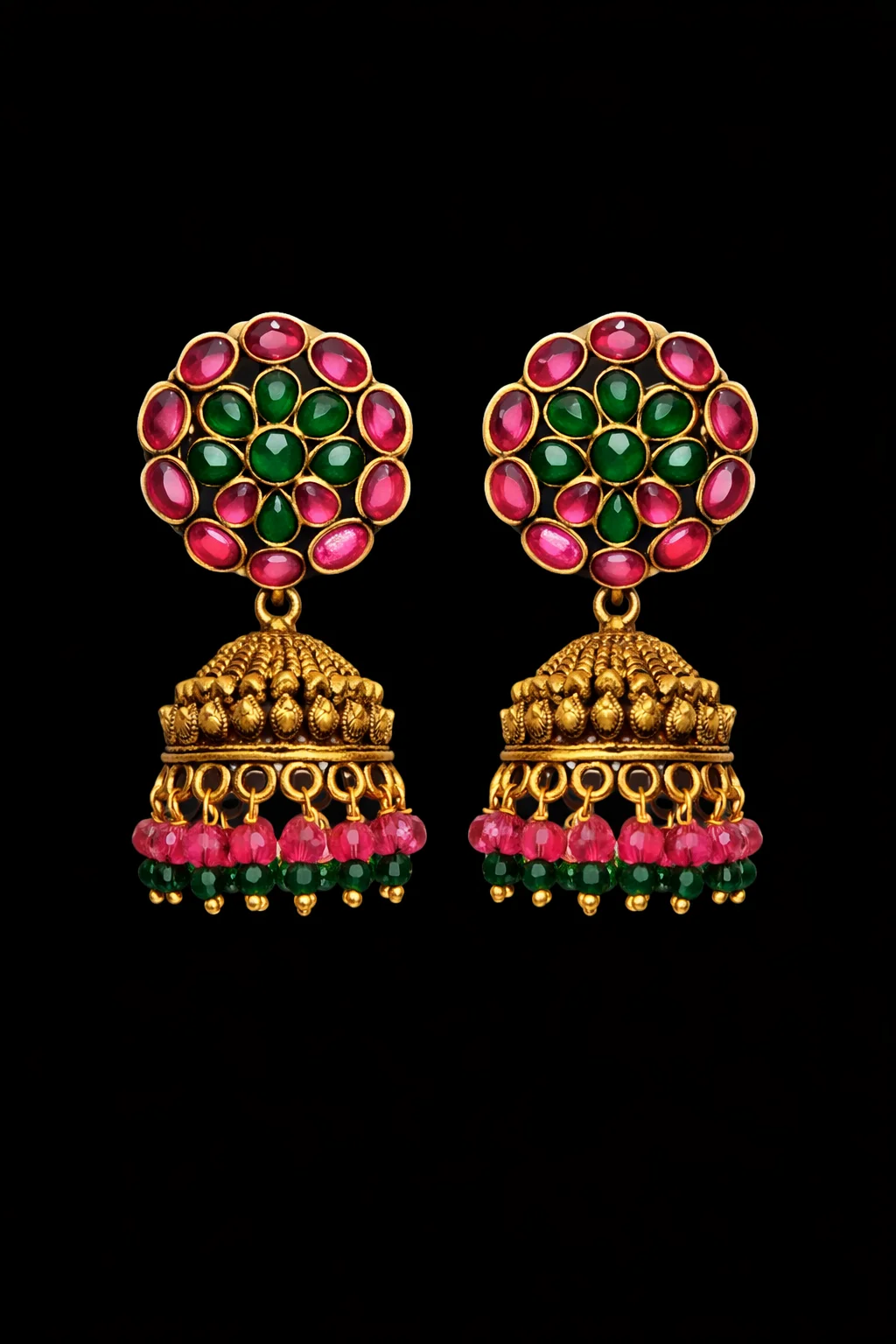
Antique plating is the finish that makes new imitation jewellery look like heirloom gold. Instead of the bright yellow shine of fresh gold, it has a warm, slightly darker tone with deeper shadows in the recesses. It is the standard finish for temple, kemp and many Kundan and bridal pieces.
What antique plating is
Antique plating is gold-colour electroplating followed by a controlled darkening of the recesses, with the raised areas lightly brushed or polished back. The result: bright highlights on the high points, darker tones in the low points, like old gold that has been worn and cleaned for years.
The process, step by step
- Surface preparation: the cast piece (Mazak or brass) is cleaned, degreased and polished.
- Base layers: usually copper and sometimes other layers, to help the final plating bond and to level the surface.
- Gold-colour plating: the piece is electroplated to the chosen gold tone.
- Antiquing: a darkening treatment is applied, settling into recesses.
- Relief polishing: raised areas are brushed back to bring out highlights.
- Lacquer / anti-tarnish coat: a clear protective coat seals the finish.
- Stone setting and final QC.
For more on each stage, read our antique gold plating process.
Antique vs other finishes
| Finish | Look | Common use |
|---|---|---|
| Antique gold | Warm, darkened recesses, heirloom look | Temple, kemp, bridal |
| Matte gold | Soft, non-shiny gold | Modern Kundan, contemporary |
| High-polish gold | Bright, mirror shine | AD, daily wear |
| Rhodium / silver | White metal look | AD, western |
| Oxidised | Dark with silver highlights | Tribal, oxidised |
How long does antique plating last?
It depends on base layers, plating thickness, the protective coat and how the customer stores and wears it. Moisture, perfume and sweat are the main enemies. A good anti-tarnish coat and dry storage keep antique pieces looking right for a long time. We do not promise a fixed number of months or years, because care varies so much, but we do check every batch against the approved sample.
What wholesalers should check
- Tone consistency across units and across re-orders
- Balance of dark and light: too dark looks dirty, too light looks unfinished
- Even coverage in deep recesses
- No peeling or bubbling at edges
- Protective coat present
See our antique jewellery wholesale range.
Antique plating on Mazak vs brass
The finish looks the same on both bases, but the preparation differs:
- Zinc alloy (Mazak) needs a copper strike first. Zinc reacts with many plating solutions, so a thin copper layer is applied in a special bath to seal the surface before other layers. Poor or missing copper strike is a common cause of peeling on cheap zinc castings.
- Brass accepts plating more readily, so the preparation is simpler, which is one reason brass pieces often hold their finish well.
What the antiquing treatment actually is
Antiquing darkens the plated surface in a controlled way. Factories use chemical darkening solutions, or an antique toning bath, and then relieve the high points with brushing or polishing. The skill is in the balance: too little darkening and the piece looks flat and new; too much and it looks dirty.
Because this step involves handwork, antique finish varies a little from piece to piece. A good factory keeps that variation small and consistent with the approved sample.
How to care for antique finish
| Do | Do not |
|---|---|
| Wipe with a soft dry cloth after wearing | Use jewellery cleaning dips or liquids |
| Store in the zip pouch, away from air | Leave it in a bathroom or damp cupboard |
| Put on perfume and hair spray first | Spray scent directly onto the piece |
| Keep pieces separate so they do not rub | Throw sets together in one box |
Pass these points to your customers on a small care card. It cuts complaints about "fading" that are really about storage.
Common antique plating defects
Watch for these when you inspect a batch: patches where the darkening has pooled and looks dirty, highlights polished so hard that the base layer shows through at edges, dull spots where the protective coat missed, and colour drift between the first and last units of a run. A good factory catches these at QC; a good buyer checks a sample of units anyway, because the approved sample is the only fair standard.