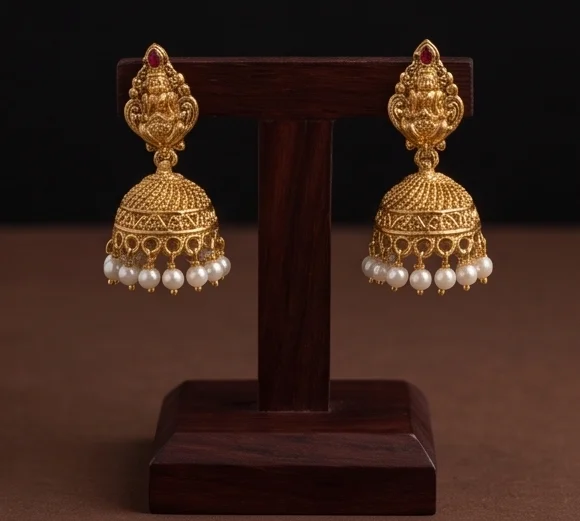
"Export quality" is one of the most used phrases in the Indian jewellery trade, and one of the least defined. Every catalogue says it. Very few say what it means. For a buyer, that is a problem: a phrase that means everything means nothing when a carton of tarnished earrings arrives. This guide sets out what export quality should mean in measurable terms, and how to check it before you pay for a bulk order.
Why the phrase exists
Overseas buyers historically paid more and returned more. A shop in London or Dubai cannot send back a carton as easily as a shop in Mumbai, so factories that supplied export buyers learnt to control finish, consistency and packing more tightly. "Export quality" became shorthand for that discipline. Today it is often just marketing, so it has to be tested.
What export quality should mean
1. Base metal
- A known alloy, usually good-grade zinc alloy (Mazak) or brass, not mixed scrap.
- Low lead and cadmium, within the limits of the EU, UK and North American markets.
- Clean castings: no pits, porosity or flash lines on visible surfaces.
See what Mazak material means and Mazak vs brass.
2. Plating and finish
- Even colour across the piece and across the batch. Two sets from the same order should look identical side by side.
- Adequate thickness and a protective lacquer, so the finish survives normal wear.
- Nickel-free plating available for Europe and the UK.
- Antique finishes that look aged on purpose, not patchy.
See antique gold plating vs micron gold plating.
3. Stone setting
- Stones seated evenly, flush and secure, with no glue visible.
- Consistent stone colour across the batch: a ruby kemp should be the same ruby in every piece.
- Pearls and drops attached with strong wire or chain that does not kink.
4. Findings and comfort
- Earring hooks and screw backs that close firmly; posts smooth and straight.
- Necklace hooks and adjustable cords that hold.
- Weight balanced for comfort, so heavy earrings do not tilt forward.
5. Consistency across quantity
This is where export buyers are strictest. A sample is one piece made carefully; a bulk order is 400 pieces made quickly. Export quality means piece 400 matches the sample: size, colour, weight and finish.
6. Packing
- Each piece or pair sealed in a poly bag with anti-tarnish protection.
- Grouped and labelled by design code and colour.
- Strong numbered cartons with silica gel for long journeys.
See export packaging and labelling.
7. Documentation
- Invoices that state HS code, base metal, plating and stones.
- Material declarations or test reports when the market needs them.
- Origin paperwork for trade-agreement duty claims.
See the export documents checklist.
How to verify the claim before a bulk order
| Check | How |
|---|---|
| Sample vs production | Ask for a photo or video of finished bulk stock, with design codes visible, before paying the balance |
| Plating durability | Wear a sample for several days; rub the back with a cloth; look for colour change |
| Stone security | Press stones gently and shake the piece; nothing should move |
| Batch consistency | Ask for a group photo of several pieces of the same design laid side by side |
| Materials | Ask what the base metal is and whether nickel-free plating is available |
| Compliance | For Europe or North America, ask whether the factory has test reports or will arrange one |
Red flags
- "Export quality" with no answer to "what does that mean here?"
- Samples that are visibly better than the photos of bulk stock.
- No design codes, so re-orders cannot be matched.
- Refusal to show finished goods before dispatch.
See also red flags when buying wholesale jewellery and how to judge quality.
Where the extra cost of export quality goes
Better quality does cost a little more per piece. It is worth knowing where that money goes, so you can judge whether a price difference is real:
| Area | What changes | Why it costs more |
|---|---|---|
| Alloy | Known, clean zinc alloy or brass instead of mixed scrap | Virgin or certified alloy costs more per kilogram |
| Plating | Thicker layers, nickel-free underlayer, lacquer | More metal in the bath and an extra process step |
| Finishing | Every piece checked, flash removed, backs polished | Labour time per piece |
| Stones | Graded glass and CZ, matched by colour | Sorting time and rejected stones |
| Packing | Individual sealed bags, anti-tarnish strips, silica gel | Materials and packing time |
If a supplier's "export quality" price is no higher than their standard price, ask which of these steps they actually do.
How Jagruti approaches it
We make each design to order in our Kandivali East, Mumbai factory, from 200 pieces per design (400 for earrings and pendants). Before dispatch, buyers approve a video of the finished stock, and every piece is packed by design code with anti-tarnish protection. For export orders, tell us the destination so plating and packing are planned for that market. See the export supply page.