Every export invoice needs an HS code, the number customs offices around the world use to identify a product. For imitation jewellery that number starts with 7117. Get the subheading wrong and you can pay the wrong duty, face a customs query or lose a trade-agreement benefit. Get it right and your paperwork moves quietly.
This guide explains what heading 7117 covers, how to choose between its subheadings, and the classification mistakes we see most often in the imitation jewellery trade.
What HS heading 7117 covers
Heading 7117 is "Imitation jewellery". In customs terms, imitation jewellery means jewellery that does not contain precious metal (gold, silver, platinum) other than as plating or minor parts, and does not contain natural or cultured pearls or precious or semi-precious stones.
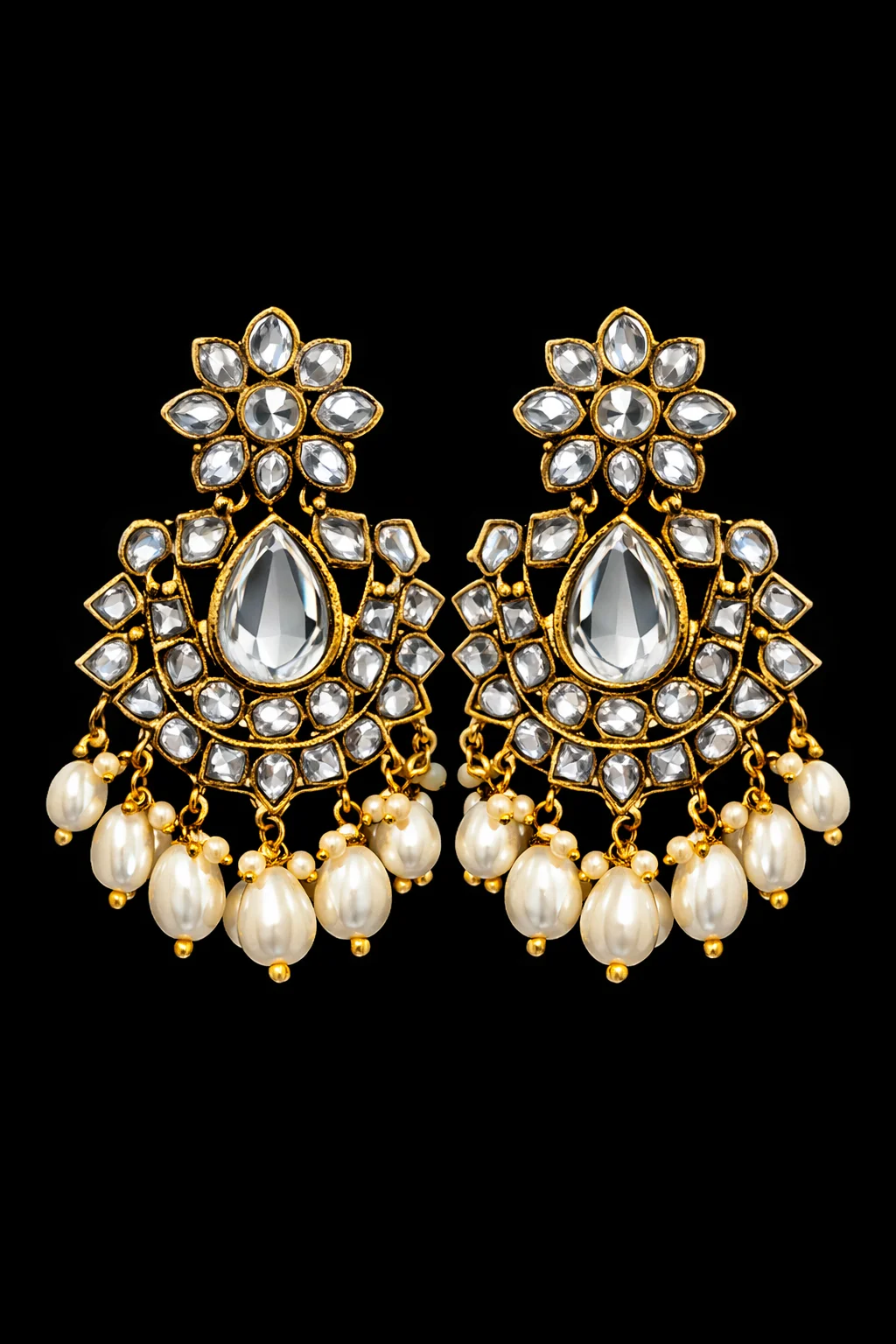
That describes almost everything a wholesale imitation jewellery factory makes: zinc alloy (Mazak) or brass castings, plated in antique gold, matte gold or rhodium finish, set with glass kemp, cubic zirconia or plastic pearls.
The first six digits are shared internationally. Each country adds its own digits after that.
| Code | Description | Typical items |
|---|---|---|
| 7117.11 | Of base metal: cuff links and studs | Cuff links, dress studs |
| 7117.19 | Of base metal: other | Plated zinc alloy or brass necklaces, earrings, bangles, maang tikka, waist chains |
| 7117.90 | Other imitation jewellery | Pieces mainly of glass, plastic, wood, thread, beads |
In India the 8-digit codes used on the shipping bill sit under these (for example under 71171910 or 71171990 for base-metal pieces, and 71179010 or 71179090 for others). Your customs broker will confirm the exact 8-digit line for each item.
7117.19 or 7117.90: how to decide
Most confusion is between these two. The question is what the piece is mainly made of, the material that gives it its essential character.
- A necklace cast in zinc alloy or brass, plated gold, with glass stones set in it: the metal casting is the body of the piece, so it is 7117.19 (base metal).
- A beaded mala of glass or plastic beads on a thread with a small metal clasp: the beads are the body, so it is usually 7117.90.
- A kundan-style set where the stones sit in a metal frame: normally 7117.19, because the frame is metal.
When a piece is borderline, describe it honestly and let your broker classify it. Do not choose a code because you have heard its duty rate is lower in the buyer's country. Customs checks the product, not the code you wished for.
GST on imitation jewellery in India
Inside India, imitation jewellery under 7117 carries GST at 3%. For exports, you either export under a Letter of Undertaking without paying IGST, or pay IGST and claim it back. See our guide to GST and the LUT for exports.
Why the right code matters abroad
The HS code decides what the buyer pays at their border. A few examples of how heading 7117 is treated:
- United States: the normal duty on base-metal imitation jewellery under 7117.19.90 is 11%, and Indian goods have also carried an additional tariff since 2025. Check the current total with a US customs broker before quoting a landed price.
- United Kingdom: under the India-UK trade agreement in force since 15 July 2026, duty on qualifying Indian jewellery is being eliminated, but only when the goods meet the rules of origin and the invoice carries the origin declaration.
- UAE: under the India-UAE CEPA, the usual 5% duty can fall to zero with a valid certificate of origin.
- Australia: all Indian goods have had duty-free access under ECTA since 1 January 2026, again with a certificate of origin.
All of these depend on the code on your invoice matching the product. Our guide to import duty by country goes further.
Common classification mistakes
- Using 7113 (jewellery of precious metal) for gold-plated pieces. Plating does not make an item precious-metal jewellery. Gold-plated brass or zinc alloy is still imitation jewellery.
- Using 7116 (articles of pearls or precious stones) for pieces with plastic pearls or glass stones. Those are imitation materials, so 7117 applies.
- One code for a mixed shipment. A carton with metal necklaces and glass bead malas may need two lines on the invoice, one for 7117.19 and one for 7117.90.
- Vague descriptions. Write what it is: "Necklace set of zinc alloy, antique gold plated, with glass stones and plastic pearls, imitation jewellery".
What your manufacturer should give you
A good factory describes each item's base metal, plating and stones on its invoice, which makes classification straightforward. At Jagruti our pieces are mostly zinc alloy (Mazak) or brass castings, plated, with glass kemp, cubic zirconia or plastic pearls, and we state that on the invoice line.
Related guides: export documents checklist, what Mazak material means and our export supply page.