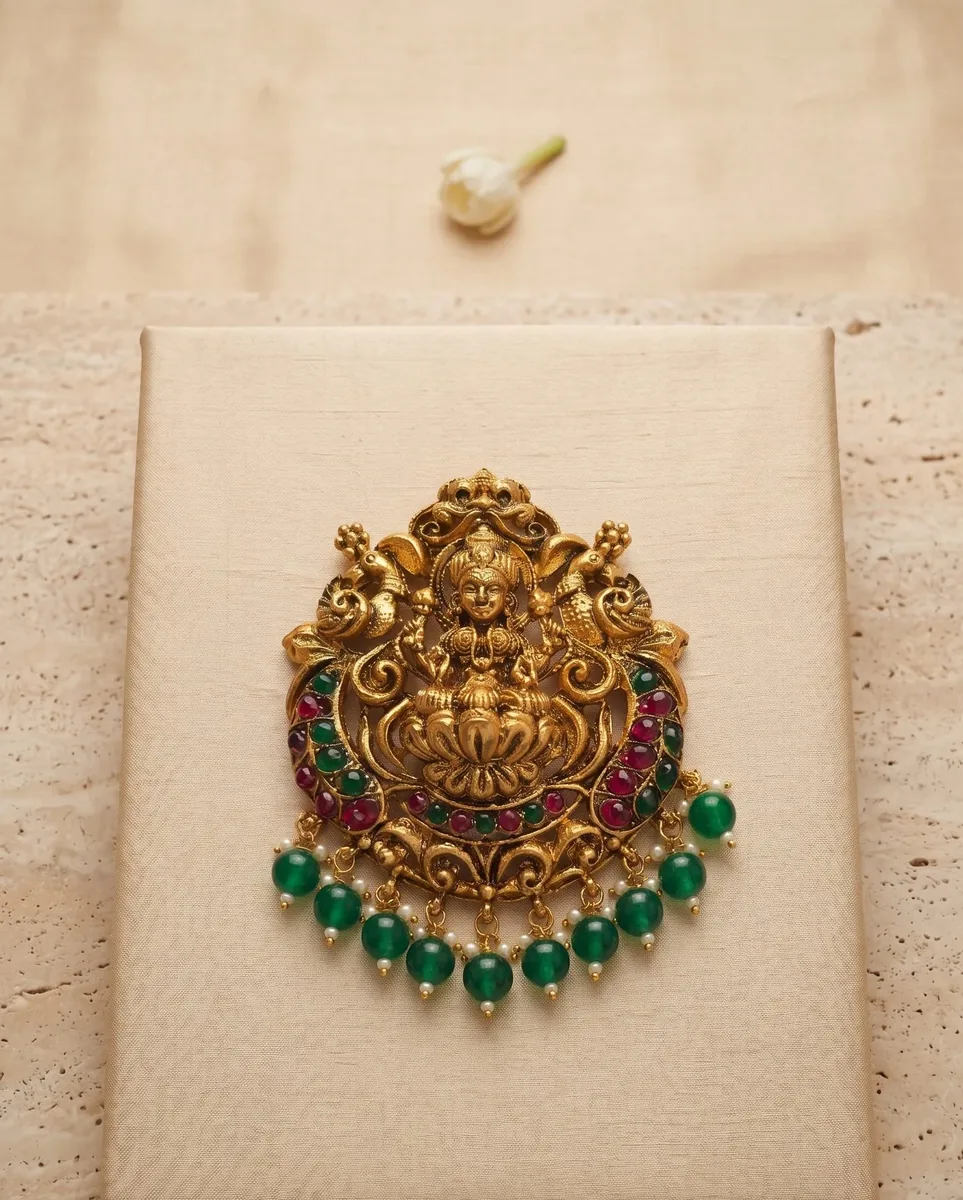
Temple and antique jewellery are often displayed together and sometimes confused. They share the old-gold finish, but they are not the same category, and they do not sell to the same customers at the same speed.
What makes jewellery "temple"
Temple jewellery comes from South Indian temple traditions. Its signature is deity and sacred motifs:
- Lakshmi, goddess of prosperity, usually seated on a lotus - the most common pendant motif
- Ganesha, often on pendants and hair ornaments
- Peacocks and parrots, symbols tied to Murugan and to the goddess Meenakshi
- Lotus, mango and temple tower (gopuram) shapes
- Coins (kasu) strung into long necklaces
Kemp stones, pearls and antique gold finish are typical. Pieces include long haarams, chokers, jhumkas, vaddanam and nethi chutti. Read what is temple jewellery.
What makes jewellery "antique"
"Antique" describes the finish and style: an aged, darkened gold look, often with vintage shapes. Antique jewellery may have floral, geometric, Mughal or regional motifs rather than deities. It includes antique Kundan, antique bridal sets, Rajwadi styles and antique bangles.
Side-by-side
| Temple | Antique | |
|---|---|---|
| Defining feature | Deity and sacred motifs | Aged gold finish |
| Strongest regions | South India, diaspora | Pan-India |
| Occasions | Weddings, temple visits, dance, South Indian festivals | Weddings, festivals, parties |
| Customer | Traditional South Indian buyers, dancers | Broad, traditional to fusion |
| Seasonality | Strong around muhurtham dates and festivals | Spread across wedding and festival seasons |
Which sells faster?
It depends on the region and the store:
- In South India, temple jewellery usually moves faster. It is bought for weddings, festivals, temple visits and classical dance, so a single customer may need a temple set for her own wedding, another for a sister's and a dance set for her daughter. Tamil and Telugu diaspora markets behave the same way.
- Across the rest of India, antique jewellery has a wider customer base and turns more evenly through the year. Without deity motifs it travels across regions and religions, suiting North Indian and Maharashtrian brides and customers who want a traditional look without religious symbolism.
- For national distributors, antique is often the safer volume category, with temple as a strong regional line.
For a South Indian counter, a rough split of about two thirds temple and one third antique works well; for a pan-India distributor, reverse it. Then measure rather than guess: for each design, track the weeks from arrival to selling 80% of the stock, and compare temple and antique designs at similar price points over the same season. Temple may lead in bridal sets while antique leads in lighter daily pieces - let your own numbers set the mix.
Stocking tips
- Match motifs to the region: Lakshmi and peacock sell strongly in the South; floral and Rajwadi antique in the West and North.
- Keep temple jhumkas and small pendants in stock year-round; they sell outside peaks.
- Use antique bangles and earrings to lift average bill size in any region.
- Buy both from one manufacturer where you can: they share the antique gold finish, and a matching tone makes the second sale (antique earrings with a temple necklace) easier.
Quality points for both
Antique tone consistency, clean recesses, secure stones and pearls, strong hooks and screw backs, and anti-tarnish packing.
We make both at our Mumbai factory. See temple jewellery wholesale and antique jewellery wholesale.