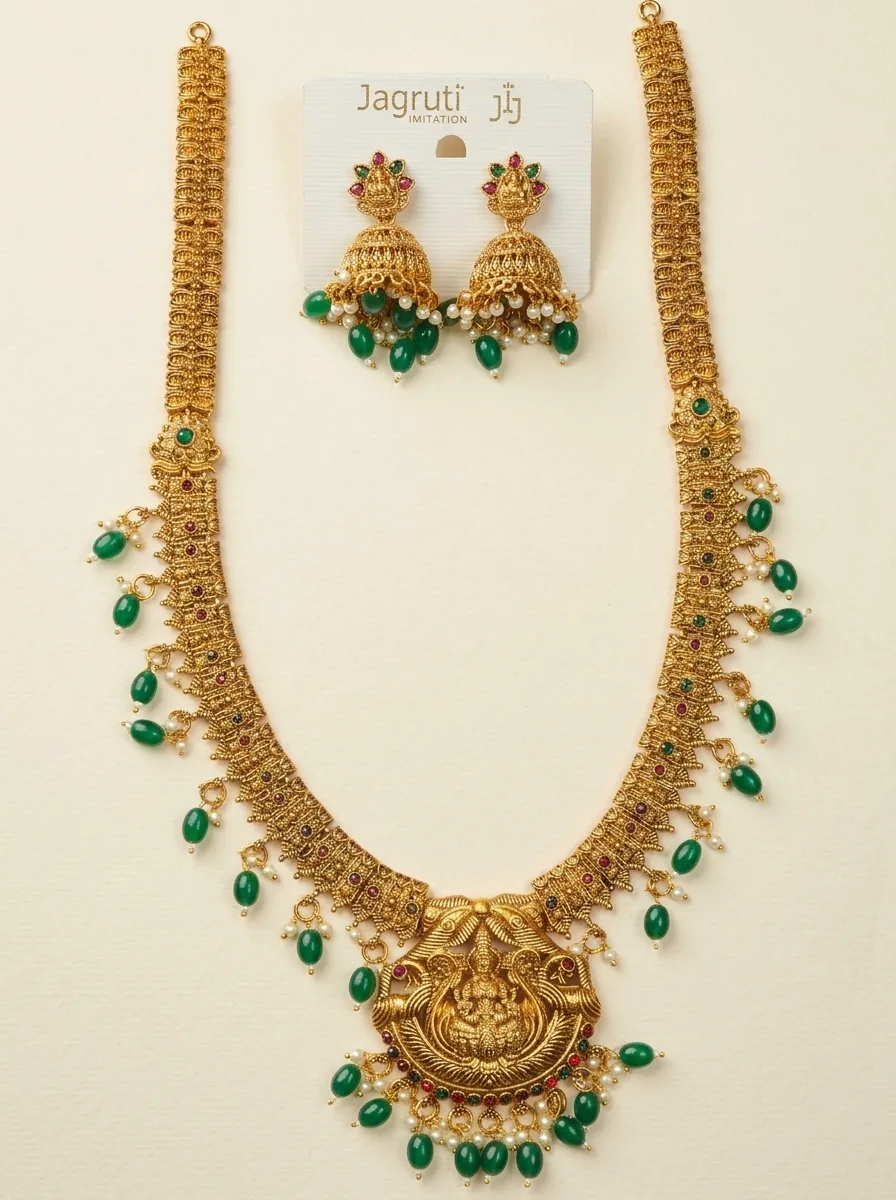
Karva Chauth is observed by married women across North India, especially in Punjab, Haryana, Delhi, Rajasthan, Uttar Pradesh and Madhya Pradesh. Women fast from sunrise until moonrise, praying for their husbands' long life, and dress in bridal-style finery, often red or maroon, with full jewellery and sindoor for the evening puja. Many buy new jewellery each year, making Karva Chauth a significant autumn spike.
What women buy
- Kundan and polki-look necklace sets
- Maang tikkas
- Jhumkas and chandbalis
- Bangles, often in red and gold tones
- Nath for a bridal look
- Sindoor boxes and puja items in gold-tone (a useful add-on)
Colours
Red, maroon and gold dominate, since many women wear red or bridal outfits. Green and pink accents are popular too.
Newlyweds
For newly married women, the first Karva Chauth is special. Families buy heavier sets, often bridal-style. This is a strong opportunity for premium sets.
Stocking plan
| Customer | Focus |
|---|---|
| Newlyweds | Heavier bridal-style sets |
| Regular observers | Medium Kundan sets, tikkas, jhumkas |
| Budget buyers | Jhumkas, bangles, tikkas |
Retailer tips
Retailers do well with red-and-gold Karva Chauth displays combining jewellery, bangles and puja items, with a sieve, karva pot and diya as props, showing complete looks. Ready-to-gift sets sell well to husbands and families buying gifts.
We manufacture Kundan and festive pieces at 200 pcs per design (400 for earrings and pendants). See Kundan and Polki wholesale and Punjabi bridal jewellery.
Common mistakes
Ordering Karva Chauth stock separately and late, after Diwali production slots are already full. Another mistake is stocking only heavy sets; many women want a fresh, medium-weight set each year rather than a full bridal look. A spread of weights and prices serves more customers.
A sample order
A distributor serving Delhi NCR and Punjab might add to the Diwali order: two medium Kundan sets in red and maroon, a newlywed bridal-style set, a tikka design and a bangle set, at MOQ quantities (200+ pcs per heavy design, 400+ per earring or pendant design).
How the date is set, and why it moves
Karva Chauth falls on the fourth day of the waning moon (Krishna Chaturthi) in the month of Kartik, as counted in the North Indian calendar, usually in October or November, about nine days before Diwali. Because the festival follows the lunar (or luni-solar) calendar, its date on the Gregorian calendar shifts from year to year. Check the date for the coming year as soon as the new panchang or calendar is published, and plan factory orders backwards from it rather than from last year's date.
Selling Karva Chauth jewellery well
- Bangles, tikkas and nose rings sell alongside necklace sets.
- Stock by September: customers start shopping weeks ahead.
A ready-made assortment
| Piece | Share of the order | Notes |
|---|---|---|
| Red and maroon necklace sets | About a third | The core look |
| Bangles in red and gold | About a quarter | Sold in sets |
| Tikkas and naths | About a sixth | Bridal-style finishing |
| Jhumkas and chandbalis | The rest | Add-ons |
After the season
Karva Chauth leads straight into Diwali and the wedding season, so most stock moves on naturally. Record what sold by design, colour and price point in the final week, while it is fresh. That record is the best guide to next year's order.
Briefing your staff
Staff should ask whether it is the customer's first Karva Chauth, and suggest bridal-style sets to new brides and lighter festive sets to others.
Working with your manufacturer for this season
Confirm designs and quantities by early August, so production (about a month for made-to-order designs), approval and transport all fit before your shelves need the stock. Karva Chauth, Diwali and the start of the wedding season overlap, so factories are busy; early orders get priority. Ask the factory to keep a record of the approved finish and stone colours, so any mid-season re-order matches the first batch.