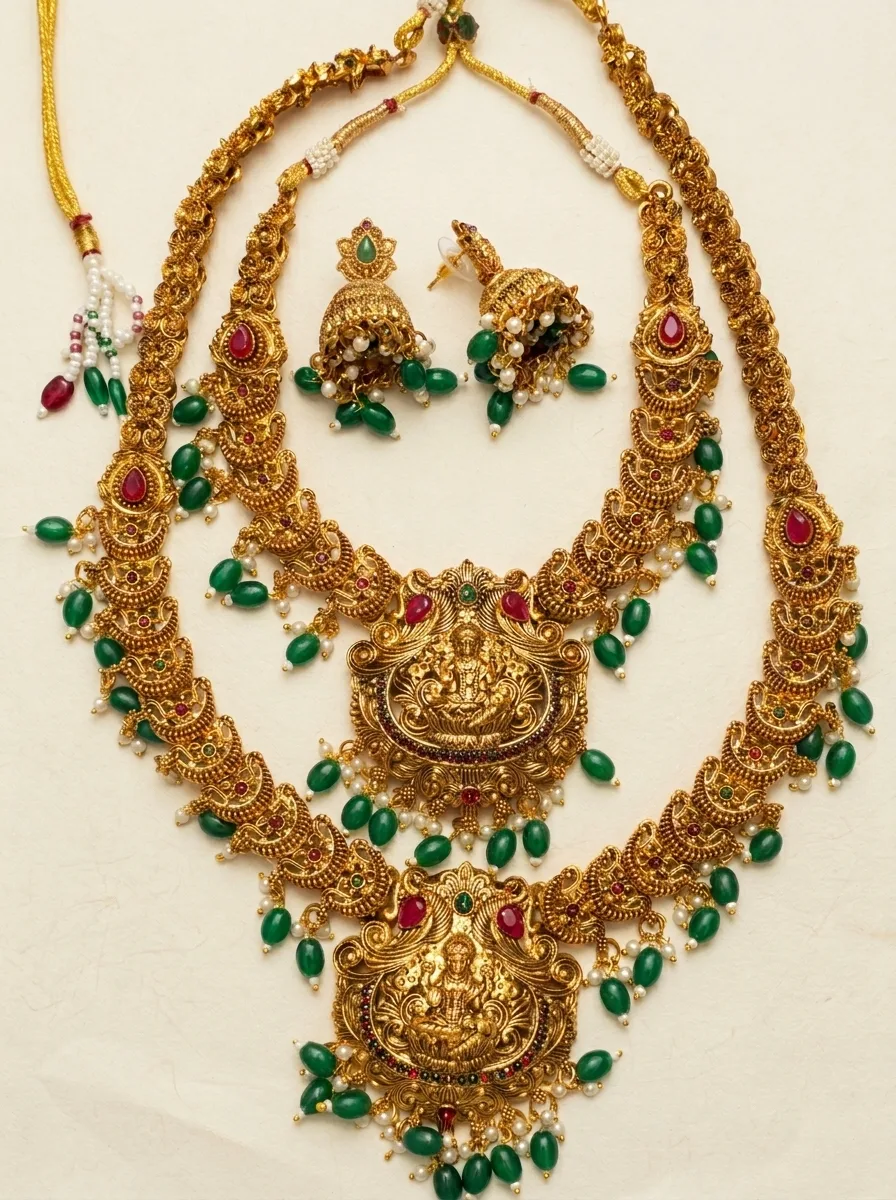
Teej, especially Hariyali Teej during the monsoon, is celebrated by women across Rajasthan, Haryana, Uttar Pradesh, Bihar, Madhya Pradesh and Punjab. Women dress in green, apply mehendi, swing on decorated swings and sing folk songs. Jewellery is central, with green and gold dominating.
What sells
- Green-stone Kundan and Meena sets
- Bangles, especially green and gold-tone
- Maang tikkas and borlas
- Jhumkas
- Hathphool and rings
- Anklets
Colours
Green is the signature colour of Hariyali Teej, and green-stone and green-Meena jewellery sells very well. Red and bridal-style pieces lead for Hartalika Teej, and Kajari Teej has its own customs.
Retailer tips
Display green jewellery with lehariya sarees and green outfits, using swing (jhoola) props and sindhara gift sets in baskets. Offer bangle and jewellery bundles.
We manufacture Kundan and Meena pieces at 200 pcs per design (400 for earrings and pendants). See Kundan and Polki wholesale, Rajasthani jewellery and Meenakari wholesale.
Common mistakes
Stocking red bridal sets for Hariyali Teej, when customers want green. Another mistake is overlooking bangles, which are the single biggest Teej purchase for many women.
A sample order
A Rajasthan or Haryana distributor might order two green-stone Kundan sets, a green Meena jhumka design, a borla, and green and gold bangle sets, at MOQ quantities (200+ pcs per heavy design, 400+ per earring or pendant design).
Sindhara gifts and a bride's first Teej
A bride's first Teej is special, often celebrated at her parents' home, and a married woman's parents often send a sindhara, a gift of clothes, bangles, jewellery and sweets, before Teej. Gift-packed jewellery and bangle sets suit this custom, and a first Teej is an opportunity for premium sets.
How the date is set, and why it moves
Hariyali Teej falls on the third day of the bright half of Shravan, usually in July or August; Hartalika Teej falls on the third day of the bright half of Bhadrapada, usually in August or September; Kajari Teej falls in between. Because the festival follows the lunar (or luni-solar) calendar, its date on the Gregorian calendar shifts from year to year. Check the date for the coming year as soon as the new panchang or calendar is published, and plan factory orders backwards from it rather than from last year's date.
Why jewellery matters at Teej
Teej celebrates the monsoon and the union of Shiva and Parvati. Married women fast and pray for their husbands, and unmarried women pray for a good husband.
A ready-made assortment
| Piece | Share of the order | Notes |
|---|---|---|
| Green and red bangle sets | About a third | The core Teej purchase |
| Necklace sets | About a quarter | Festive outfits |
| Sindhara gift sets | About a fifth | For new brides |
| Tikkas, naths and earrings | The rest | Finishing touches |
After the season
Teej is followed by Raksha Bandhan and Janmashtami, then Navratri, so festive stock keeps moving. Record what sold by design, colour and price point in the final week, while it is fresh. That record is the best guide to next year's order.
Selling online for this occasion
Sindhara gift sets sell well online to families sending gifts to new brides in other cities.
Briefing your staff
Staff should ask whether the customer is buying for herself or as a sindhara gift, and suggest bangle sets in green or red.
Working with your manufacturer for this season
Confirm designs and quantities by April or May, so production (about a month for made-to-order designs), approval and transport all fit before your shelves need the stock. Hariyali Teej often falls in July, early in the festival calendar. Ask the factory to keep a record of the approved finish and stone colours, so any mid-season re-order matches the first batch.