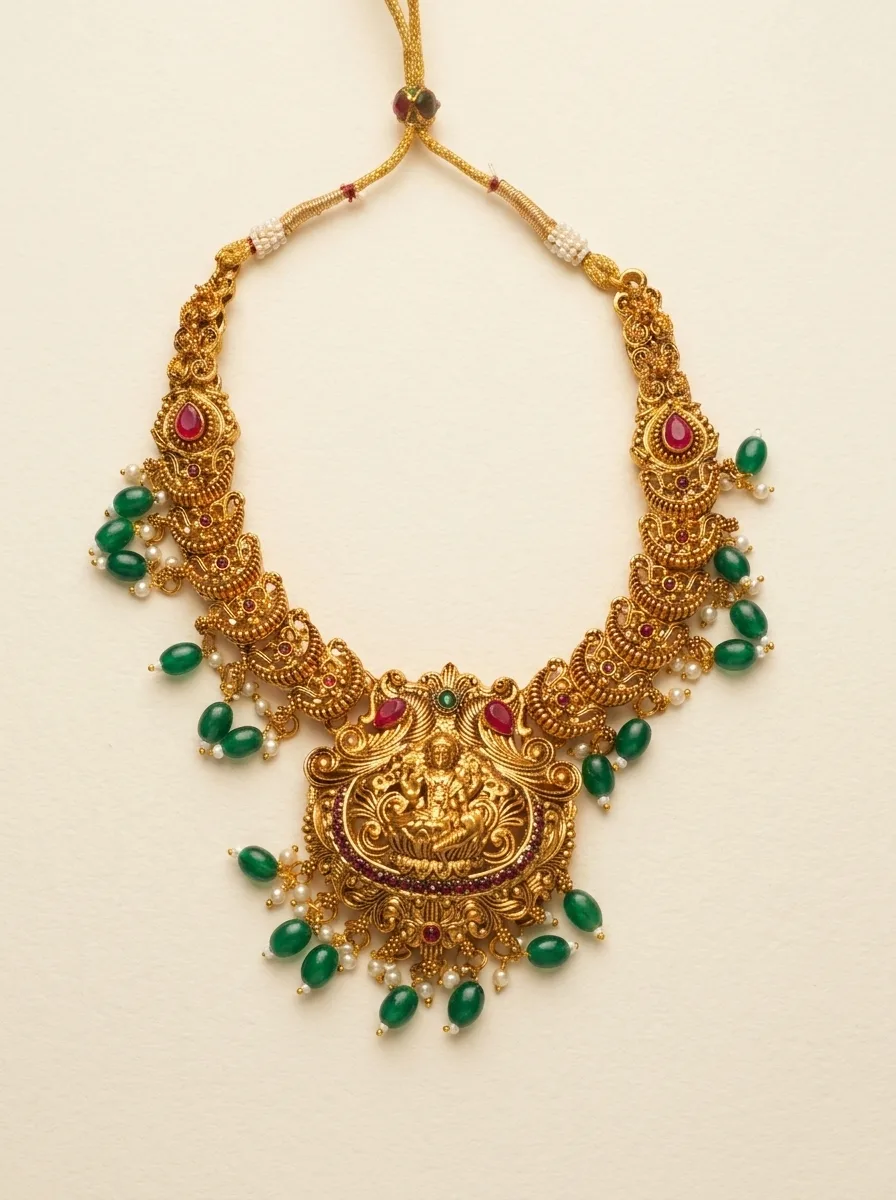
Tribal-inspired jewellery draws on the bold, chunky ornaments of India's many communities: the Banjara, Rabari and others, as well as tribal traditions of central and eastern India. In imitation form, it has become a popular fashion category, usually in oxidised silver-look finishes.
Pieces that sell
- Hasli: a rigid neck ring.
- Coin necklaces: layered coins in oxidised finish.
- Chunky cuffs and kadas
- Statement jhumkas with bells and beads
- Anklets with ghungroo
- Nose pins with tribal motifs
- Layered bead necklaces
Customer profile
College students, fashion buyers, Navratri shoppers and customers wearing handloom and cotton outfits. Tribal-inspired pieces also sell well to tourists and gift shops.
Respectful design
Tribal-inspired fashion jewellery borrows from real communities' traditions. Use descriptive, respectful names, avoid misusing sacred items, and do not claim pieces are made by a community when they are not.
Quality points
- Oxidised contrast crisp
- Weight comfortable for statement pieces
- Smooth inner surfaces on cuffs and haslis
- Beads and bells secure
Stocking tips
- Tribal jhumkas and coin necklaces lead volume.
- Navratri is a big spike.
- Statement pieces sell well displayed on busts.
We make tribal-inspired oxidised pieces at 200 pcs per design (400 for earrings and pendants). See oxidised jewellery wholesale and oxidised jhumka wholesale.
Photograph them with handloom and ethnic outfits: customers buy the look, not only the piece.
Weight and wearability
Tribal-inspired pieces are often large and chunky, but customers still want to wear them for hours. Manufacturers can reduce weight by hollowing backs, using lighter alloys and designing open patterns. When approving samples, wear the piece for a while to judge comfort, especially haslis and large earrings.
Zinc alloy keeps them wearable while keeping the bold look.
Trend cycles
Tribal-inspired jewellery goes through fashion cycles, often driven by social media and film. Keep evergreen pieces such as coin necklaces and statement jhumkas in stock, and add trend pieces in smaller runs. Watch sell-through closely and move quickly when a design takes off.
Briefing tribal-inspired designs
Share references, specify dimensions and weight limits, finish depth (how dark the oxidising should be) and any beads, bells or stones. Ask for smooth inner surfaces on cuffs and neck pieces.
Pairing with textiles
Tribal-inspired jewellery pairs naturally with handloom, block print and cotton outfits. Retailers selling ethnic fashion can cross-sell these pieces easily.
Retailers who sell both jewellery and textiles can display them together.
Festival demand
Navratri, college festivals and cultural events drive spikes. Plan stock for these periods.
Tribal jewellery traditions that inspire fashion
India's tribal and nomadic communities have rich jewellery traditions:
- Banjara (Lambadi) communities of the Deccan: heavy silver-look jewellery with coins, mirrors, shells and colourful threads.
- Kutchi communities of Gujarat: silver jewellery with bold earrings and coin necklaces.
- Naga communities of the North-East: beads, shells, brass and bone.
- Bhil and Rajasthani communities: heavy anklets, torque necklaces and large earrings.
Imitation tribal-inspired jewellery takes these looks into oxidised and silver-look metal, often with coins, beads and coloured threads.
Tribal-inspired designs and respect
Tribal jewellery carries cultural meaning for the communities it comes from. Good practice for wholesalers:
- describe pieces as "tribal-inspired" rather than claiming a specific community made them
- avoid using sacred or ritual objects as fashion motifs
- where possible, support genuine community artisans for authentic pieces
Who buys tribal-inspired jewellery
College students, fashion-forward buyers and people who wear handloom, khadi and Indo-western clothing. It sells year-round, with a peak at Navratri, especially in oxidised finish.
Common mistakes when stocking this style
- Claiming pieces were made by a specific community when they were not.
- Using sacred symbols as fashion motifs without understanding them.
- Heavy brass where zinc alloy would keep the look wearable.
- Missing Navratri, the peak season for oxidised tribal styles.
Colour accents that sell
Oxidised tribal-inspired pieces sell best with small bursts of colour: turquoise, coral red, green glass and multicolour threads. Plain oxidised pieces suit office wear, while coloured versions sell for festivals and Navratri. Keep both in the range, and offer the same design in a plain and a coloured version where the mould allows.
Care
Oxidised finishes darken further with air. Store pieces in sealed bags and wipe them with a dry cloth; never use silver dip, which removes the oxidised look.