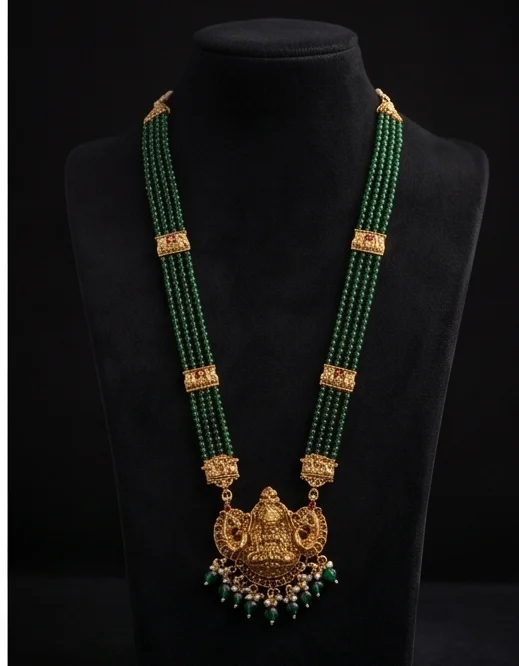
India's imitation jewellery trade is spread across many cities, each with its own strengths. A distributor or chain that understands the map can source smarter: the right styles from the right hubs, and bestsellers from manufacturers who can repeat them. This guide gives an overview, with links to our detailed city guides.
The main hubs at a glance
| City | Best known for | Guide |
|---|---|---|
| Mumbai | Temple, Kundan, AD, bridal, custom manufacturing | Mumbai |
| Delhi | Huge wholesale variety, North Indian bridal | Delhi |
| Jaipur | Kundan-Meena, lac bangles, silver-look | Jaipur |
| Rajkot | Volume fashion and silver-look manufacturing | Rajkot |
| Ahmedabad | Navratri and Gujarati bridal | Ahmedabad |
| Hyderabad | Pearls, bangles, Telugu and Deccani bridal | Hyderabad |
| Kolkata | Bengali bridal, eastern India distribution | Kolkata |
| Chennai | Tamil temple jewellery, dance sets | Chennai |
| Bengaluru | Mixed South Indian and modern demand | Bengaluru |
| Madurai | Temple and kemp jewellery | Madurai |
| Machilipatnam | One gram gold jewellery | Andhra one gram gold |
How buyers use multiple hubs
Few distributors rely on one city. A common pattern:
- Core bestsellers and exclusives from a manufacturer, often in Mumbai, for price and consistency.
- Regional specialities from the city that makes them best, such as Meena from Jaipur.
- Fill-ins and trend tests from local wholesale markets in small quantities.
Market buying vs factory buying
Wholesale markets are best for variety, ready stock and small quantities. Manufacturers are best for volume, custom designs and repeat consistency. Read manufacturer vs wholesaler vs trader.
Planning a sourcing trip
- Decide which styles you need and which hub is strongest for each.
- Book factory visits in advance; markets can be visited freely.
- Carry sell-through data and reference photos.
- Collect contacts and design codes for remote re-ordering.
Where demand is growing
Tier-two and tier-three cities across India are growing markets as incomes rise and organised retail spreads. Distributors in cities such as Indore, Nagpur, Patna, Lucknow, Coimbatore and Guwahati have strong opportunities.
The national wedding and festival calendar
| Period | What drives demand |
|---|---|
| January | Lohri, Pongal, Sankranti, Uttarayan; weddings in many regions |
| March to April | Gudi Padwa, Ugadi, Baisakhi, Vishu, Bihu, Tamil New Year |
| April to June | Akshaya Tritiya and the summer wedding season |
| July to August | Teej, Varalakshmi Vratham, Raksha Bandhan |
| September to October | Navratri, Durga Puja, Dasara |
| October to November | Karva Chauth, Diwali, Chhath |
| November to February | The main winter wedding season in much of India |
A national distributor is therefore busy almost all year, with each region peaking at different times. Planning factory orders region by region, two to three months ahead of each peak, keeps stock flowing without tying up money in the wrong region at the wrong time.
Choosing hubs for your business
A small retailer usually needs one nearby wholesale market for top-ups and, as volume grows, one or two manufacturers for core designs. A regional distributor needs a manufacturer for each main style it sells, plus a local market for fast fill-ins. A national distributor or brand needs manufacturers across styles, a warehouse near its main customers, and a clear plan for each region's calendar.
Buying remotely across hubs
Most long-term buying now happens without travelling: WhatsApp catalogues and quotes, video calls, couriered samples, video approval before dispatch, and transport companies for delivery. Once a supplier is trusted, you may visit only once a year. The practical limits are transport time and the MOQ. Group orders to each hub so consignments are large enough to travel economically, and keep a spreadsheet of each supplier's design codes, lead times and terms.
Quality across hubs
Quality varies more between individual suppliers than between cities: every hub has good and weak suppliers. The same checks work everywhere: an approved sample, a written specification, a look at finished goods before paying the balance, and a record of how each batch compared with the sample. Read how to verify a manufacturer.