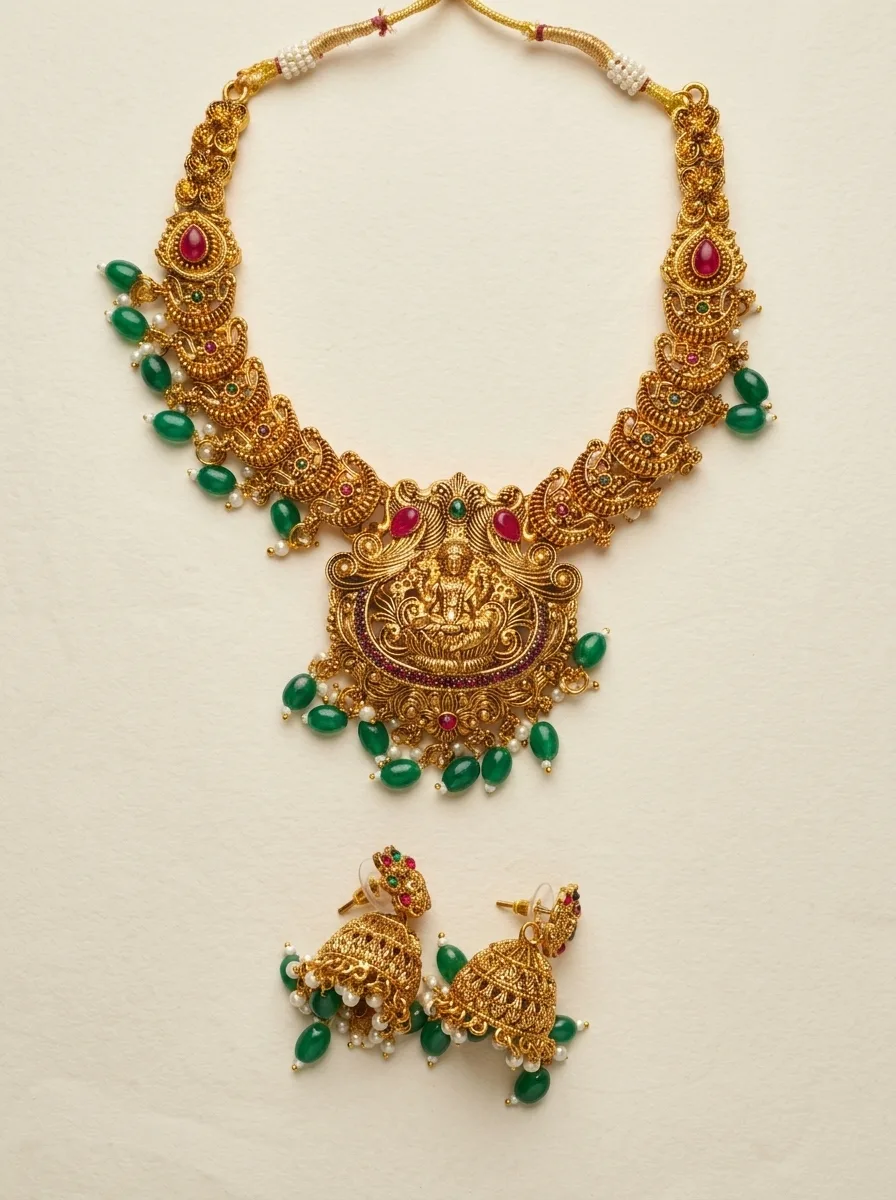
Bridal jewellery sales rise and fall with the wedding calendar, and that calendar differs by region, community and year. Auspicious dates (muhurat or muhurtham) shift from year to year, and some periods see very few weddings. For wholesalers, the key is not to memorise dates but to build a planning routine that starts early enough. For this year's dates and order deadlines, see the 2026-27 wedding season order planner.
The broad pattern
Across much of North and West India, the heaviest wedding season runs through the cooler months after Diwali and into early spring, with a second smaller season in late spring and early summer. South Indian wedding dates follow Tamil, Telugu, Kannada and Malayalam calendars, with busy months spread through the year.
Why the exact dates matter less than the lead time
Wedding jewellery is labour-heavy. A factory making Kundan or temple bridal sets needs weeks of production time, and every manufacturer gets busy before the main season. Buyers who order late compete for limited slots. The practical rule: place new bridal designs several months before your main season, and repeat designs well before that season starts.
A planning routine for wholesalers
- Ask your retailers which months were busiest last year in their area.
- Check the coming year's auspicious dates with a local calendar or your retailers.
- Work backwards: delivery to retailers several weeks before the first peak, transit time, factory production time, sample approval time.
- Book production with your manufacturer as early as you can.
- Split into batches so early stock arrives for the first peak and top-ups follow.
- Keep a one-page year planner: month by month, the regions you serve, their wedding clusters and festivals, and the date each factory order must be placed. Review it every quarter.
Regional snapshot
| Region | Typical focus of bridal stock |
|---|---|
| North India | Kundan, polki-look, AD reception sets |
| West India | Kundan, Maharashtrian and Gujarati bridal |
| South India | Temple, kemp, Kerala bright gold |
| East India | Bengali, Odia, Assamese bridal |
Guest and relative demand
For every bride there are many guests. Lighter sets, jhumkas and bangles sell in higher numbers than full bridal sets. Stock these alongside bridal heroes.
Using batch-wise production
On large seasonal orders, batch-wise production lets you receive the first batch before the first peak and later batches as the season continues. At Jagruti, batch-wise payment is available on 1,000+ unit orders. Read batch-wise production.
After the season
Review sell-through per design. Keep winners for next season and retire slow designs. The best time to plan next season's bridal range is right after this one ends.
See bridal jewellery manufacturer and bridal sets wholesale guide.
How auspicious dates are chosen
Hindu weddings are usually fixed on muhurthams, auspicious dates and times worked out from the Hindu calendar and the couple's horoscopes. Some periods are widely avoided, for example the months considered inauspicious in each regional calendar, and periods such as Kharmas in North India (roughly mid-December to mid-January and mid-March to mid-April), and Aadi and Margazhi in Tamil Nadu. Chaturmas, the four months of the monsoon, also sees fewer weddings in many North and West Indian communities.
The result is a calendar with dense clusters of weddings. In a heavy muhurtham week, a city can have thousands of weddings, and jewellery demand comes all at once.
Muslim, Christian and Sikh weddings
- Muslim weddings avoid the month of Muharram and Ramzan for celebrations in many communities, and cluster in other months, often around school holidays.
- Christian weddings are spread through the year, with peaks around Christmas and in the months after Easter in many communities.
- Sikh weddings follow family and community preferences, often in the winter months in Punjab and in summer for the diaspora abroad.
A wholesaler serving mixed communities sees a steadier year than one serving a single community.
Tracking demand
Keep a simple record of weekly sales for bridal and guest ranges across the year. After two years, patterns become clear: which weeks to be fully stocked, which to run down, and when to place factory orders. Your own data beats any national calendar.