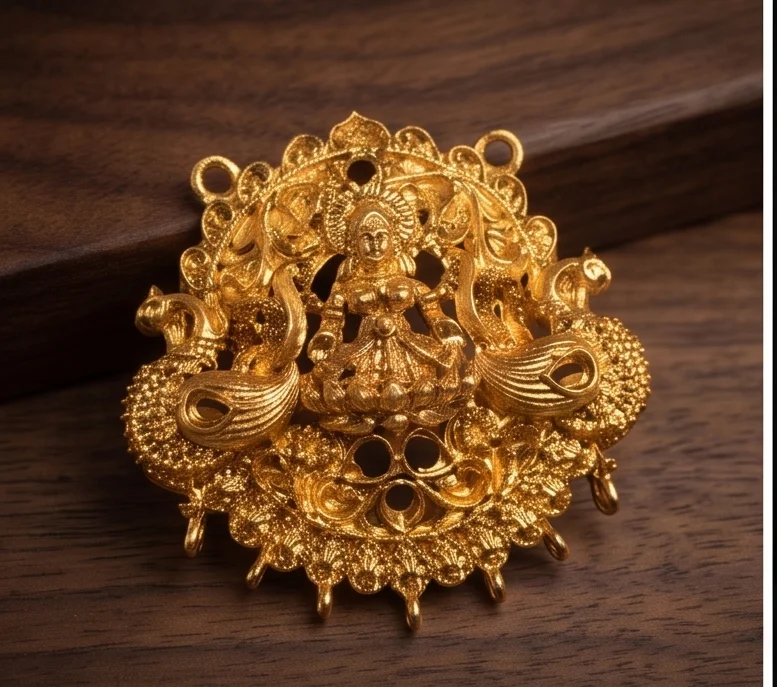
Kundan and AD are the two biggest categories in North and West Indian imitation bridal and party jewellery. Many retailers stock both, but they rarely sell equally in the same shop. Knowing how they differ helps a wholesaler decide how to split budget and which customers to serve with each.
The look
Kundan is traditional and regal: glass stones set in gold-tone frames with foil backing, often with pearl hangings and Meenakari on the back. It photographs richly and belongs with lehengas, heavy sarees and bridal outfits.
AD (American Diamond) is bright and modern: faceted cubic zirconia in rhodium, gold or rose gold settings. It sparkles under lights and suits receptions, cocktail events, gowns and Indo-western outfits.
Who buys each
| Kundan | AD | |
|---|---|---|
| Typical customer | Brides, bridal families and wedding guests wanting a traditional look | Younger customers, reception, cocktail and party wear |
| Outfit | Lehenga, heavy sarees, sharara | Gowns, Indo-western, lighter sarees |
| Colour preference | Red, green, pastels matched to outfit | White, rose gold, occasional colour stones |
| Occasion | Wedding ceremonies, Karva Chauth, Diwali | Engagements, receptions, parties, gifting |
| Regions strongest | Punjab, Rajasthan, Delhi NCR, UP, Gujarat | Metros and urban centres nationwide |
| Season sensitivity | High (wedding and festival peaks) | Moderate (year-round party wear) |
Price and margin
Kundan's value is in visual weight and handwork, so heavier sets carry higher unit prices and support higher MRPs. AD's value is in stone count and setting quality: a small AD pendant set sells well at an entry price, while a full AD bridal necklace with hundreds of stones sits at the top of the range. Both can deliver good margins - Kundan tends to earn more per unit, AD tends to turn faster - so build a price ladder in each category rather than treating one as always dearer.
Stocking strategy for resellers
- Bridal-focused stores in the North and West: lead with Kundan, add AD for receptions.
- Urban fashion stores: lead with AD, add a smaller Kundan festive line.
- Distributors: match each retailer's customer rather than pushing one category everywhere.
A mixed store can put more of the wedding-season budget into Kundan and keep AD stocked through the year. Display them separately - Kundan with traditional sets, AD with western and party wear - but close enough for a second sale: a customer buying a Kundan set for the wedding may well buy an AD set for the reception.
Quality points for each
Kundan: foil brightness, stone flushness, clean frames, Meena quality if present, secure pearl hangings.
AD: stone clarity and cut, even pave, strong prongs, rhodium or plating tone, working clasps.
Combining them
Kundan-with-AD pieces are popular: Kundan centre stones with CZ borders give a traditional shape with modern sparkle. They sit well between the two categories and appeal to brides who want both.
We manufacture both at our Mumbai factory at 200 pcs per design (400 for earrings and pendants). See Kundan wholesale and AD wholesale, or read AD and CZ grades.
How the two are made differently
Imitation Kundan starts with a cast frame in zinc alloy or brass, with a cup for each stone. The frame is plated in a warm gold tone, foil-backed glass stones are set into the cups, and a gold-tone edge around each stone recreates the look of traditional pressed gold foil. Pearls and drops are added by hand, and the reverse often carries meenakari-style colour.
AD (American Diamond) starts with a cast frame designed for faceted cubic zirconia. Stones are set with prongs, in pave (many small stones close together) or in channels. The piece is usually plated in rhodium for a white look, or in rose gold or bright gold. Setting accuracy is everything: uneven prongs or stones at different heights spoil the sparkle.
The different making process explains the different quality checks: in Kundan you look at the foil glow and the neatness of the edging; in AD you look at stone alignment, sparkle and prongs.