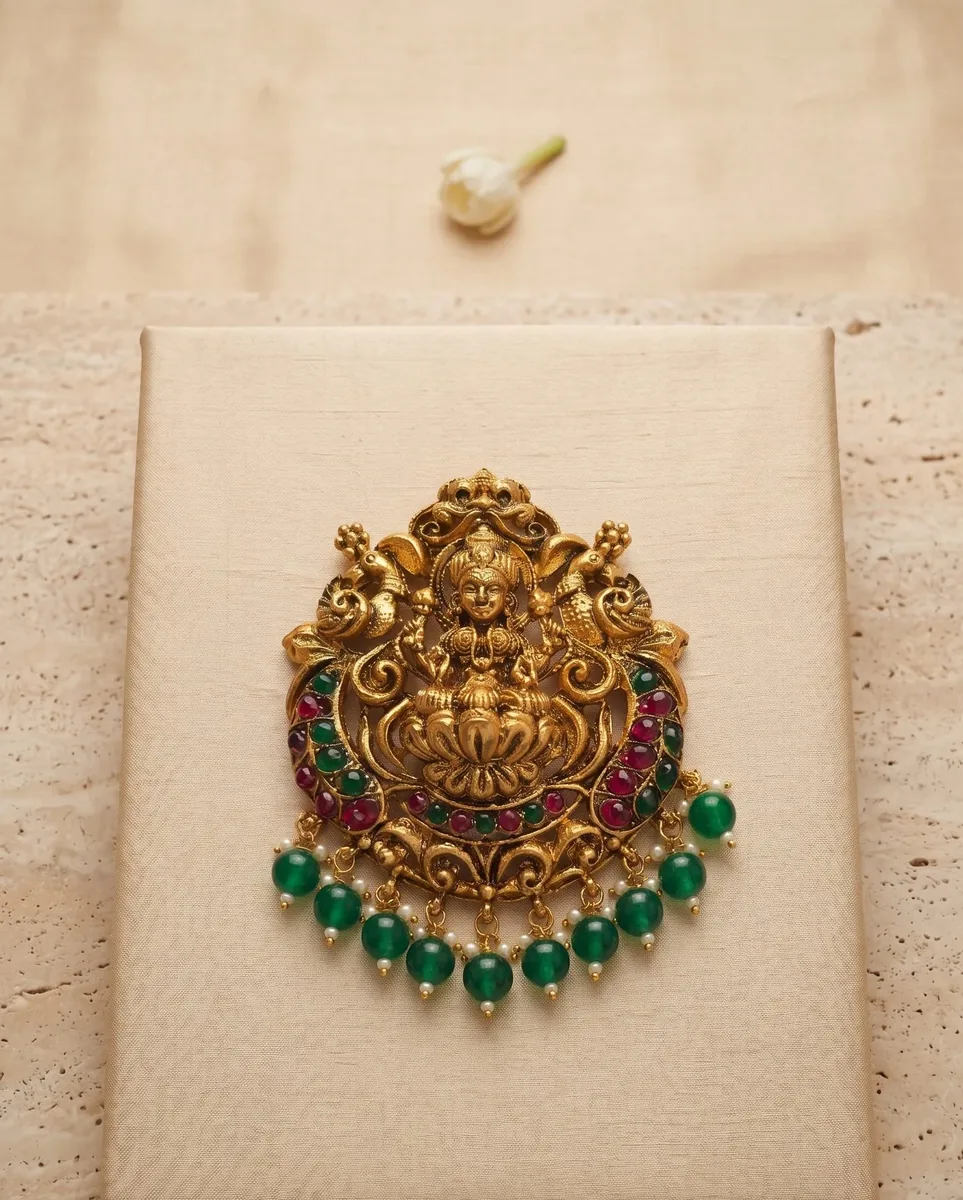
Mazak metal, a zinc alloy, is the base of a large share of the imitation jewellery sold in India. It is not a secret shortcut and it is not a flaw to hide from customers. It is a material with clear strengths and some limits. A wholesaler who understands both can choose the right base for each range and cut down on complaints at the counter.
The advantages of Mazak metal
1. Fine casting detail. Mazak flows easily into moulds and fills tiny recesses. Deity faces on Lakshmi pendants, granulation on temple pieces and thin filigree lines stay crisp. That sharpness survives plating, so the finished piece looks rich.
2. Lower weight. Mazak is lighter than brass for the same volume. For large statement necklaces, long haarams and heavy jhumkas, lighter weight means the customer can wear the piece for a full wedding day.
3. Lower cost per unit. Zinc is cheaper than copper, and Mazak's low melting point saves energy and time per casting cycle. For wholesalers, this means a wider range can be offered at accessible retail prices.
4. Consistency across large runs. Die-cast or spin-cast Mazak gives very repeatable results. For a distributor supplying many counters, each unit of a design should look the same.
The limits of Mazak metal
1. More brittle than brass. Forcing a thin Mazak part to bend can snap it. Good design adds thickness at hooks, joints and adjustable parts.
2. Surface depends on plating. If the plating is scratched deeply, the zinc underneath can dull or mark. That is why the base layers and final anti-tarnish coat matter so much.
3. Not suited to every style. Heavy traditional buyers sometimes expect the weight of brass. For those segments, a lighter Mazak piece may be read as "cheap" even when the finish is excellent.
Mazak or brass: how to decide by range
| Range | Better base | Why |
|---|---|---|
| Detailed temple and antique | Mazak | Sharp detail at a lower cost |
| Heavy bridal where weight signals value | Brass | Customers expect heft |
| Oversized fashion and statement | Mazak | Wearable weight |
| Bangles and kadas that flex | Brass | Less brittle |
| Price-led festival stock | Mazak | Margin at accessible MRPs |
What to check when you buy Mazak pieces in bulk
- Section thickness at stress points: hooks, S-locks, adjustable back chains
- Pre-plating base layer: ask what is applied before the gold plating
- Plating colour match across the batch against the approved sample
- Anti-tarnish lacquer: ask whether it is applied and how
- Stone setting: glued stones should sit flush with no visible glue
At Jagruti we make both Mazak and brass pieces, and we recommend the base per design rather than one metal for everything. See our antique jewellery wholesale range or read what Mazak material means for the basics.
Why some Mazak pieces crack or swell with age
Buyers sometimes see a batch that was perfect on arrival develop hairline cracks, blistered plating or a chalky, swollen surface months later, usually at thin joints. The usual cause is not the Mazak family itself but impure alloy. Lead, tin and cadmium impurities in zinc castings allow moisture to attack the boundaries between grains, a process called intergranular corrosion. Graded die-casting alloys keep those impurities extremely low and add a trace of magnesium to resist it.
Cheap castings are sometimes poured from mixed scrap to save money. They cost less at purchase and much more in returns. When you compare quotes, ask whether the factory casts from graded alloy ingot.
How to test a Mazak sample before a bulk order
- Weight check. Weigh the sample and note it. Ask for bulk units to stay within a small tolerance of that weight; a much lighter piece usually means thinner sections.
- Flex check. Gently flex hooks and joints (not the decorative parts). They should not creak or show cracks at the plating.
- Scratch check. Lightly scratch an inside edge with a coin. If grey metal shows immediately, the plating or base layer is very thin.
- Humidity check. Leave one piece unpacked in a bathroom for a week. Poorly sealed finishes will start to change colour.
- Back check. Turn the piece over. Rough, porous backs suggest rushed casting.
Mazak and skin
Zinc alloy itself is not a common skin allergen. Reactions to plated jewellery usually come from nickel in the plating layers or from damaged plating. For sensitive customers and for markets such as the EU and UK, ask for nickel-free plating. See nickel and lead rules for exports.
Care advice you can pass on to customers
A simple care card at the counter reduces returns: keep pieces dry, store them in the zip pouch they came in, put on perfume and hairspray before the jewellery, and wipe with a soft dry cloth after wearing. These steps protect the plating, and the plating protects the Mazak.